When I met Juliana in 2010, she and her spouse were undocumented and struggling to make ends meet. They had migrated from Guerrero, Mexico, to Santa Barbara, California, many years before, and now they had three young children.
However, like so many other women navigating resource constraints, she found a sense of power through her relationship with food.
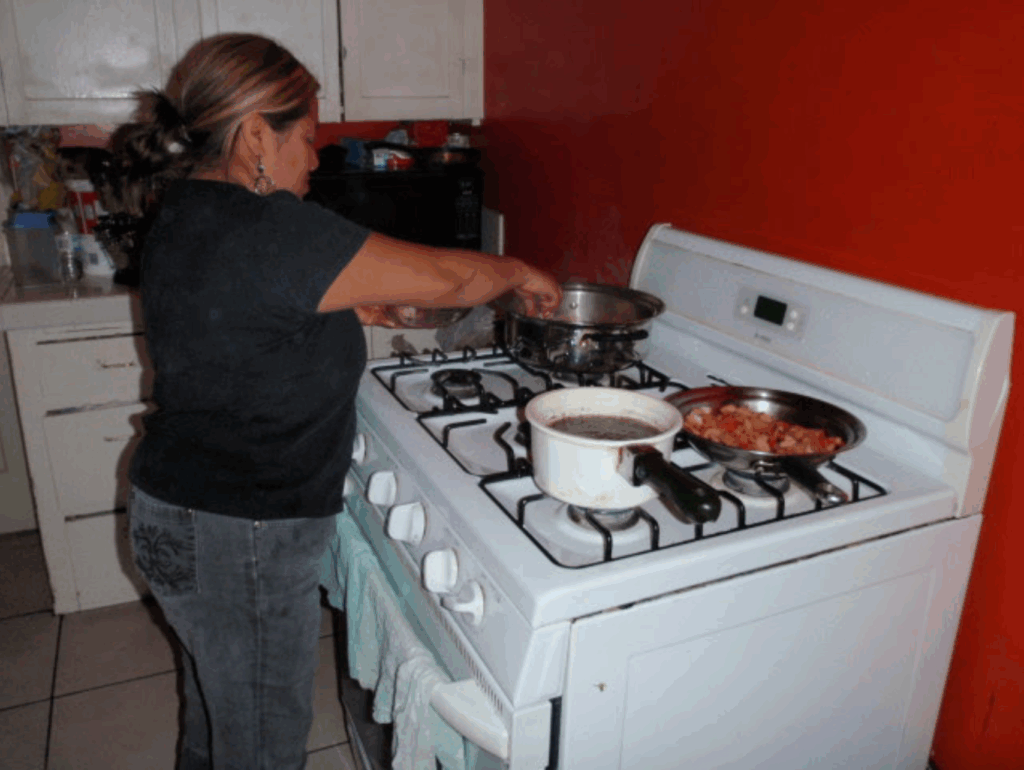
Juliana turned the necessity of purchasing items on sale into an opportunity, introducing her children to new ingredients and expanding their palates along the way as she transformed those ingredients into meals. What others might have viewed as limitation, she framed as resourcefulness. That small act of agency in the kitchen gradually grew into a strong political consciousness and getting active politically in her community.
“I’m interested in the rights of women,” Juliana told me. “I know many women who are marginalized, who do not have a voice or a vote. I take an opposite stance. Because before I was in the same position.”
Migrant women are not passive recipients of the unfamiliar food environments to which they arrive. Rather, they often infuse these spaces with rich culinary knowledge, thereby (re)shaping the food practices of host communities
For almost two decades I have studied the experiences of displaced and migrant women as they navigate barriers to food, water, and other life-sustaining resources. For the women themselves, kitchens often emerge as important sites of affirming one’s dignity, reclaiming power and autonomy, expressing creativity, and nourishing relations of care.
Furthermore, cooking meals for family and friends promotes health in a way that is often overlooked in clinical settings. Culinary care also cultivates identity, while what is cooked preserves and celebrates culture.
Yet women’s experiences and knowledge are often dismissed and overlooked. Recognizing women’s contributions to food production and domestic labor should be a priority when it comes to designing policies to address some of our most pressing global problems such as hunger, water scarcity, and climate change.
Women Create the Flavor of a Place
Migrant women are not passive recipients of the unfamiliar food environments to which they arrive. Rather, they often infuse these spaces with rich culinary knowledge, thereby (re)shaping the food practices of host communities or what some have termed as “culinary mestizaje.”
In her memoir and recipe book, acclaimed chef Mareme Cisse described how establishing her own version of Senegalese-Sicilian cuisine revealed a renewed sense of identity and belonging. She writes, “The kitchen, too, helps us to travel, to get lost, and to dream.”
For Cisse, the kitchen is a grounding space, a place where she has been able to make sense of living estranged from many of her loved ones in West Africa, raising children in a southern European culture that often discriminates against them based on race, and asserting herself as a world-class talent in a male-dominated profession.
It is through women, and women’s transnational movements and mobilities, that most of us have inherited whatever informal culinary knowledge we have.
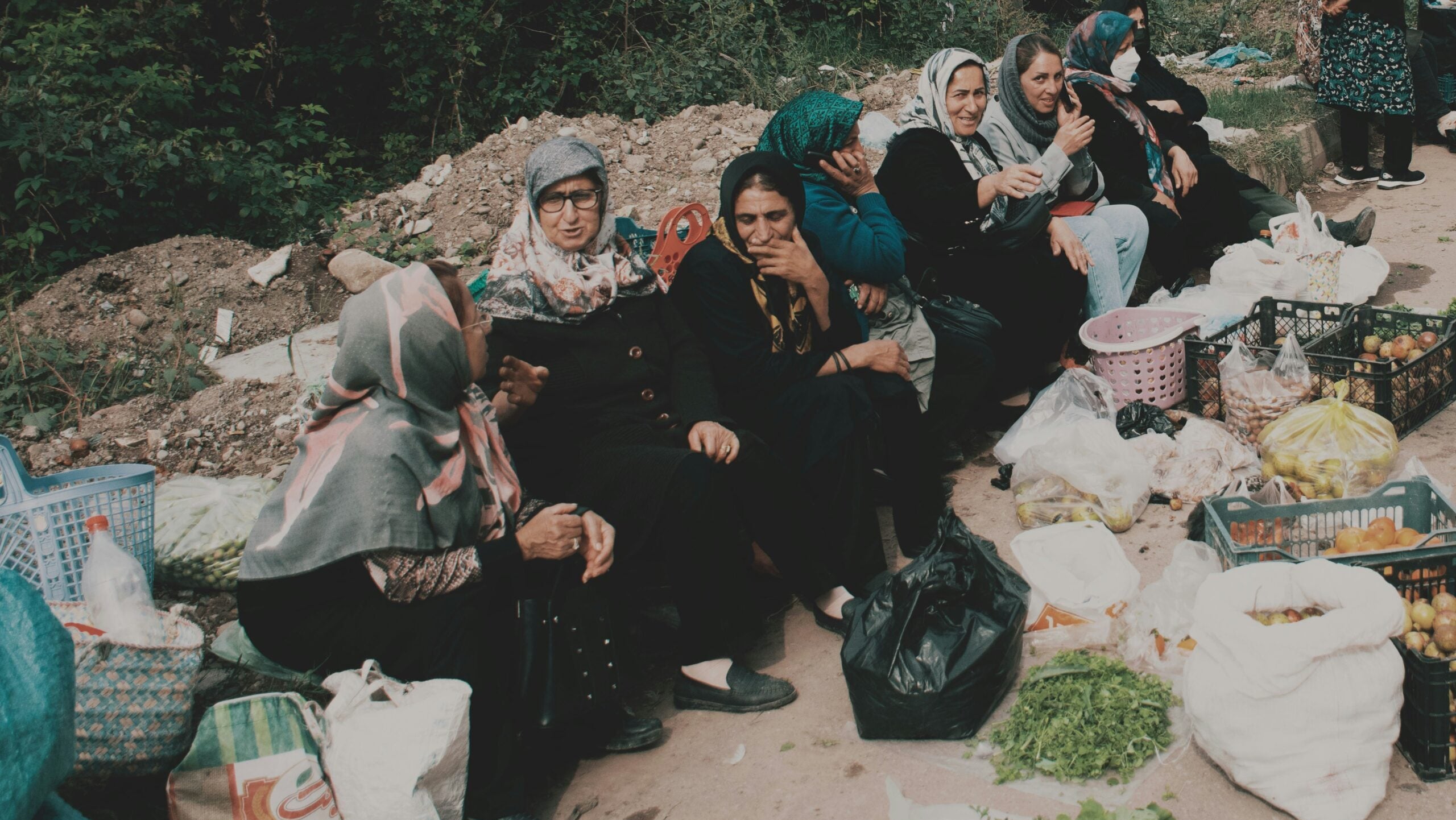
Where I reside in Tucson, Arizona, long a place of refugee resettlement, women of migrant backgrounds lead workshops about how to prepare foods from their home countries. These workshops — often connected to popular, immigrant-owned food businesses as well as organizations like Iskashitaa Refugee Network and Mission Garden — stand in stark contrast to primarily white-led public health nutrition interventions and food justice initiatives that preach healthy eating to racialized communities while doing nothing to address the structural barriers to accessing nutritious foods.
Women Keep and Transmit Food Knowledge
It is through women, and women’s transnational movements and mobilities, that most of us have inherited whatever informal culinary knowledge we have. Many women feel an obligation to pass culinary knowledge from one generation to the next. Nearly every woman I have interviewed over the years learned to cook from a mother, aunt, or grandmother in her home country; those who grew up without a female caregiver often described feeling at a disadvantage, less able to exercise the kind of self-reliance in the kitchen that others took for granted.
I recognize something of this in my own upbringing — raised by a mother juggling work and home alone, with little time for cooking, I grew up fed but without that relationship to food preparation, a gap that may well have inspired my curiosity about food in the first place. It is largely through the women I have collaborated with in this research that I have since learned so much about cooking itself.
To demonstrate these points, students in the course I teach on the anthropology of food, health, and migration, create family food histories that flow similarly to one’s family tree. But rather than emphasizing relationships among human kin, we identify how food knowledge is transmitted and transformed as relatives migrated. While most students are unable to account for these details extending more than a few generations back, they invariably come to appreciate how drastically their families’ relationship to food and land has been transformed in such a short span of time.
Across the globe, women prove to be the knowledge-holders about household and community struggles with resource insecurities.
The purpose of this exercise is to underscore how mobility and migration have always been integral to the human experience; that mobilities transform foods and their meanings over time and that women play a significant role in shaping these histories.
My hope is that by reconnecting (and reckoning) with the past, we may also chart toward more nourishing futures.
An Old Story
The effects of dispossession and displacement on diet and health — as well as for relationships to land, water, and food systems — have been shown to endure for generations.
My two decades of research with migrants and their families has shown that, in many cases, the root of the problem lies in the global-industrial food system.
In brief, the global food system is designed to work for industry and to pay workers very little, causing immense inequality between those who own land and those who work the land.
However, this is an old story.
Anthropologist Sydney Mintz, for example, wrote in 1985 of the ways European and American owners of sugar plantations transformed sugar from a rare foreign luxury to a common necessity that people consume at nearly every meal. Yet sugar depended completely on slave labor — planting, growing, harvesting, and transporting it back to Europe and the U.S. to stifle the poors’ hunger and placate the masses. This historical example shows how food becomes a tool of capitalism and industry.
Policies related to climate change should especially protect women and their ability to be creative and resourceful.
Lack of industry regulation of greenhouse gas emissions is a problem that is not unlike sugar. The concentration of greenhouse gasses in our planet’s atmosphere is a symptom of a structural problem — one in which industrial agriculture gains and people lose in extraordinary ways. While multinational corporations encroach on lands traditionally cultivated for subsistence, small farmers observe declining harvests amidst conditions of perpetual drought, extreme heat, or the sudden onset of floods and storms.
Time and again, women show up to express their concerns, and to care for the groups and coalitions that are organizing and mobilizing in response. Across the globe, women prove to be the knowledge-holders about household and community struggles with resource insecurities.
They will almost certainly be the ones responsible for figuring out how to feed people when climate change changes our food supplies and habits. Therefore, policies related to climate change should especially protect women and their ability to be creative and resourceful.
Already migrant women are innovating ways to survive displacement and climate-induced environmental changes. If we can see them, they can illuminate how humanity will have to adapt to an increasingly drier and warmer world.