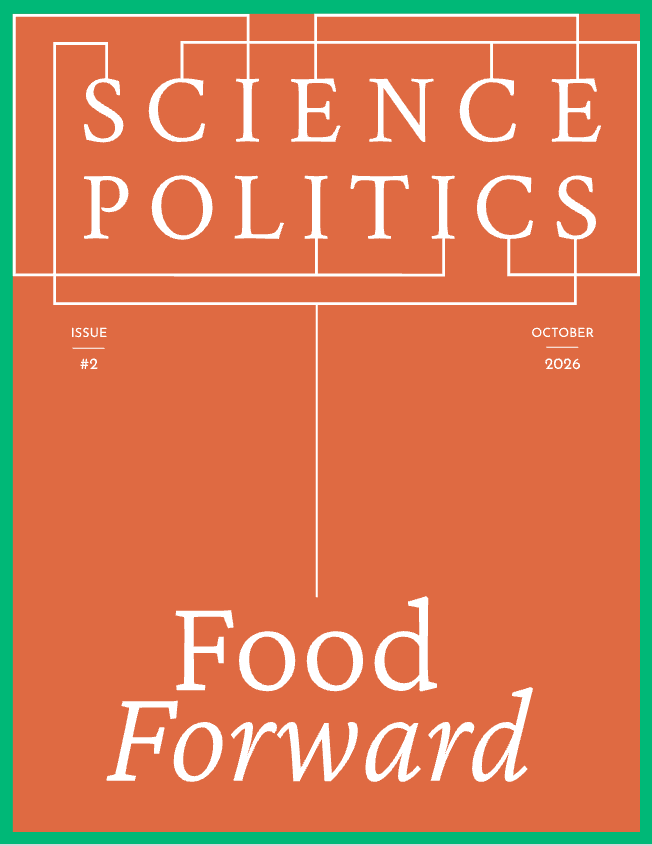
Issue #2: Food Forward
This is the second print issue of Science Politics. Our first considered the future of development after the rupture of the United States international aid agency: what caused it, what happened in its aftermath around the world, and what the path forward is. This issue turns to food. At a moment when culture and politics in the U.S are colliding to produce not only new policies but new ideas about what is good for us, the politics of food felt urgent. We are honored to open the collection with a foreword by Marion Nestle.
The essays are organized in three parts:
First, we ask who decides what we eat, and why. Our contributors examine the cultural assumptions behind the New Food Pyramid and what counts as real food, superfoods that are repackaged as gummies and powders, the double standard applied to scientific evidence, and what the United Kingdom’s approach reveals about real reform.
Second, we consider the systems that feed us, and how decades of policy and trade have shaped what farmers grow. How do global policies shape the way people experience food, and how does that experience reach their families? Our contributors examine agricultural policy in India, the plantation frontier in West Papua, and the legacy of NAFTA in North America.
Finally, we turn to the hands that feed us. We consider how the global food system creates risk and insecurity for so many workers, and we suggest a better way forward.
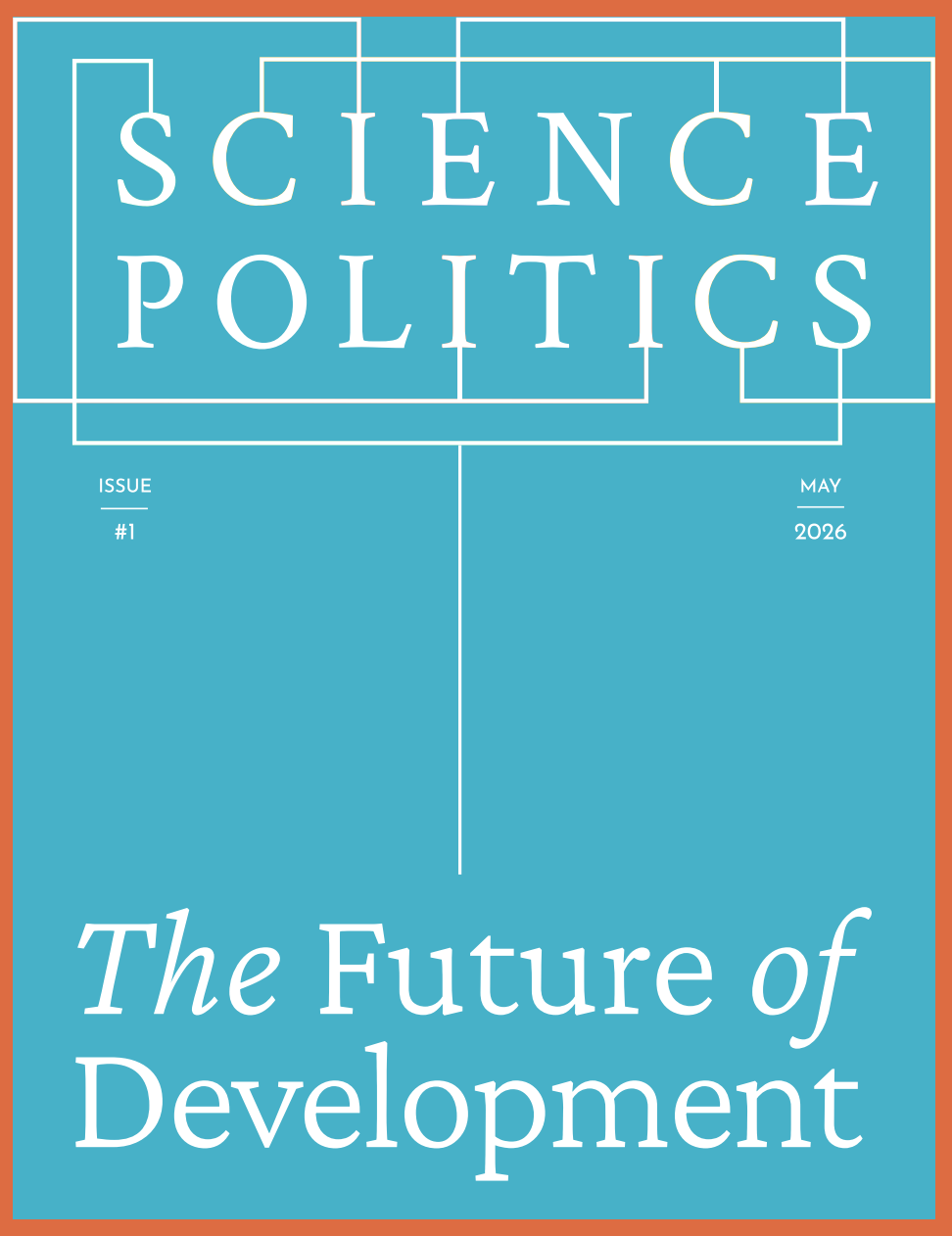
Issue #1: The Future of Development
At the very moment science is shaping our future more profoundly than ever, the structures that sustain and communicate it are under strain. Putting forth new ways of thinking about some of the world’s greatest scientific challenges — from health and food to energy, technology, environment, and space — is an urgent endeavor.
The featured essays are organized around three themes:
Our expert contributors reimagine the future of development: Do we rebuild or reinvent? How do we harness the power of what’s been left behind while focusing on what’s possible for a more prosperous future?
The rupture of US international aid: what caused it, how it happened, and what it looked like.
The consequences of the swift withdrawal of aid around the world: what occurred in the immediate aftermath, and what effects linger on.
Frequently Asked Questions
What are Science Politics Special Issues?
Our Special Issues are a compilation of a series of articles published on our site that fit a theme that is in the zeitgest at the intersection of science and politics.
How much do the Special Issues cost?
Our Special Issues are free to access via Digital Georgetown and are distributed on Georgetown’s Capitol and Hilltop campuses.
When will the next Special Issue be released?
We will plan to release Special Issues on a quarterly basis.
Are print copies available?
Yes! We have a select number of print copies available for pick-up from Georgetown campus. Please write to sciencepolitics@georgetown.edu, if you are interested in receiving a copy. We can mail them for a small donation.