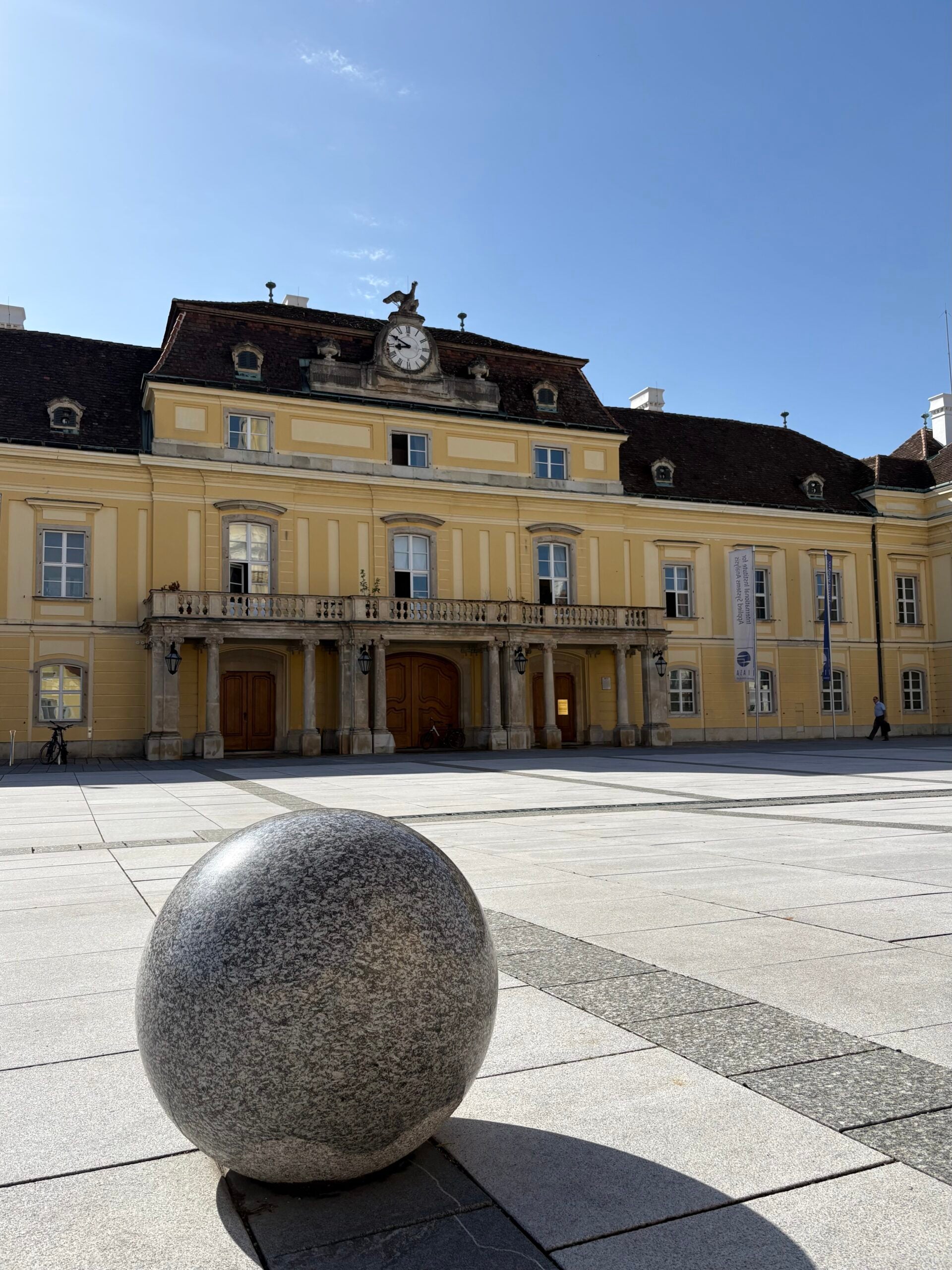
Forty participants sat facing one another in a rectangle inside the historic Schloss Laxenburg. The cohort included mathematicians, statisticians and science policy experts, complexity scientists, theoretical physicists, diplomats, and governance scholars from 19 countries. Behind us, the fortress-like stone walls of the baroque palace, nearly a meter thick, buffered the heat of an Austrian summer.
We were considering the last three digits of our phone numbers. The instructor asked us whether the number was higher or lower than the number of member states in the United Nations. Then, she asked us to estimate whether our phone number was higher or lower than the length of the Nile River.
It was a classic demonstration of cognitive anchoring. The exercise was the first lesson in human decision-making, showing that even the most sophisticated analytical minds are swayed by arbitrary data.
That insight clued me in to how the week at the Raiffa Academy’s inaugural short course on decision-making and negotiations would unfold. I had arrived expecting a week dominated by modeling and the AI arena. Instead, I found myself learning about human judgment.
At a moment when international cooperation is often strained, spending a week working through shared problems and decision frameworks felt remarkable in its own right. Yet we repeatedly found common ground through structured dialogue and analysis.
The real work was using structured decision analysis to navigate uncertainty and stakeholder conflicts in policy decisions. Sessions covered simplifying complex power line electromagnetic field risk debates, and simulating international negotiations using the GAINS model, an integrated assessment framework that helps policymakers identify cost-effective ways to balance economic and environmental tradeoffs.
We weren’t informed of the results of the phone-number anchoring exercise until the end of the week, but my calculated guess on the Nile was embarrassingly short of the mark, skewed entirely by the arbitrary anchor of three digits of my phone number. (The Nile is roughly 4,132 miles.)
How to Make Decisions Amid Competing Interests
As a journalist and senior research scholar in science communication at the International Institute for Applied Systems Analysis, I was something of an outlier. The rest of the cohort comprised a highly selective group of specialists from 19 countries, including the United States, Russia, China, South Africa, Pakistan, Austria, Egypt, and the United Kingdom. Yet, in the classroom, participants wrestled with the same cognitive biases, negotiated the same difficult tradeoffs in small group simulations, and confronted many of the same limits of human judgment.
To understand why our room of global experts puzzled over a simple river estimation is to understand a central crisis of modern governance. We live in an era that worships data. When confronted with complex, systemic disruptions, whether it is regulating Microsoft’s multibillion-dollar partnerships with OpenAI or managing the expiring water allocations of the dying Colorado River Basin (two of our case studies), our instinct is to demand more evidence and data.
We build intricate models. We assume that if we can collect enough data points, the correct policy path will reveal itself. We treat the human world like a machine waiting to be solved.
Data has a ceiling. Evidence matters. But decision makers rarely operate under conditions where evidence is complete. They make choices under tight timelines, often within minutes, amid shifting political realities and incomplete information. The primary bottleneck in a crisis is the challenge of interpreting competing evidence, a group’s interests, and consequences under pressure.
Public institutions must adopt structured dissent mechanisms, such as “premortem” exercises that force teams to imagine why a project will fail, or decision-making processes that intentionally reduce the social cost of speaking up.
When my team dissected the case of the Microsoft-OpenAI alliance, the challenge centered on the interplay of technological, economic, and social systems, and the range of people affected by them.
Similarly, the role-playing case study on the crisis gripping the Colorado River reflected a dense human web of competing interests, institutions, and survival concerns among stakeholders. Left to themselves, deeply divided factions do not look at data objectively, Detlof von Winterfeldt, one of the Raiffa Academy faculty, explained. They talk past one another, using numbers to defend their preexisting biases.
This is where the true utility of decision science can help us at this moment in time. Its value is not in a perfect calculation but in the ability to transition from overwhelming complexity to radical simplicity. Tools like systems mapping and network analysis are designed to rationalize human controversy. They force a diverse room to map out hidden feedback loops, confront their own negotiating styles, and establish a shared foundation of reality before trying to model the future.
Establishing Enduring Trust and Understanding
As I spoke with members of the cohort before the course ended, I learned that conversations outside the classroom matter almost as much as what is learned inside. The value of gathering experts from 19 countries created relationships that are increasingly difficult to build. In a single week, scholars from countries with strained diplomatic relationships shared meals, compared policy challenges, and tested ideas together. The exchanges helped establish trust and understanding that can endure.
A scholar working in the U.S. now has a path for collaborating with a scholar from Pakistan, and they might even meet in Malta as they prepare future work.
A governance scholar from South Africa realized that systems mapping was a way to decode the unquantifiable, non-Western rationality behind his country’s informal taxi industry amid rampant corruption.
What I also observed over the week is a temptation in high-stakes arenas to treat analytical or ethical failures as flaws of individual character, training, or compliance. We assume that if we simply instruct smart people to act rationally and give them clear guidelines, they will reliably make the right choices.
But behavioral science has proven for decades that this assumption is fundamentally wrong. Human behavior is ruthlessly shaped by institutional culture, social dynamics, hierarchy, and situational pressures.
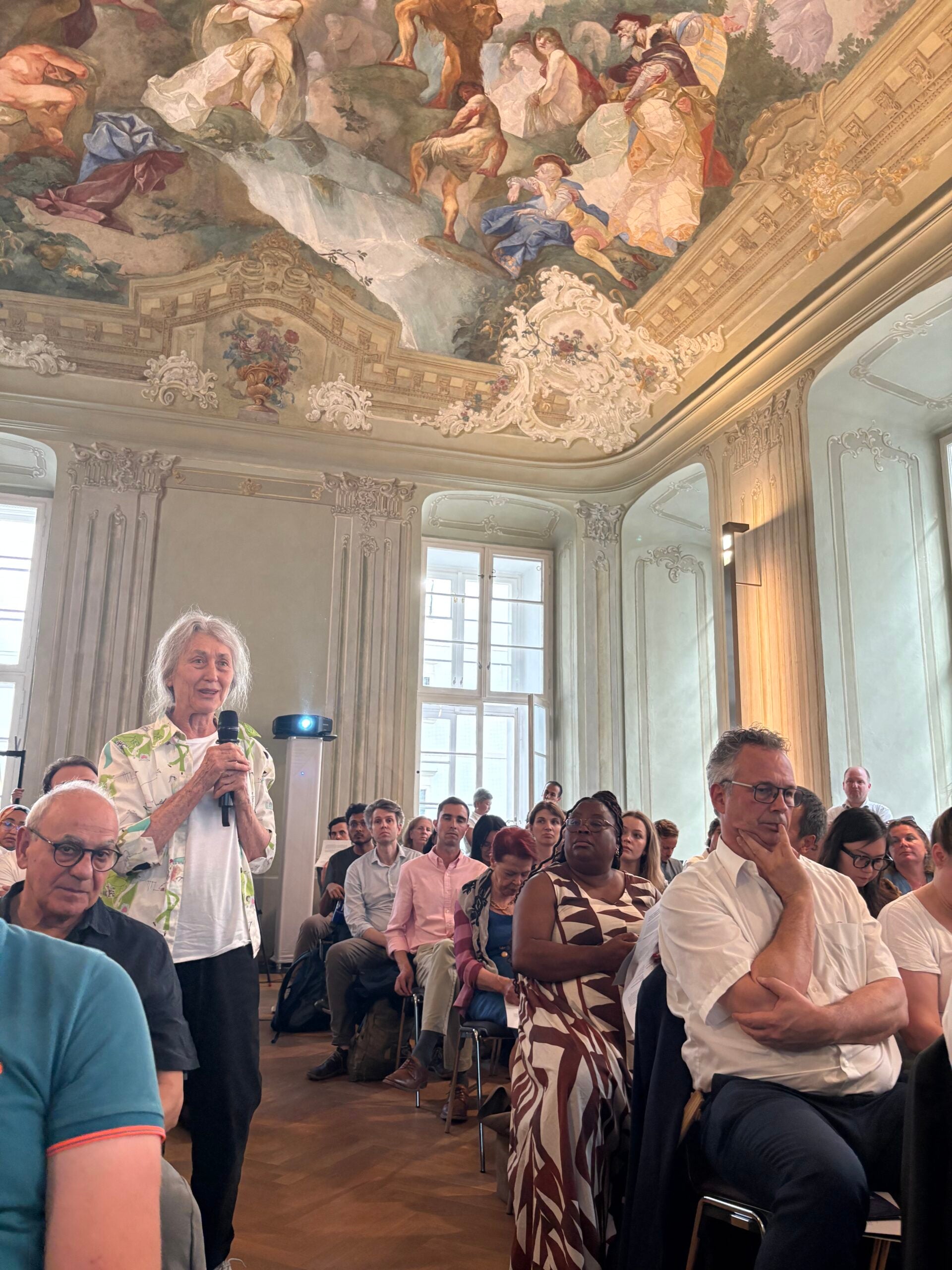
As former U.S. director of national intelligence and president-elect of the Carnegie Endowment for International Peace Avril Haines put it during her Raiffa Lecture in Vienna, when a junior analyst softens a judgment to avoid conflict, or an entire team defers to a flawed group consensus, they are navigating incentives, hierarchies and social pressures that shape how information is interpreted and communicated. In these moments, the barrier to a correct decision is not lack of facts, but the immense personal cost of acting on them, Haines explained.
This systemic vulnerability is precisely how decision science and skills of negotiation can help institutions shift focus from pure data to the design of human environments in which decisions are made. Haines framed this challenge as a necessity for national security and global governance. She said public institutions must adopt structured dissent mechanisms, such as “premortem” exercises that force teams to imagine why a project will fail, or decision-making processes that intentionally reduce the social cost of speaking up.
As data systems and AI become more influential, our capacity to communicate, build trust, and negotiate across differences may become even more important.
Howard Raiffa was one of the founders of the field of decision science and the first director of the International Institute for Applied Systems Analysis, founded during the Cold War in 1972 to bring scientists from Russia, the U.S. and other countries to work together. When he developed tools for structured negotiation, he was building tools that actively lower the social cost of telling the truth.
That insight felt particularly relevant in a room bringing together participants from political systems, cultures, and disciplines that rarely share a common framework for global decisions. Structured processes did not eliminate disagreement. They made disagreements productive.
I experienced that as a communication expert working in a breakout group of mathematicians, theoretical physicists and statisticians mapping a systems analysis problem. I could raise my points because we were using the same tool.
As Haines and other Raiffa Academy faculty put it, even emerging technologies can’t hold up to that shared decision-making. AI should never be used as a substitute for human judgment, diffusing responsibility into an unaccountable machine. Sure, as Haines described, it can serve as a “tireless devil’s advocate,” intentionally stress-testing our consensus and surfacing the perspectives we are inclined to overlook.
When I looked across the room in this former Habsburg imperial lodge just outside Vienna, I saw a microcosm of people from 19 different nationalities and disciplines, from countries often at odds in a deeply divided world. We differed in age, scientific discipline, professional background, and national context.
At a moment when international cooperation is often strained, spending a week working through shared problems and decision frameworks felt remarkable in its own right. Yet we repeatedly found common ground through structured dialogue and analysis.
That experience left me convinced that the future of science and policy lies in the relationship between science and human judgment. As data systems and AI become more influential, our capacity to communicate, build trust, and negotiate across differences may become even more important.