
If you are reading this on a phone screen or computer, deep-sea mining is more relevant to you than you may think. While deep-sea mining — or extracting critical minerals from the seafloor — is not in practice yet, it may be soon.
Just this past year, United States President Donald Trump issued an executive order called Unleashing America’s Offshore Critical Minerals and Resources, which pushes to expedite exploration and extraction of critical minerals from the seafloor within U.S. national waters.
Nineteen other countries have also expressed interest in mining the deep ocean.
One reason interest in deep-sea mining is growing is because it offers a path away from fossil fuels and toward stored energy in batteries. But the false dichotomy of mining versus fossil fuels obscures other options for mitigating the growing energy crisis: reducing, reusing, and recycling the batteries we already have.
What’s So Special About the Seabed?
Battery-powered technologies have long been presented as an answer to fossil fuels, which have caused levels of CO2 in the atmosphere to skyrocket over the last century.
Technologies such as electric vehicles and solar panels that aim to lower levels of CO2 have driven up global demand for battery power 18-fold from 2016 to 2023. The demand for batteries, in turn, has increased the demand for the critical minerals — such as cobalt, nickel, and manganese — that power them.
To satiate this growing demand for critical minerals, stakeholders are looking to the ocean.
If we wish to minimize the harmful effects of deep-sea mining, we must shift the narrative about why it is necessary.
The seafloor is estimated to hold over 94,000 tons of cobalt — six times more than terrestrial reserves. Cobalt and other mineral reserves are usually deep, located more than 4 kilometers (2.5 miles) below the ocean surface. They are also located in the high seas, or areas of the ocean beyond the jurisdiction of any nation, meaning that international cooperation is necessary for its responsible extraction.
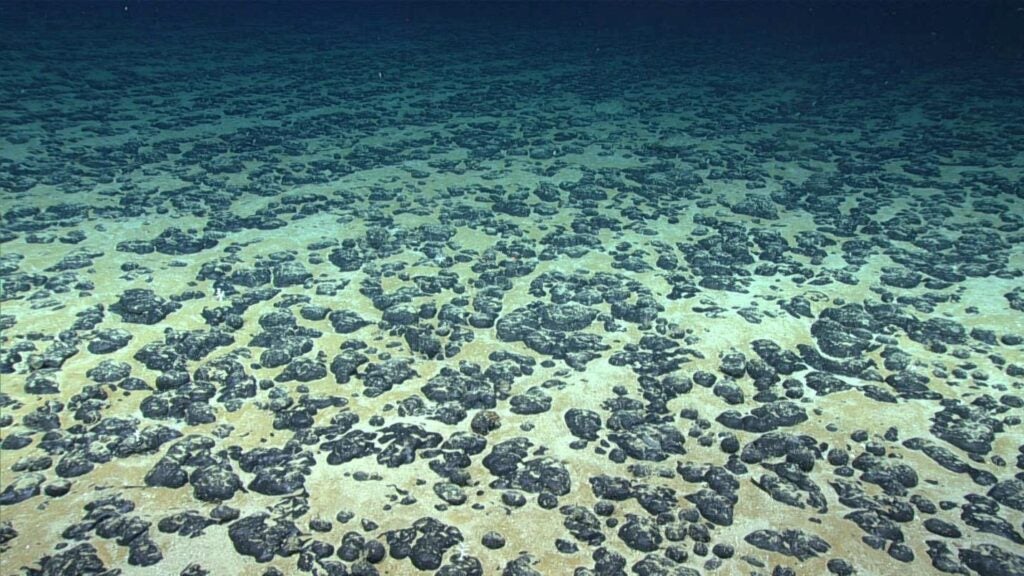
One such reserve is in the Clarion-Clipperton Zone (CCZ), an area in the central Pacific Ocean roughly the size of the continental U.S. that is currently being leased for mining. To extract these reserves, underwater mining vehicles would sweep the seafloor and pick up anything in their path.
The trouble is that there is more in the ocean than just minerals.
Marine scientists worry that, with so much still to learn about the deep ocean, the ecological impacts of commercial-scale deep-sea mining may be underestimated.
One study from 2023 estimates that more than 7,000 unique species inhabit the CCZ, of which just 6% have been discovered. Many of these animals are benthic — meaning they live very near or on the seafloor, often relying on the critical minerals themselves for their habitat. This makes them vulnerable to mining.
Even beyond targeted areas, mining vehicles would kick up sediment plumes that could travel hundreds of miles away, choking other vulnerable seafloor animals like corals, sponges, and mussels.
Noise from mining operations would also disrupt dolphin and whale communication and navigation, including for the endangered blue whale, the largest animal to ever live on Earth.
With a current estimate of 2 million marine species yet to be discovered from the ocean, some of which may hold the key to future biomedical and bioengineering breakthroughs, mining risks destroying this biodiversity before it is ever known.

While battery-powered technologies have often been lauded as a solution to fossil fuel use, critical minerals are, arguably, no less renewable than fossil fuels. Both form over millions of years, with little opportunity for replenishment.
Furthermore, the seabed sequesters more than 900 million metric tons of carbon each year, playing a critical role in carbon drawdown and climate regulation.
In the high seas, where interest in mining is highest, mining operations threaten to release centuries-stored carbon back into the atmosphere, exacerbating the very carbonization they’re aiming to prevent.
Reduce
Of all the battery technologies hitting the market, none are more responsible for the push to mine the deep ocean than electric vehicles (EVs). EVs account for more than 90% of the increased global demand for battery minerals seen over the last decade. This demand is largely driven by the U.S. and China, the two largest consumers of cars globally (boasting 259 million cars and 353 million cars, respectively).
Despite China exceeding the U.S. in the number of cars on the road, the per-capita rate of car ownership in the U.S. (78%) is nearly three times that of China (25%). There are nearly as many cars in America as there are Americans.
And while the U.S. currently ranks 7th in the world for number of cars per capita, the U.S. has more cars than the other top six per-capita countries combined.
If the growing demand for critical minerals is to decline, so, too, must our demand for cars.
Such a perspective is less controversial than one might think. According to a study from 2021, over 60% of Americans supported transportation policies that would make it easier to take mass transit, walk, or bike, rather than making it easier to drive.
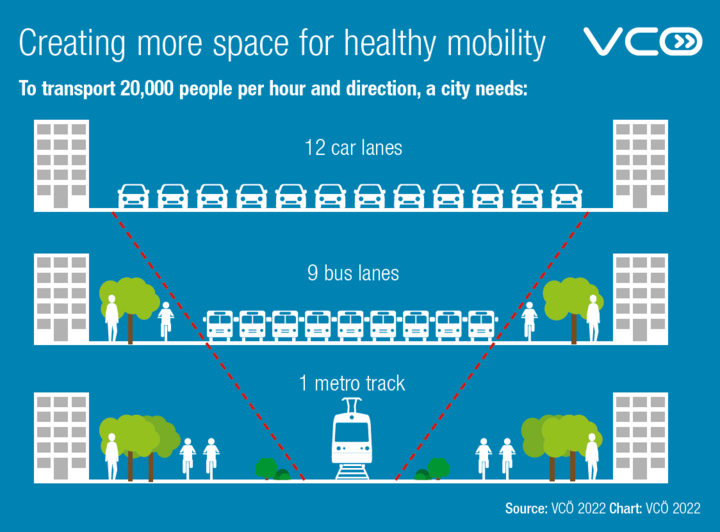
We can advocate for better public transit and more walkable and bikeable cities. If we have access to public transit, we can choose to take it.
Not only are these options more sustainable, they are more efficient. Americans currently spend an average of 63 hours per year stuck in traffic, and long commute times have been directly linked to poorer overall health and mood.
In contrast, while a single lane of cars can transport about 600-1000 people per hour, dedicated rail lines can transport up to 25,000. Likewise, a single freight train can haul the same amount of cargo as 300 cargo trucks.
China, the leading global consumer of cars, nonetheless invests heavily in mass transportation, having one of the largest high-speed rail networks in the world — something the U.S. notoriously lacks.
And while the majority of Americans support expanding access to public transit, 45% still have no access to it.
Furthermore, even if all cars were electric, they would still have detailings made of plastic and drive on tires made of synthetic rubber and roads paved with tar. Raw minerals and finished products would still be transported using oceanic cargo vessels, which burn up to 350 tons of fuel per day.
Thus, cars — even electric ones — and fossil fuels remain inextricably linked in the supply chain.
Reuse
While much of the demand for critical minerals comes from new battery-powered technologies, it also stems from how we treat the technology we already have.
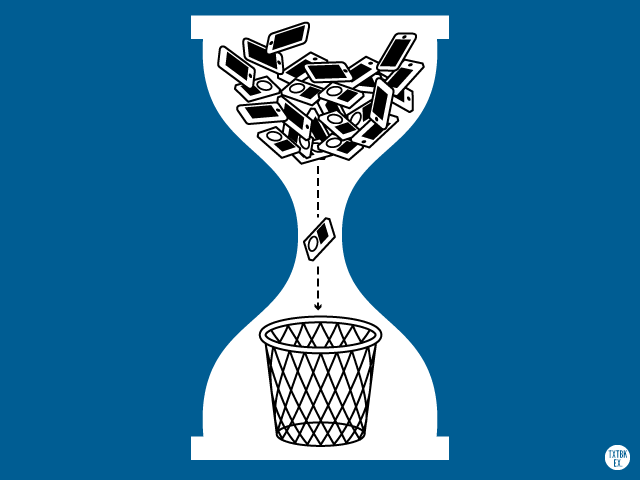
“Planned obsolescence” is the practice of artificially shortening the lifespan of a product to generate demand for new products. In 2017, for example, Apple settled a case where the company was accused of deliberately slowing down older iPhones to coerce consumers into buying newer models.
Similarly, EVs have already been found to depreciate in value faster and their batteries to be declared obsolete more readily than their gas-powered counterparts, with parts and maintenance so expensive that replacement is often cheaper than repair.
To counteract planned obsolescence, “Right to Repair” laws have been introduced across the U.S. and the European Union.
We can take the time to repair and maintain the technology we already have and fight against planned obsolescence in our products and buying habits.
Right to Repair laws respond to the apparent conflict of interest built into many companies’ business models. Often, product repairs are tightly controlled by manufacturers, who may find it more profitable to recommend buying a new model than repairing an old one.
Circumventing such manufacturers can be difficult, since third-party repair shops may not have access to proprietary parts, and seeking out third-party services may void manufacturer warranties.
Right to Repair laws, therefore, aim to free up consumers to choose to repair their products, ensuring that their cars or other items last as long as possible.
Increasing interest in a circular economy — which aims to keep resources in use for as long as possible — has also been growing. Popular brands like Adidas, Patagonia, and IKEA have all successfully introduced product repair and buy-back programs, and have even begun incorporating recycled materials into their products.
Such decisions are not only ethical — they’re good business. In 2022, 66% of U.S. shoppers polled said they actively seek out more eco-friendly brands, with 55% willing to pay more for a more sustainable product.
Recycle
Artificially engineered lifespans are a significant contributor to deep-sea mining, as globally only about 1% of all critical minerals from batteries are recycled. At the same time, current estimates put the U.S. demand for cobalt at 8,000 tons per year.
Without large-scale battery recycling operations in place, this number will only grow.
There are three main steps to battery recycling: (1) collection and sorting, (2) disassembly; and (3) material recovery and regeneration.
For lithium batteries, experts state that safe disassembly is currently the biggest hurdle to large-scale recycling. Simply put: Most batteries are not made to be recycled.
We can advocate for legislation that expands “Right to Repair” laws and makes batteries easier and safer to recycle.
All companies are currently allowed to build their batteries however they like, meaning that each battery is built differently and needs to be processed separately. Recycling is thus time-consuming, dangerous for processors, and cost-ineffective. The result is very little capacity for large-scale, third-party recycling operations.
This can (and must) change.
In a promising turn, CATL, the world’s largest producer of batteries, has begun partnering with recycling companies to improve their capacity for battery recycling. Experts also suggest that technological advances in material recovery and refinement show promising results in reusing rare earth minerals from batteries.
However, policies regarding battery manufacturing standards and recycling quotas must be enacted if batteries are to ever be a sustainable alternative to fossil fuels.
Where Do We Go From Here?
If we wish to minimize the harmful effects of deep-sea mining, we must shift the narrative about why it is necessary.
Deep-sea mining has the potential to cause irreversible damage to delicate deep-sea ecosystems that humans rely on for global oxygen and carbon cycling. Whether through sound pollution, sediment plumes, or the direct destruction of rare, nodule-dwelling animals, mining the deep ocean will likely cause more environmental damage than it will prevent.
There is already precedence for precaution. Forty countries have so far voiced support for a moratorium on deep-sea mining until the science and societal risks can be better assessed.
In addition, to dampen the rising demand for critical minerals we can take the time to repair and maintain the technology we already have and fight against planned obsolescence in our products and buying habits.
We can advocate for legislation that expands “Right to Repair” laws and makes batteries easier and safer to recycle.
We can advocate for better public transit and more walkable and bikeable cities. If we have access to public transit, we can choose to take it.
Finally, we can reframe our thinking and continue to bring up these issues in ideological debates and policy discussions about deep-sea mining.
One day, the ocean may thank us.