
Scientists increasingly want to roll up their sleeves and engage in local policy.
State-level Science and Technology Policy Fellowships are already active in twelve states and planned in five more. Engineers and Scientists Acting Locally has found a broad audience of STEM professionals who wish to apply their training to their local communities’ needs.
Acknowledging the value of civic engagement in a scientific career can go a long way toward promoting scientists to act locally. Yet, investing in local communities often involves tedious zoning hearings, budget debates, and electioneering — activities that may be lower on a STEM professional’s priority list.
As our lives get busier and our careers more intense, taking a moment to consider civic engagement through the work of influential scientists can be helpful.
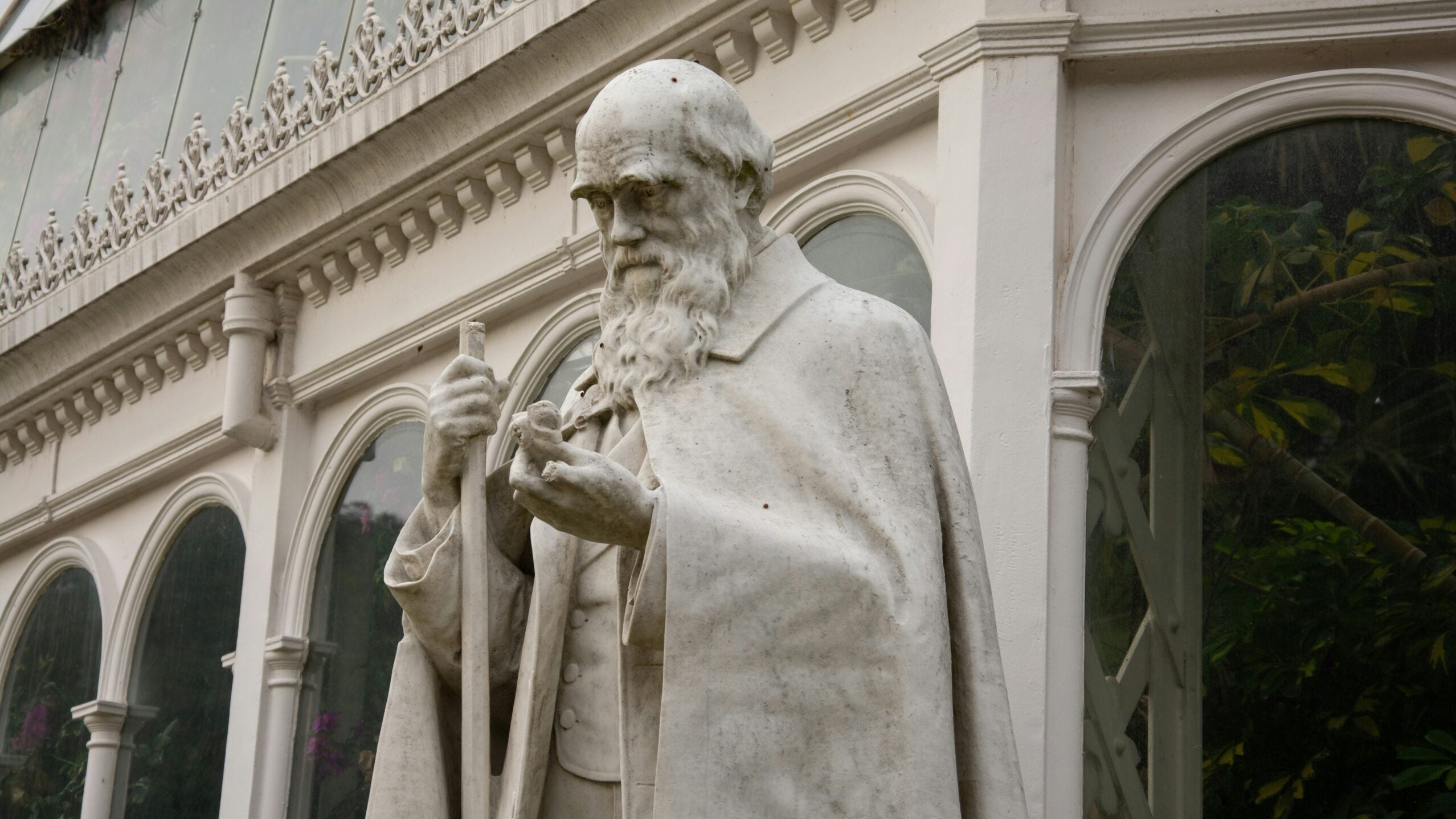
Charles Darwin the County Magistrate
Charles Darwin is arguably one of the most impactful scientists in history. He was a naturalist, biologist, and geologist best known for his contributions to evolutionary theory. Darwin’s most famous book, On the Origin of Species (1859), argued that all beings stem from a common ancestor. This book revolutionized our understanding of life.
Darwin’s many biographers have written about his monastic isolation at Down House in Kent, in southeast England. He rarely ventured to the museums and universities of his day because of a chronic illness that led to frequent fits of vomiting.
However, Darwin did venture into his local community. He spent considerable time on local civic engagement as a voluntary county magistrate.
Following the example of Charles Darwin, scientists today should consider stepping into the local public sphere.
Darwin settled dozens of petty session disputes for his home county. His board of magistrates heard trials on stolen turnips, hazelnuts, apples, plums and hay. They decided the punishment for poachers, participants in minor fisticuffs, and perpetrators of animal cruelty.
Darwin’s contributions to the community are barely a footnote in the many biographies of his life. Still, it took up a considerable amount of his valuable time during the most productive phase of his career.
Some biographers have speculated that this engagement was to compensate for Darwin’s offenses to the church. However, a recent analysis by John van Wyhe and Christine Chua in Charles Darwin: Justice of the Peace argues convincingly that his engagement came from a sense of obligation and commitment to the community.
While Darwin was an absolute workaholic, with a prodigious output of high-impact research, he also managed to find time to engage on the local level.
How We Can Be Like Darwin
Organizations such as the National Institutes of Science, 314 Action, and the American Association for the Advancement of Science have drawn many scientists out of their labs and into the national public sphere.
Policy-minded researchers should also consider the mission of Engineers and Scientists Acting Locally (ESAL). ESAL provides training through its recently developed Local Civic Engagement Toolkit. This toolkit outlines the many on-ramps that scientists and engineers can take to engage in local civic action, and its many rewards.
ESAL helped inspire me to run for and join our local school board. I am a biologist specializing in the ecology, evolution, and development of amphibians such as frogs and salamanders.
For researchers concerned about school management and protecting schools from potential abuses, local school board governance is a critical front. Anti-science movements reveal a need for constant vigilance.
While I am a biology professor by day, I have always been concerned about the management of our schools and in protecting them from potential abuses by boards that may be more likely to dismiss science.
Our district is only 40 minutes from Dover, Pennsylvania where, 22 years ago, board members pushed to get intelligent design onto the curriculum. Fortunately, they lost in court. Ever since the Dover trial, I’ve been inspired to run and promote other scientists to commit to joining their local school boards.
The experience of campaigning and eventually working with a bipartisan board of committed neighbors has been exceptionally rewarding.
Following the example of Charles Darwin, scientists today should consider stepping into the local public sphere. For researchers concerned about school management and protecting schools from potential abuses, local school board governance is a critical front. Anti-science movements reveal a need for constant vigilance.
Campaigning and working with a bipartisan board has changed my perspective on partisan politics. Sitting with a diverse group of community members to positively impact our schools has revealed how much we have in common, despite the headlines. Scaling this type of engagement could make a measurable difference across the country.