As the Spring 2026 academic term came to a close, university-wide committees on the future of AI in higher education submitted their final reports; AI debates in faculty meetings crescendoed and fell; and students booed Big Tech commencement speakers who painted the graduates’ adulthoods as inevitably dominated by AI.
This summer, there remains plenty to sort through — all the AI hype, potential, politics, and power.
We think a lot about AI in my Communication, Culture & Technology department at Georgetown University, a Jesuit-founded community built around Ignatian practices for making decisions toward a good life.
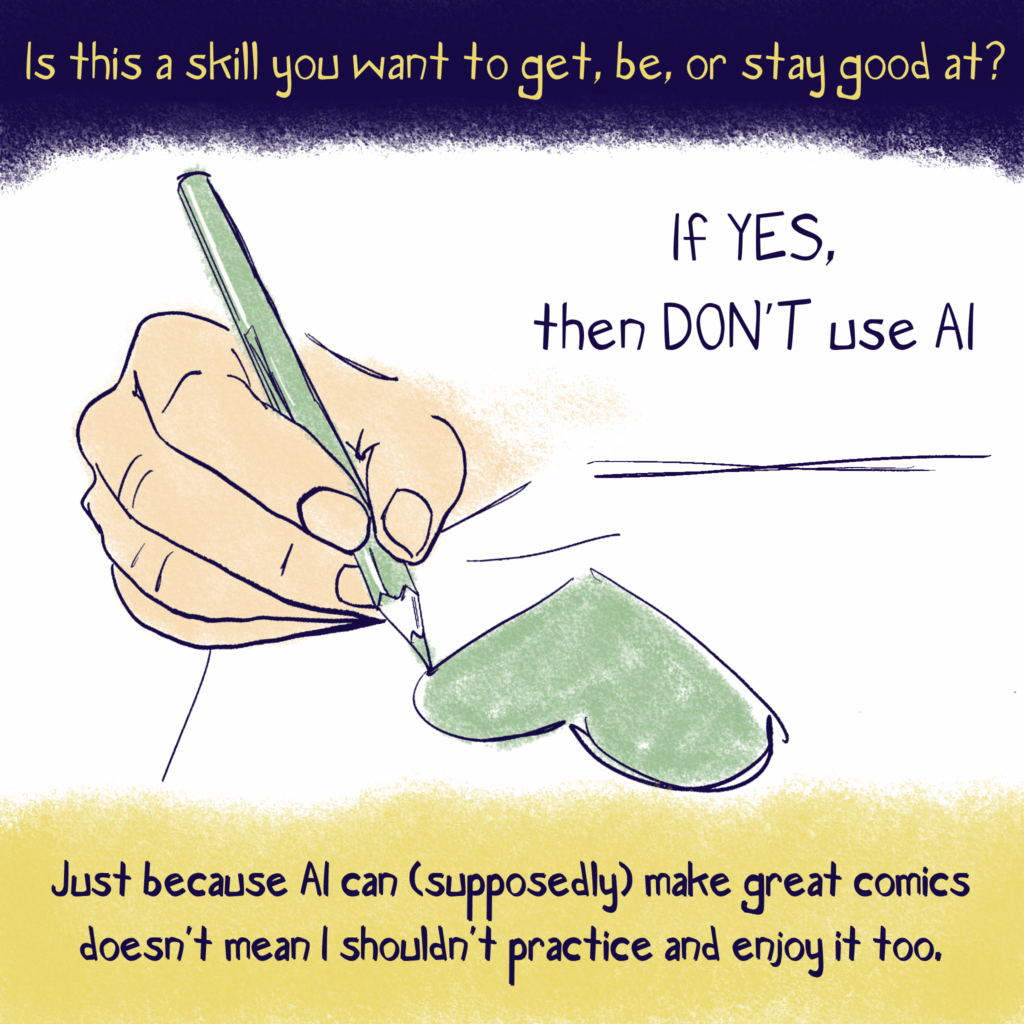
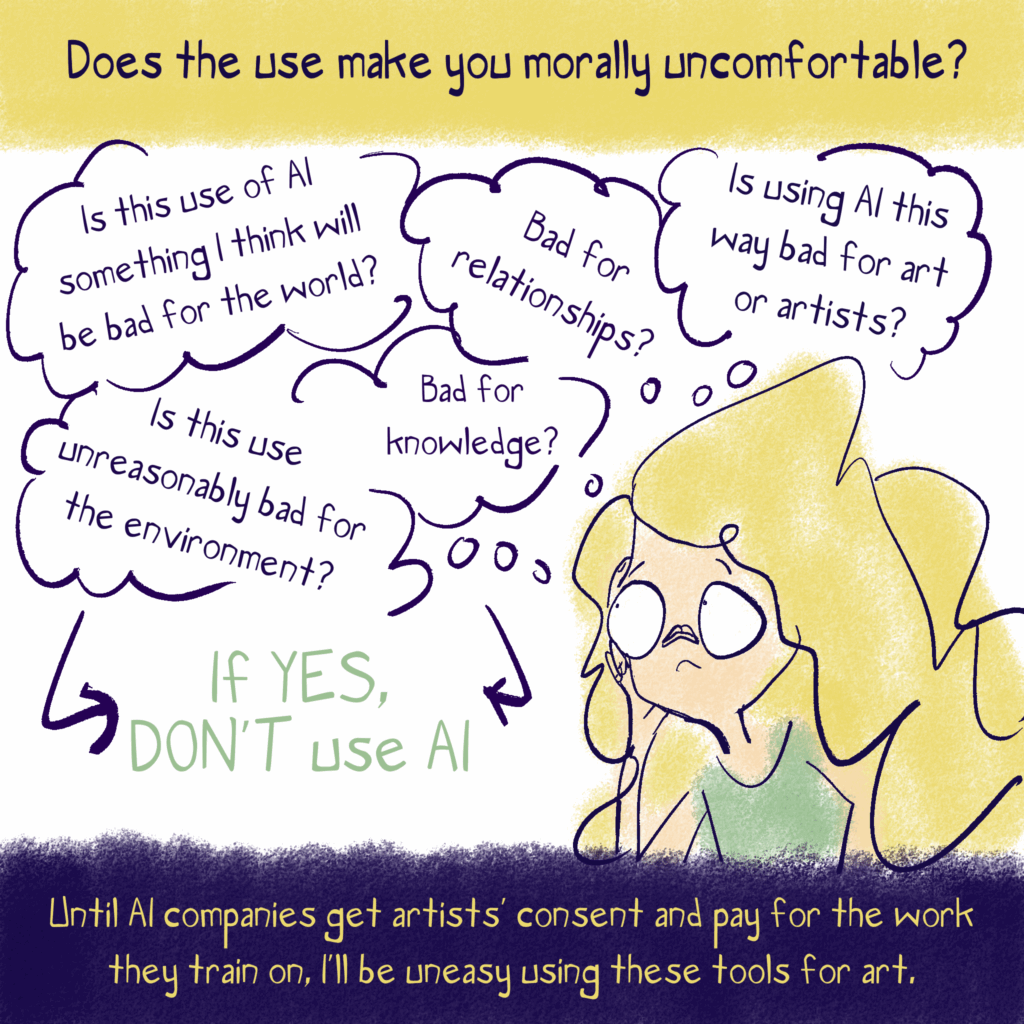
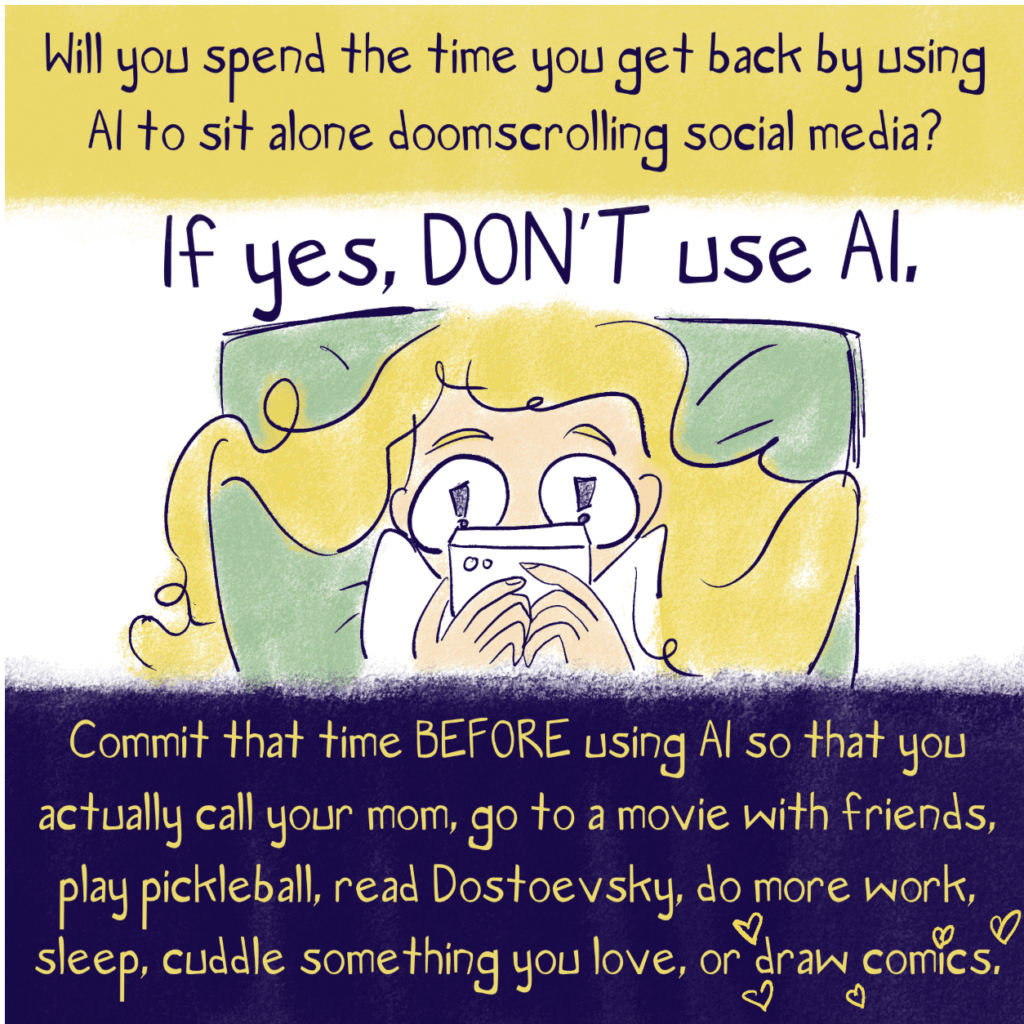
After thinking, praying, reading, researching, and talking about whether to use AI, here are the three questions I ask myself — and instruct my students to ask themselves.
Meg Leta Jones is a tech policy professor and cartoonist in the Communication, Culture & Technology (CCT) program at Georgetown University where she researches rules and technological change. She’s also a founding faculty member of the Center for Digital Ethics and a faculty affiliate with the Institute for Technology Law & Policy at Georgetown Law Center. Ctrl+Z: The Right to be Forgotten, Meg’s first book, is about the social, legal, and technical issues surrounding digital oblivion. Her second book project, The Character of Consent: The History of Cookies and Future of Technology Policy, tells the transatlantic history of digital consent through the lens of a familiar technical object. Her current research and cartoons revolve around family technology policy and involve a number of collaborative projects with incredible Georgetown colleagues and students.
Rethinking measurement priorities requires centering the people who actually produce and use health data — health workers, facility teams, and district managers, not philanthropists or donor countries.