
Most people aren’t surprised when they hear about illegal fishing. They likely think of it as an environmental and fisheries management issue associated with overfishing, marine biodiversity loss, and weak regulatory enforcement.
Yet across the Indo-Pacific, fisheries crime has increasingly evolved into a broader human rights and transnational security crisis.
Fisheries crime involves forced labor, human trafficking, debt bondage, and violence against vulnerable maritime workers. Fishing vessels operating within illegal, unreported, and unregulated fisheries frequently function not only as tools for resource exploitation, but also as concealed spaces where severe human rights abuses occur beyond effective state oversight.
As a result, the ocean has become an operational environment where environmental crime, organized crime, and systemic human rights violations increasingly converge. This growing convergence can be described as “blue crime”: the expanding nexus between fisheries crime and wider transnational criminal networks operating at sea.
The concept of blue crime is important because it challenges the traditional assumption that fisheries offenses are merely technical or administrative violations. Instead, they can be manifestations of deeper governance failures affecting both human security and maritime stability.
How Fisheries Exploit Labor
According to INTERPOL, criminal organizations increasingly exploit fishing industries because maritime operations provide opportunities for them to be anonymous, mobile, and largely invisible to law enforcement. Law enforcement is especially limited in regions characterized by fragmented governance and weak institutional coordination.
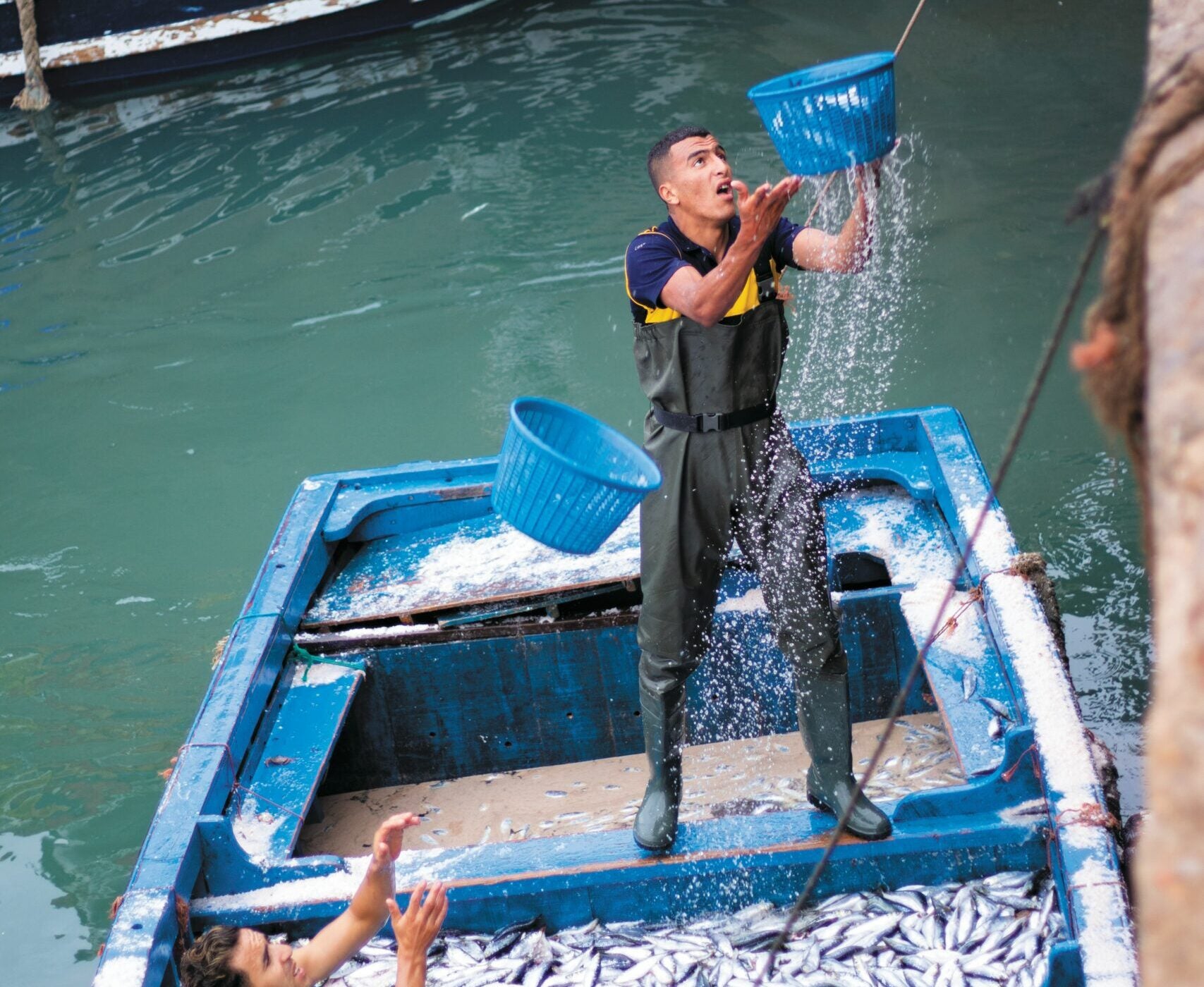
In practice, fisheries crime often operates by exploiting migrant labor workers aboard fishing vessels. The International Labour Organization and international human rights organizations have documented numerous cases involving physical violence, withholding of wages, confiscation of identity documents, excessive working hours, and even deaths aboard distant-water fishing fleets.
Severe labor abuses occurring aboard fishing vessels are frequently overlooked or treated separately from fisheries enforcement itself.
Many vessels operate for months in remote maritime areas without entering ports. Thus, workers are frequently isolated from legal protection, communication access, and external monitoring mechanisms. In these circumstances, fishing vessels effectively become floating zones of legal invisibility where labor exploitation can continue with minimal accountability.
The Indo-Pacific region is particularly vulnerable to the intersection between fisheries crime and human rights abuses. This is largely because maritime corridors such as the Strait of Malacca and the South China Sea are both centers of global trade and fisheries production as well as routes frequently used by trafficking networks and exploitative labor intermediaries.
Indonesia, as the world’s largest archipelagic state, faces significant challenges monitoring vast maritime territories while simultaneously protecting fisheries workers, combating illegal fishing operations, and addressing transnational criminal activities at sea.
We Need a Human Rights Framework for the Sea
Blue crime exposes important weaknesses within existing international governance frameworks.
Fisheries governance systems traditionally focus on sustaining resources, documenting catches, and making sure licenses are in compliance. On the other hand, human rights protections at sea remain fragmented across labor law, migration law, maritime law, and criminal enforcement mechanisms.
As a result, severe labor abuses occurring aboard fishing vessels are frequently overlooked or treated separately from fisheries enforcement itself.
According to the United Nations Office on Drugs and Crime, this fragmentation creates governance gaps that allow criminal actors to exploit both marine resources and vulnerable human populations simultaneously.
Blue crime is not merely a maritime security issue. Blue crime is also a reflection of structural inequalities within global economic systems and ocean governance arrangements.
Technological developments have improved states’ ability to detect suspicious maritime activities and identify illegal fishing patterns. Some good examples include satellite surveillance, artificial intelligence, and vessel tracking systems. However, technology alone cannot resolve the human rights dimensions of blue crime.
Many abuses occur beyond the visibility of digital monitoring systems. While satellite data may identify suspicious vessel movements or “dark vessels” operating without tracking systems, it cannot directly detect forced labor, violence, or coercion aboard fishing vessels. Effective responses therefore require stronger integration between maritime surveillance, labor inspections, intelligence sharing mechanisms, and human rights protection frameworks.
Another important dimension of blue crime concerns the relationship between fisheries exploitation and broader geopolitical inequalities affecting the Global South.
Workers aboard exploitative fishing operations frequently originate from economically vulnerable communities in Southeast Asia. In these contexts, limited employment opportunities and weak legal protections may increase susceptibility to trafficking and labor exploitation. At the same time, global seafood supply chains often obscure the human rights costs embedded within commercially valuable fisheries products consumed in international markets.
Blue crime is not merely a maritime security issue. Blue crime is also a reflection of structural inequalities within global economic systems and ocean governance arrangements.
The persistence of blue crime demonstrates why human rights considerations must become central to future maritime governance frameworks.
Illegal fishing can no longer be treated solely as a conservation problem. Without stronger institutional coordination and political commitment, the ocean risks becoming an increasingly dangerous place for people who work, live, and travel at sea.