
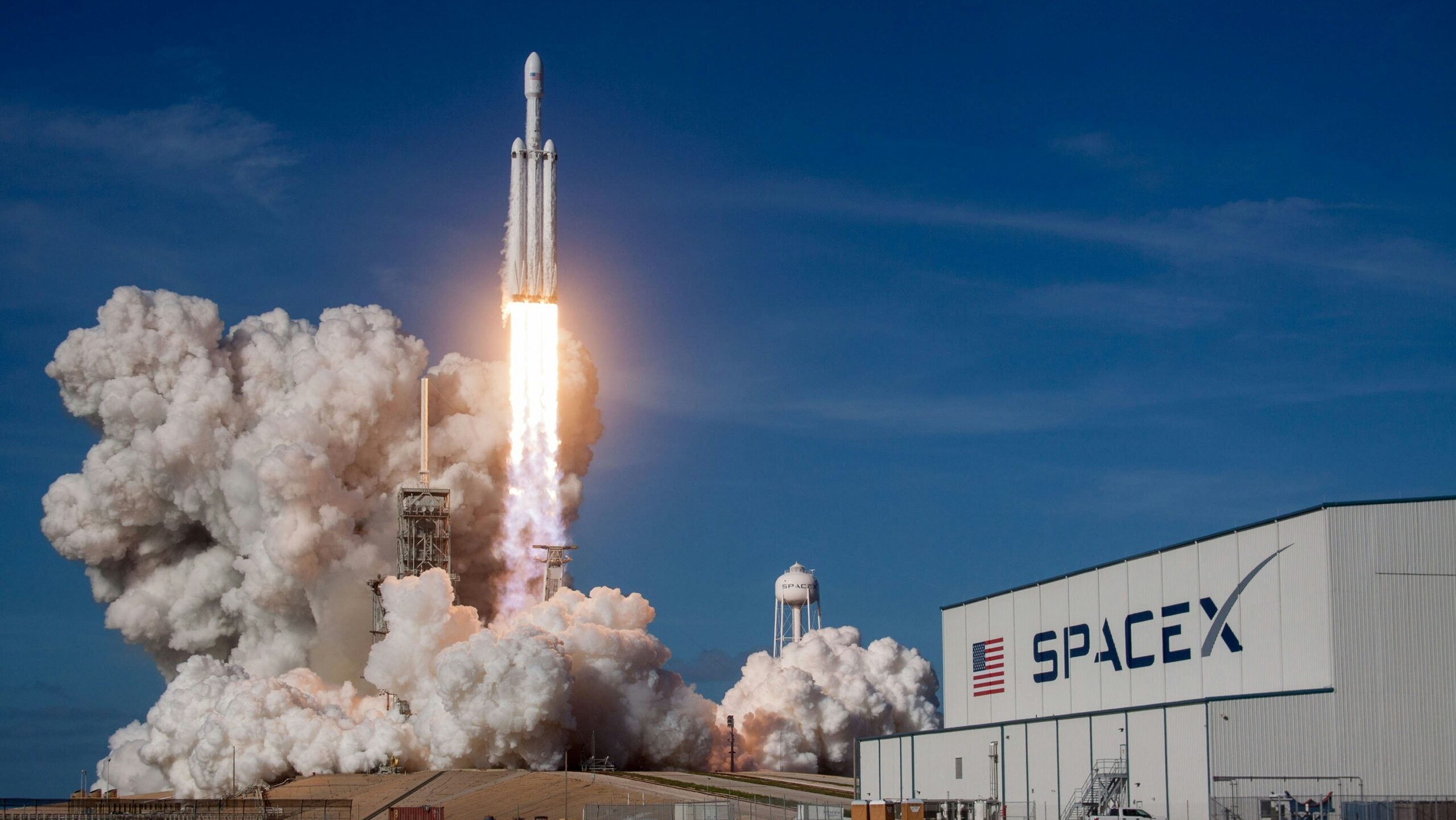
The commercial space sector has transformed over the last three decades. SpaceX dominates the global launch market, Starlink is reshaping orbital congestion patterns, and commercial firms increasingly hold leverage over NASA mission planning. As a result of all the changes, it’s tempting to conclude that the private sector now holds the pen on space norms.
But it doesn’t — and understanding why matters for what comes next.
National governments retain control over international space norms for three key reasons. First, nations remain the dominant forces within international bodies. Second, space technologies and priorities have been shaped by rivalries between states, such as the space race. Finally, domestic regulatory regimes constrain the power and influence decisions of commercial space companies.
So the real question isn’t whether states still lead. It’s whether they will evolve the architectures and systems governing space to harness the innovation of the commercial space sector.
Three Reasons States Still Hold Power Over Corporations in Space
First, the building blocks of international bodies like the United Nations are states, not private actors. This holds true for the U.N.’s technical space bodies, like the U.N. Committee on the Peaceful Uses of Outer Space (COPUOS), the U.N. Office for Outer Space Affairs, and the International Telecommunication Union.
The foundational treaties governing outer space, such as the 1967 Outer Space Treaty and the 1972 Liability Convention, were negotiated among states and assigned legal responsibility exclusively to states. This legal primacy means that states are responsible even for the actions of commercial actors.
If a state says “stop,” the rockets stay grounded.
For instance, a SpaceX launch gone wrong is legally a problem for the United States, not SpaceX. Even as Elon Musk gains political power, states cannot outsource accountability to the private sector.
Space companies may contribute to the work of these technical space bodies, but their involvement is usually informal and limited to information. The real decision-makers are state diplomats, who negotiate resolutions, decide language and codify best practices.
Second, great-power competition among states determines which space issues receive priority — and which technologies space companies should develop to secure government contracts.
For example, consider the rivalry between the U.S. and the Soviet Union, which set the pace of the original space race. Today, competition between the U.S. and China is determining the goalposts of the next one: lunar mining.
In 2020, the U.S. launched the Artemis Accords, reaffirming the principles of the 1967 Outer Space Treaty and laying out new principles for lunar activities. One activity is allowing the extraction of lunar resources.
In response, in March 2021 China and Russia jointly launched the International Lunar Research Station initiative to establish a research station for long-term robotic exploration and eventual human presence. It currently has 17 state signatories compared to the Artemis Accords’ 67 signatories. It also has the support of more than 50 international research institutions, some of which are state-backed.
Governments that ignore private-sector technical abilities risk writing norms that are legally authoritative but practically unenforceable.
Companies are vital to developing the technology that will carry out lunar missions. But governments and their space agencies recruit state signatories — not individual space companies — to both initiatives, indicating the enduring preeminence of state power.
Third, nations determine what space companies can and cannot do. Within the industry, companies like SpaceX and Blue Origin have an outsized impact on setting the pace in developing innovative technologies such as robotic arms, reusable rockets and smaller satellites.
At the end of the day, however, these companies conform to regulations set by nation-states.
The Federal Aviation Administration (FAA) has the final say on licensing space launches taking place on U.S. soil. The FAA has grounded or delayed planned SpaceX launches to conduct environmental reviews. Similarly, the Department of Commerce oversees sustainable business practices for space companies and develops technical standards in collaboration with other states and international bodies.
These domestic standards do not exist in isolation. The U.S. makes space policies both directly with other nations as well as collectively in multilateral forums. Often, what begins as a legal decision in the U.S. may expand to influence an international norm.
If a state says “stop,” the rockets stay grounded.
Exploring New Horizons for State-Commercial Collaboration
Although states hold power over space-related corporations, we need a more formally integrated diplomatic architecture that channels commercial expertise directly into international negotiations and regulatory decision-making. Integrating commercial space actors does not dilute state authority; rather, it enhances states’ power by anticipating private sector challenges and concerns and incorporating them from the outset, leading to stronger, more actionable guidance.
The same authority that can ground a rocket can, if wielded wisely, ensure that the rules governing space are worthy of the ambitions that put us there.
For example, the International Atomic Energy Agency (IAEA) is the UN’s technical advisory body for nuclear science and technology. Although composed of states, technical experts are nominated by governments to sit on safety committees, helping inform global standards. Decision-making authority remains firmly with states, but this hybrid model allows industry knowledge to shape the international regulatory environment.
A version of this could work for space. The UN’s COPUOS already grants observer status to non-governmental organizations, and the U.S. has recruited commercial space advisers for some delegations. A more systematic approach to appointing technical experts to government delegations across all governments could help bring in technical knowledge, supplemented by the addition of a select few commercial space actors as observers at COPUOS meetings to contribute to discussions through papers and technical presentations.
Governments that ignore private-sector technical abilities risk writing norms that are legally authoritative but practically unenforceable. The same authority that can ground a rocket can, if wielded wisely, ensure that the rules governing space are worthy of the ambitions that put us there.