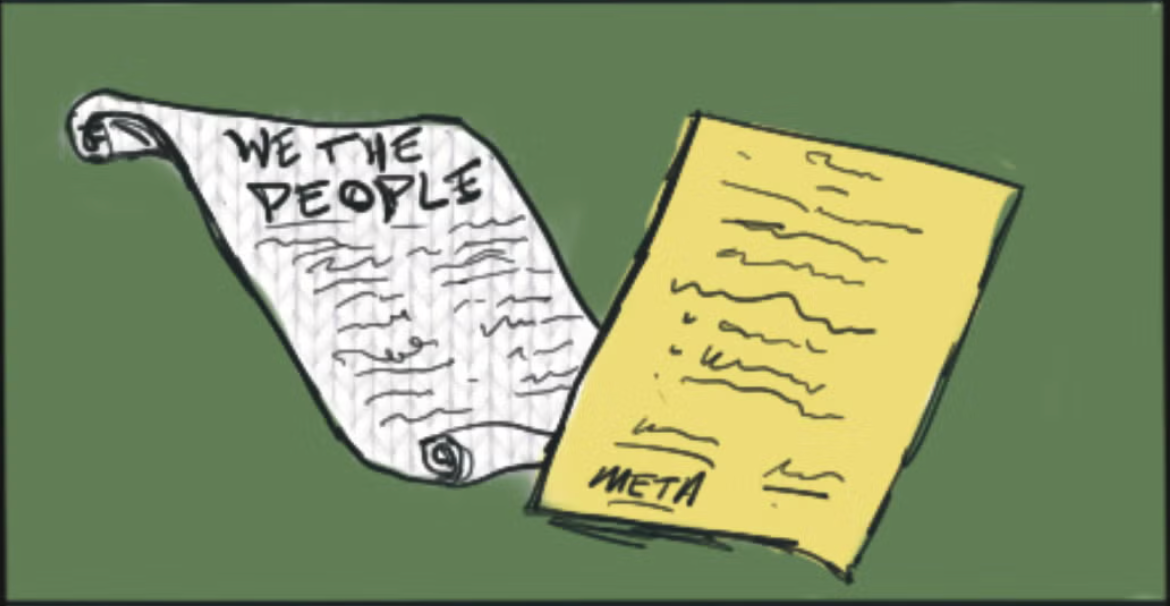

At a public meeting in April 2026, the Tennessee Valley Authority (TVA) distributed an informational booklet stating that coal ash, a by product of burning coal, is not dangerous. Noting that the substance contains numerous toxic chemicals, some experts called the claim a blatant misrepresentation of the facts.
This kind of clash is familiar. Companies that emit pollution tend to claim that it does no harm. Researchers who study its impacts and communities exposed to the pollution offer evidence that it does affect people’s health.
Apparent debates over facts are often symptoms of deeper disagreements over moral priorities.
With opposing groups each claiming that facts are on their side, a crucial point gets lost. Facts about coal ash, like other environmental and health hazards, take their meaning from the moral commitments that surround them. Information linking coal ash to illness will only shape the TVA’s decisions if protecting human health is among the corporation’s priorities.
Apparent debates over facts are often symptoms of deeper disagreements over moral priorities. How important is human health relative to other social goals? Who deserves to see their health protected? Who should be accountable to whom, and for what?
Different factions of our society are currently answering fundamental questions like these in divergent ways. Repairing our social fabric means getting on the same page about what moral standards we want to uphold, how we prioritize them when they come into conflict, who we will stick up for when they are wronged, and what we owe each other when we do wrong.
As I show in my recent book, “The Science of Repair,” fighting for a correct understanding of facts can’t help us remake a strong social fabric. Doing science can.
Sampling Smelly Air Improves the Social Fabric
In 1995, a new technology known as ‘the bucket‘ enabled people living near oil refineries and petrochemical plants to investigate levels of toxic chemicals in the air. Up until that point, when chemical odors pervaded their neighborhoods, residents had to count on local environmental agencies, health departments and industrial facilities for information about what they were breathing. Often the information they received contradicted their own senses: They were told that there had been no unusual chemical releases or, if there were, that they had not affected air quality in residential neighborhoods.
To make their work reparative, researchers can follow the example of bucket developers and deliberately align their questions and methods with the moral priorities they wish to advance.
Buckets let residents collect smelly air in a non-reactive plastic bag and send it to a laboratory for analysis. With the homemade, low-cost devices at the ready, people living near industrial facilities could decide when a surge of toxic air pollution was worth knowing more about. They could learn what chemicals were present, at what levels, in their immediate neighborhood. They could use their data to call into question industry and government representatives’ assurances that pollution posed no threat.
Over the past 30 years, communities all over the world have used buckets in their campaigns for cleaner air. But you don’t need to know what they found in their air to see how expanding people’s ability to participate in the assessment of air quality strengthened the social fabric.
First, as I argue in “The Science of Repair,” using buckets raised the bar on moral standards: By taking samples when and where they experienced strong chemical odors, bucket users advanced the norm that communities should be protected from degradation of residential air quality, even when pollution episodes can’t be considered catastrophic.
Second, communities’ use of buckets strengthened accountability. Before ordinary residents had the capacity to take air quality measurements, there was little they could do to challenge the assertions that government agencies and industrial facilities made about air quality. Faced with independent sampling results, companies and regulators had to explain where their information came from and why it differed from residents’ experience and evidence.
The case of bucket sampling refutes the idea that scientific investigations have to be morally neutral to be valid.
Finally, participating in air quality monitoring bolstered the status of people who tend to be marginalized in debates about moral priorities. People’s firsthand accounts of being harmed by pollution are frequently discredited, dismissed, or denied. The people harmed are treated as though they lack the capacity to speak reliably about their own experience and thus don’t have anything to offer deliberations about how to protect everyone from harm. Taking measurements with buckets allowed individuals living on the front lines of pollution to assert their status as knowers and full participants in moral reasoning.
Science Always Has Moral Commitments
The reparative consequences of buckets were no accident. The bucket’s original developers set out to change the perception of midsized petrochemical releases, so that they would be seen as harmful, not ordinary. Bucket developers also wanted to give affected communities a way to hold facilities and regulators accountable for their claims about air quality. And they believed that refinery neighbors had important insight into refinery pollution and deserved to be listened to.
These overt moral commitments do not prevent bucket users from doing rigorous science.
Wanting to ensure that they produced high-quality information, bucket developers validated the device by taking samples side-by-side with more established technology. They developed a quality assurance plan and had it approved by the U.S. Environmental Protection Agency. They made quality control measures part of standard bucket sampling practice.
The case of bucket sampling refutes the idea that scientific investigations have to be morally neutral to be valid. It also illustrates why controversies can’t be resolved just by getting the facts straight.
Science can contribute to repairing our social fabric if we focus on the ways that the activity of seeking knowledge can be part of the process of making social fabric more robust.
Buckets were designed to establish the fact that residential air quality was impacted by flaring and accidental releases from petrochemical plants. That was a purposeful departure from air toxics monitoring programs set up by industry and environmental agencies, which were typically designed to produce facts about what levels of pollution were present on average over weeks or months.
These two different approaches to collecting information about air quality reflect contrasting judgments about what matters. Regulatory scientists’ standard practices are no less reflective of moral commitments than bucket monitoring.
Each approach produces facts relevant in the context of its underlying judgments, but neither set of facts can establish that a certain set of priorities is correct.
Showing that average air toxin levels are low in a refinery-adjacent community, for example, cannot invalidate the claim that periodic releases are deleterious to residents’ health. Nor can evidence of occasional spikes in pollution disprove a logic that says we should base judgments about the livability of a community on ordinary conditions, not extraordinary ones.
How Science Can Make Social Repair its Goal
Science can contribute to repairing our social fabric if we focus on the ways that the activity of seeking knowledge can be part of the process of making social fabric more robust.
To make their work reparative, researchers can follow the example of bucket developers and deliberately align their questions and methods with the moral priorities they wish to advance.
Research that is upfront about its moral priorities still aims to produce facts. But by modeling inclusive, accountable relations, it can strengthen the social fabric even when its results are inconclusive.
As a first step, researchers could scrutinize the value judgments inherent in the standard methods of their disciplines: How are certainty and precaution balanced in statistical analysis, for example? What kinds of evidence are considered meaningful, what kinds are discounted, and how does that shape the issues that the research can illuminate?
Having identified the judgments already embedded in their processes of investigation, researchers can make those judgments more thoughtfully and explicitly, empowered by the awareness that no study is ever value-free.
Being upfront about the moral priorities that animate a research project stands to repair the social fabric by increasing accountability for the information scientists generate and acknowledging how value judgments shape research questions and methods. Amplifying accountability and transparency makes it more difficult for facts to be used as a substitute for necessary deliberation of moral priorities.
Involving people without formal credentials in scientific investigation can also help strengthen the social fabric. As co-investigators, marginalized people may have an easier time asserting that their perspectives count in debates over moral priorities. They may find it easier to convince others to stand with them to insist that their health and well-being deserve to be protected.
Turning attention to harmful patterns that have been overlooked is a third way for research to build more robust social relations. The insults and hazards experienced by marginalized groups are often invisible in mainstream culture but may be hard to describe.
Knowing how research can work to counteract divisiveness, people who want to defend science can spend less effort attempting to make sure that everyone has their facts straight.
Research can help name these phenomena, document their frequency and rate their intensity. As in the case of bucket monitoring, which made industrial releases more knowable, this kind of research can enable us to stand up for others against harms we may not even have seen before.
Research that is upfront about its moral priorities still aims to produce facts. But by modeling inclusive, accountable relations, it can strengthen the social fabric even when its results are inconclusive.
Knowing how research can work to counteract divisiveness, people who want to defend science can spend less effort attempting to make sure that everyone has their facts straight. Instead, they can support processes of investigation with the potential for repair.