
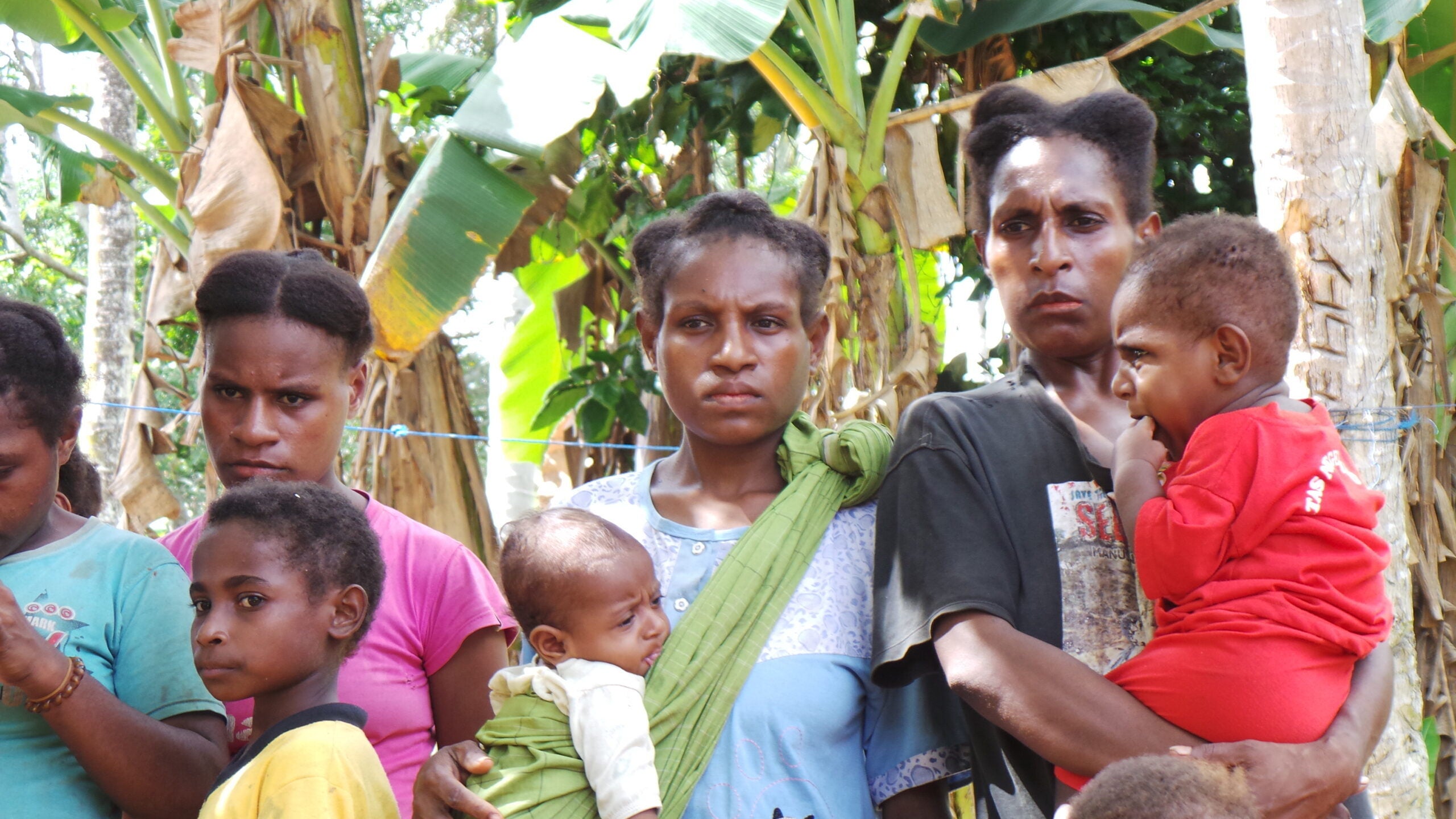
In policy discourse, hunger is often framed as a technical issue — a shortage of resources, a temporary emergency, or a problem to be resolved with calories and cash transfers. Hunger is also frequently understood primarily in nutritional or biophysical terms — how it affects humans’ bodily functions, their weight and their metabolism.
Among the Indigenous Marind People of the West Papuan plantation frontier, the meanings of hunger are much more complex.
For Marind, hunger is never just an empty stomach.
Rather, hunger is experienced and described as a haunting presence — felt under the skin, lodged in the throat, pooled in the gut. Hunger is a force that thickens the air, narrows the horizon and recalibrates what is possible for human and non-human beings.
Marind women in particular often spoke to me about hunger as something that moves — traveling along roads, settling in households, spreading through human and non-human bodies, seeping into rivers, gathering momentum in the wake of chainsaws, bulldozers and excavators. Hunger, these women insist, is not simply experienced. It is made, produced, managed and monetized to the benefit of some and detriment of others.
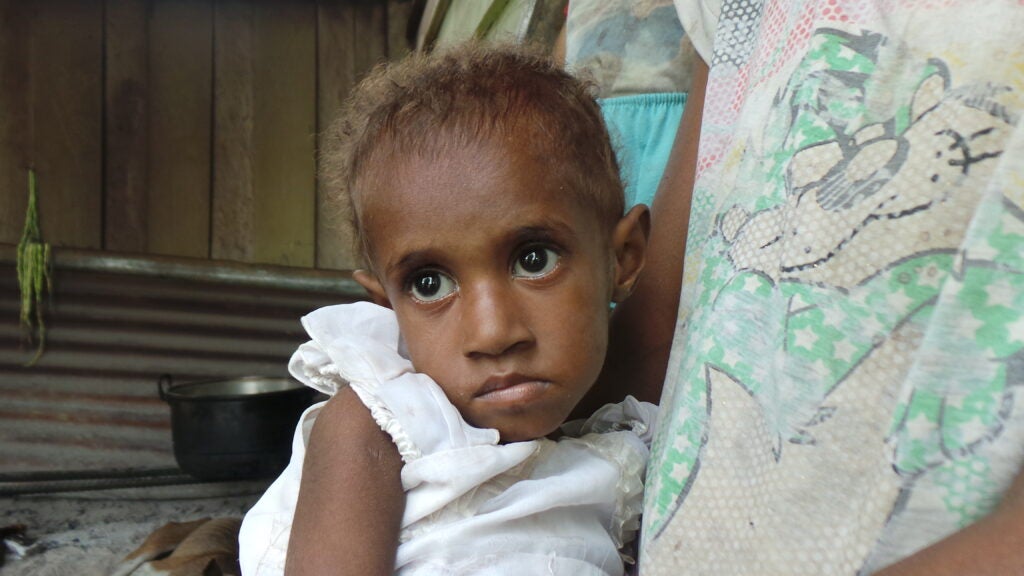
For Marind, hunger is also a moral and affective condition of being human. It is often described as a form of shame that “eats away” at a mother who cannot feed her children the foods that make them strong. It is also seen as a source of anger that burns in people’s hearts when forests are burned to ashes and replaced with regimented agribusiness plantations. Hunger is also a form of dread, experienced as a tightening in the chest in the face of uncertain futures that feel thinner than the present.
In my book “Land of Famished Beings,” I explore these explanations of hunger as incisive, grassroots diagnoses of the ways in which governments and corporations control people’s food, bodies and ecologies when they engage in what they call development and modernity projects.
Agribusiness is relocating — rather than eliminating — hunger.
On the Papuan plantation frontier, substituting native forests with industrial oil palm developments is radically reconfiguring the futures of the landscape and its human and non-human lifeforms. Here, dismantling forest food ecologies is generating hunger. New commodity foods that are full of empty calories but cheap enough to keep you full are changing how people eat. At the same time, toxic plantation chemical exposures corrode people’s bodies and social relationships when they get sick.
Waning Forest Ecologies
The Bian River in Merauke, West Papua, is an area that has been repeatedly targeted for agribusiness expansion by the Indonesian government and national and multinational companies. Large-scale plantations now cover over 1.2 million hectares of former forest, and the government and companies have long viewed this area as empty, idle, or underproductive. They argue that development will bring jobs, modernity and national prosperity to the region’s Indigenous inhabitants.
Yet, for Marind, the forest is understood as a living, storied world of sago groves, hunting grounds, rivers, gardens and spirit presences. The forest is a place where sustenance is inseparable from kinship, memory, ethics and relations with animal kin.
What’s happened is that Indigenous Marind are losing the forest environments and ecologies that once enabled them to feed themselves. As the forests and the species that live in the forests diminish, the Marind are also losing the valued cultural, social, moral and spiritual meanings of and practices associated with the plants and animals that make these foods possible and whom Marind consider to be their kin. For the Marind, the animals of the forest are considered to be family, and so their loss is felt very much like one would feel if they lost an uncle or a cousin.
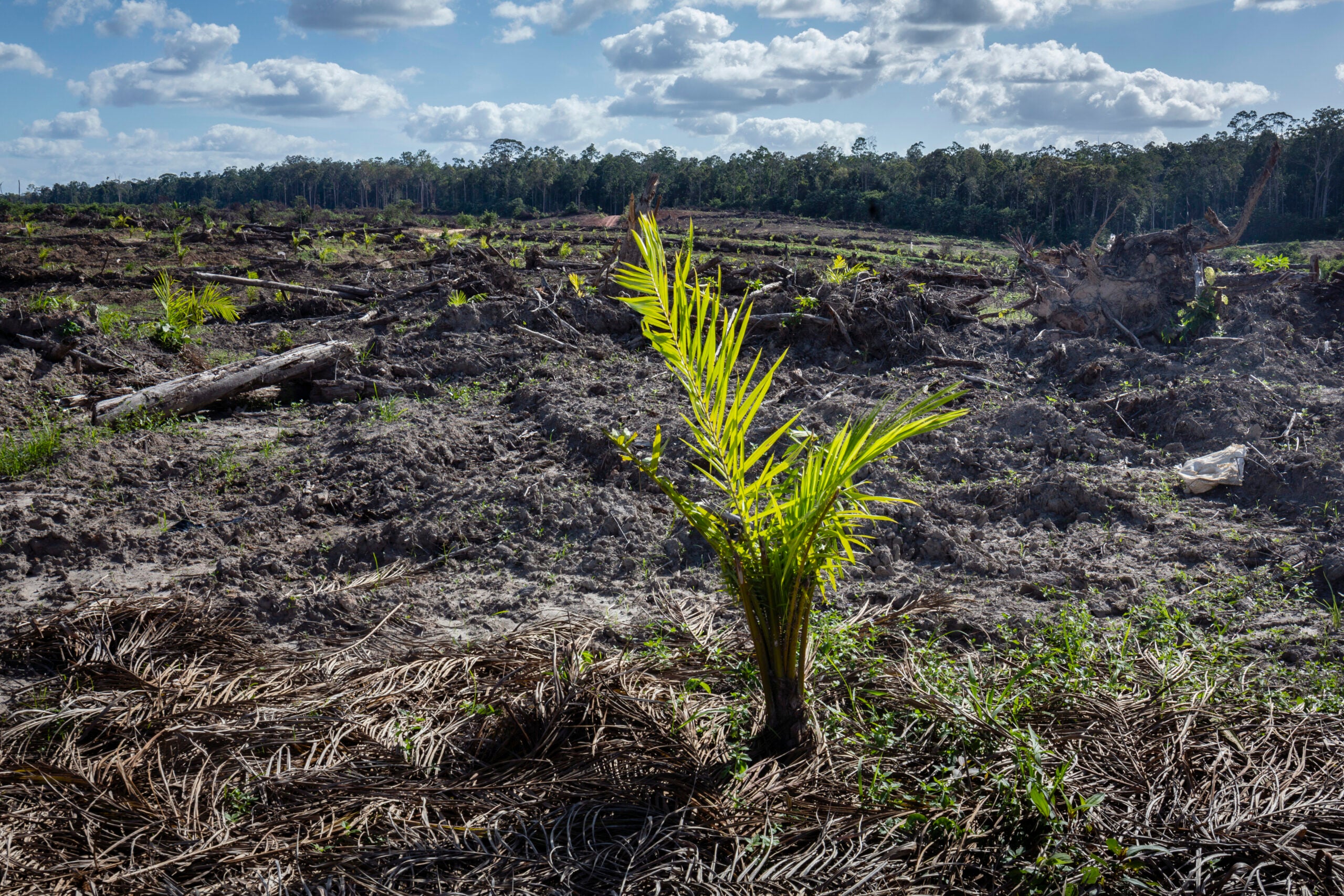
In Marind women’s accounts, the plantation frontier is not only a place where people struggle to eat. It is also a place where people and forests are being eaten. For instance, forests are “eaten” by oil palm companies. Rivers are “eaten” by toxic contamination. Bodies are “eaten” by exploitative labor and chemical toxins. Futures, too, are being “eaten” by land contracts and compensation that cause community fragmentation, tenurial uncertainty and opaque horizons of possibility for human and non-human surviving and thriving.
These idioms name and critique a form of extraction that consumes life to produce food for some humans and death for others. Palm oil grown on Marind lands feeds and fuels a global community of consumers and sustains the national Indonesian economy. Meanwhile, on the ground, chemical runoff alters waterways, fish become scarce or unsafe, hunting becomes uncertain, soils harden and sickness becomes routine.
As conditions of life are reorganized around extraction, people can come to feel hollowed out through these processes of material, existential and relational alienation.
Plantation expansion changes who controls the land. It fragments communities through coercive negotiations and uneven compensation. It creates a reliance on introduced, processed andpackaged foods purchased by local inhabitants with wages earned from the very industry that displaced them. It introduces forms of surveillance and intimidation that constrain movement and speech. It replaces diverse ecologies with simplified single-crop plantations that rely on herbicides and fertilizers.
And the change of land use reorganizes everyday life: how people spend their time, what work they do, what they eat, their health and how people think about caring for each other and their environments.
The Destruction of Sago Groves for Oil Plantations
The destruction of sago groves to make way for oil plantations illustrates these dynamics. Sago is a starchy substance that is extracted from tropical palm stems that Marind often use in their food, akin to flour.
For Marind, sago represents far more than just an important source of carbohydrate. This plant is described and celebrated as a sibling, ancestor and relation that binds people to place, to mythical histories, to seasonal rhythms and to wider ecologies of reciprocity with the forest and its dwellers.
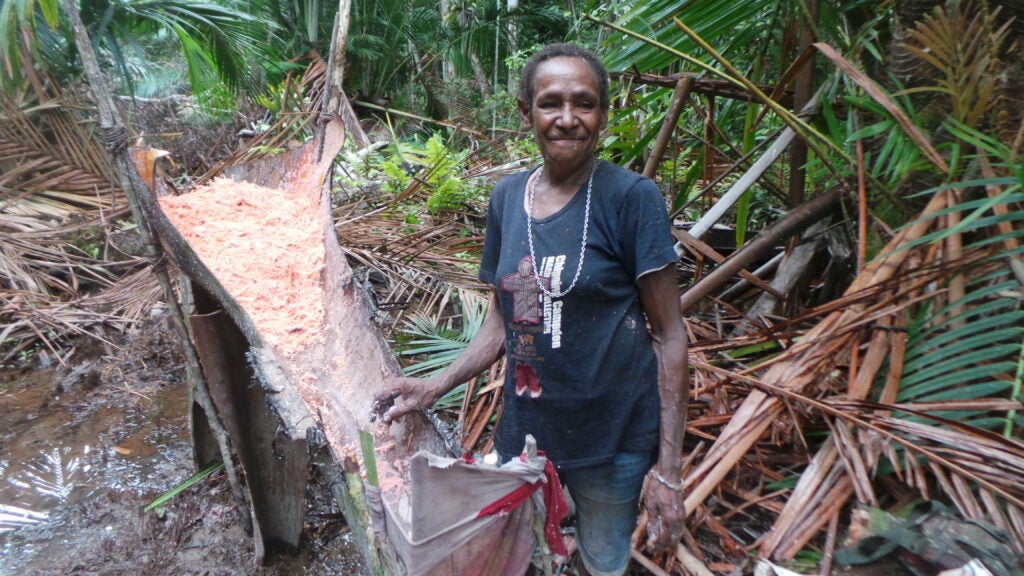
The labor of making sago flour from sago palms is painstaking. However, this labor is collective, valued work that teaches children how to read the forest, how to move through it, how to derive nourishment from it and how to care for it.
Industrial oil palm plantations dismantle these intimate and ancestral relations between humans and the forest. When forests are cleared, sago groves are destroyed, sacred hunting grounds are razed and rivers and waterways contaminated with toxic chemicals, or diverted to irrigate monocrops.
As a result, the diverse foods that make Marind forest meals nourishing — fish, game, leafy greens, fruits, tubers — become harder to find, less predictable and sometimes unsafe to seek out.
People have lost their dignity of feeding others from one’s own land with the introduction of plastic foods.
Even where patches of forest remain, access is restricted to corporate personnel or foreign conservation experts. Plantations are closed-off spaces, accessible only to company staff and workers. This makes entrance into lands that were formerly owned by Marind clans dangerous, illegal and prosecutable.
Importantly, there is a gendered dynamic to gut governance in West Papua. Plantation negotiations often elevate men as signatories while sidelining women, even as women are frequently responsible for feeding households. As native forest subsistence ecologies disappear, it becomes harder for Marind women to feed their children properly and meaningfully. These women often spoke to me of their children’s bodies becoming less and less able to “hold” life as their skin thins, their bones weaken and sickness becomes the norm.
Plastic Foods
The loss of forest foods works hand in hand with the arrival and normalization of what Marind call plastic foods, or store-bought, shelf-stable commodities. These foods, especially rice and instant noodles, travel along the very same infrastructures that enable extraction and destruction of forests — roads, markets, cash economies, corporate stores and the wage labor that supplies money to procure what the forest once freely provided.
Plastic foods are often framed by government and corporate actors as heralds of modernity, convenience and national belonging. In a word, progress is achieved once again through what people are made to consume. I often heard policymakers say that plastic foods will help integrate remote, backward communities into market networks and uplift their nutritional health through supposedly diversified diets.
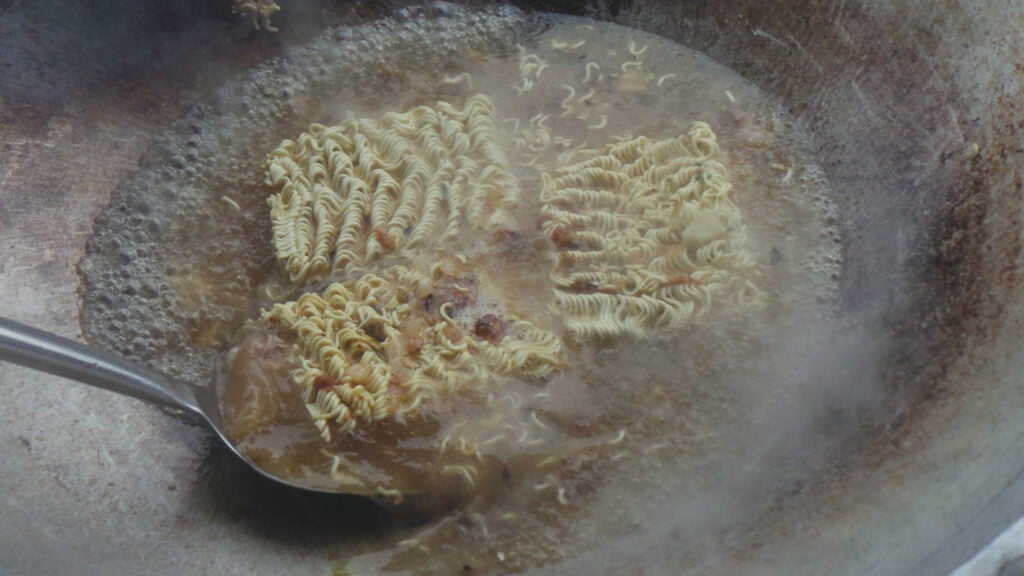
But for Marind women, plastic foods produce new hungers that are difficult if not impossible to satisfy. They fill bellies without nourishing bodies, they offer satiety without strength. Children may eat instant noodles all day long and yet remain vulnerable to chronic illness, weakened bones and diminished vitality.
Adults may crave these foods even as they recognize their harms, because craving itself becomes part of the new regime — a kind of addictive hunger shaped by scarcity, stress and the lure of new commodities.
Some women spoke of those caught in the plantation economy as becoming “like the living dead” — alive, moving, spending, yet increasingly estranged from the forest relations that once anchored their sense of personhood. As conditions of life are reorganized around extraction, people can come to feel hollowed out through these processes of material, existential and relational alienation.
We need to rethink food security in ecological and relational terms.
In many accounts, the plantation is itself characterized as a voracious being, or an entity that feeds on land and on life to sustain its own wellbeing and proliferation. For instance, negotiations with plantation operators are frequently described as a form of ingestion, whereby signatures are swallowed, forests are digested and monetary compensation constitutes a fleeting sweetness masking a permanent loss.
Why Slow Forest Food Matters
New foods also reorganize time and care. Forest provisioning demands collective labor, skill and attention. It is slow food in the deepest sense that it is embedded in relations among and beyond humans.
Packaged staples in contracts are purchased quickly, eaten quickly and forgotten quickly — and they require cash. That need for cash intensifies the pull of plantation labor, which in turn reduces time for forest work, which in turn deepens reliance on store foods — an endless feedback loop that tightens Marind’s dependency on global markets.
The substitution of forest foods with plastic foods is experienced by many of my friends in the field as a source of humiliation and shame. For instance, when families must serve guests rice and noodles because forest foods are unavailable or too hard to obtain, hospitality becomes strained.
People have lost their dignity of feeding others from one’s own land with the introduction of plastic foods. People also feel they have lost the pleasure of taste tied to forests their ancestors once tended, and the pride of sustaining children with foods understood to grow and nourish bodies properly.
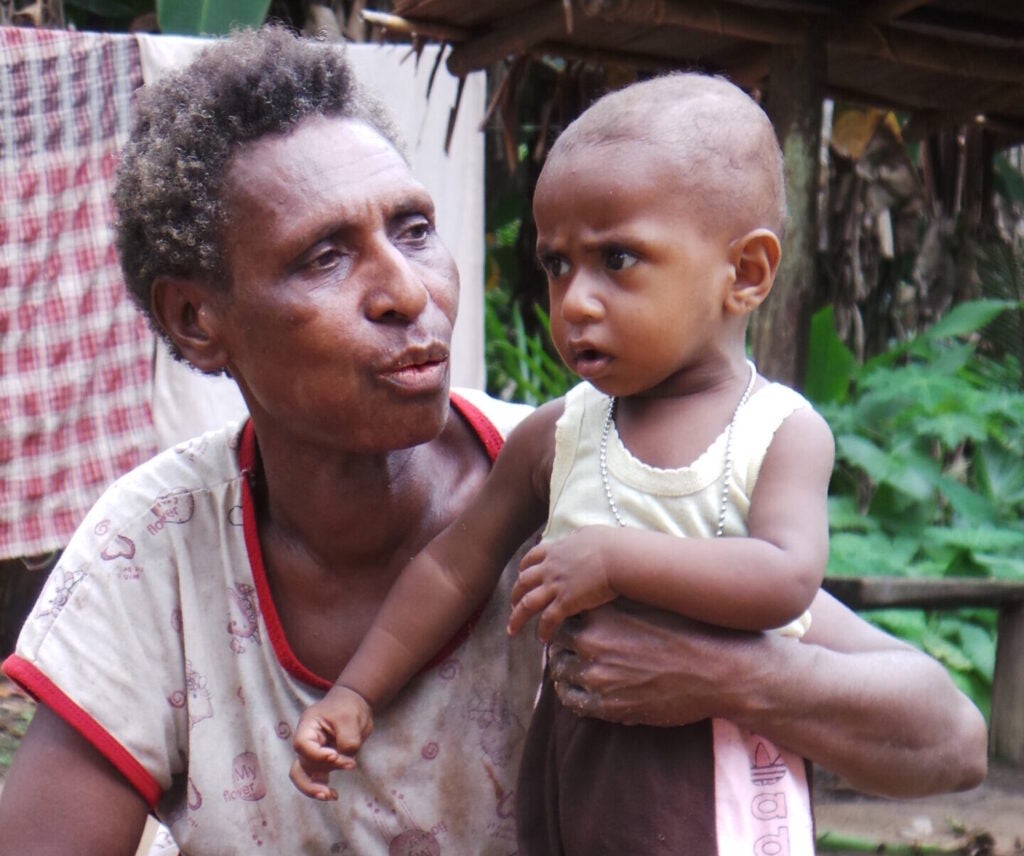
Hunger becomes personalized as a failure because people are blamed for their children’s hunger. I’ve heard people say “they don’t work hard enough” or “they don’t know how to feed their children right.” However, the people are finding new ways to survive engineered dispossession and disempowerment.
Hunger as Connection
The dynamics of this seemingly out-of-the-way plantation frontier are not as remote or disconnected from our own everyday lives as might first appear. In catering to the demands of global consumer communities for vegetable oils and renewable energy sources, agribusiness is relocating — rather than eliminating — hunger.
So what needs to change?
First, food politics must be understood as something more than a matter of individual consumer preference, and instead as a form of (gut) governance, of infrastructure, of land, law and livelihoods.
Second, industrial food production systems, including agribusiness plantations, must be regulated through hard social and ecological thresholds. Regulation may include projects that do not reduce customary access to traditional food sources, undermine water safety, or fragment communities through coercive processes.
Central to these regulations is respecting Indigenous and other local communities’ collective right to give or withhold their free, prior and informed consent to any project that might affect their lands, subsistence and futures.
Finally, and perhaps more challenging, we need to rethink food security in ecological and relational terms. This new and more expansive definition of food security may be conveyed by a form of food security that is driven not just by the pursuit of nourishment for humans in the present, but also by a serious consideration of how this pursuit reshapes the futures of forests, rivers, plants and animals who make food for humans possible in the first place.
The Marind of West Papua offer us vital guidance and knowledge in working towards this more expansive understanding of food, and what the future holds for people and the planet.