It seems impossible to escape polarization in U.S. politics, yet the risks of polarization are considerable.
At its most visible, social polarization may escalate violence and civil unrest. Polarization can also erode trust, leaving people struggling to find common ground and work together to solve shared problems, from public health to climate change. Ultimately, polarization threatens democracy itself by undermining norms and institutions, with politicians often prioritizing partisan benefits over the public good.
Conventional wisdom holds that polarization is a social phenomenon, with people splitting into opposing groups because of shared identity, be it politics, social class, or sports fandom. Media and online algorithms can further reinforce beliefs and drive groups further apart.
Polarization threatens democracy itself by undermining norms and institutions, with politicians often prioritizing partisan benefits over the public good.
But what if I told you that social polarization is not only about nurture but also about nature?
I am a cognitive neuroscientist who has focused on nurture and nature mechanisms of how human values — individual and social — arise. I have come to realize that much of social group dynamics is essentially universal. The roots of these dynamics may be understood by four simple words: evolution and the brain. Through slow, careful observational science, we can understand how humans and other animals form groups and reinforce group identities.
Ultimately, cognitive neuroscience and social psychology may offer some good news. While social divisiveness is indeed both dangerous and ancient, some studies suggest that people can change, even when polarization appears inexorable.
The Biology of Polarization
Social group dynamics emerged through evolutionary forces to enhance survival in activities like hunting or fighting foes. Animals may also bond in times of scarcity to store resources, for sexual reproduction, and to raise offsprings. A central element of this bonding requires one to learn with whom is worth grouping, and who may pose a threat.
Thus, the process of group dynamics involves making social decisions that can be conscious or unconscious. The average adult is estimated to make about 35,000 decisions per day, most of which are small, unconscious choices. The process of decision-making starts by first getting information (for example, “I see a hill ahead”). We must then decide which of the possible actions maximizes value or minimizes loss. For example, two possible actions may be “walking straight makes the path shorter but is more tiring, while turning right leads to the opposite outcome.”
Social polarization is not only about nurture but also about nature.
The brain makes people’s decisions by determining what is more valuable; for example, “getting home sooner” or “getting home without tiring so much.” This decision depends on values stemming from our body (“I am fit these days”), social context (“my wife gets upset if I get home late for dinner”), or environment (“rain is coming”). However, the brain must have values ready for each situation. Experiments have shown that about 35% of these values are genetic, and the other 65% are learned throughout life. This is a typical nurture-nature dichotomy.
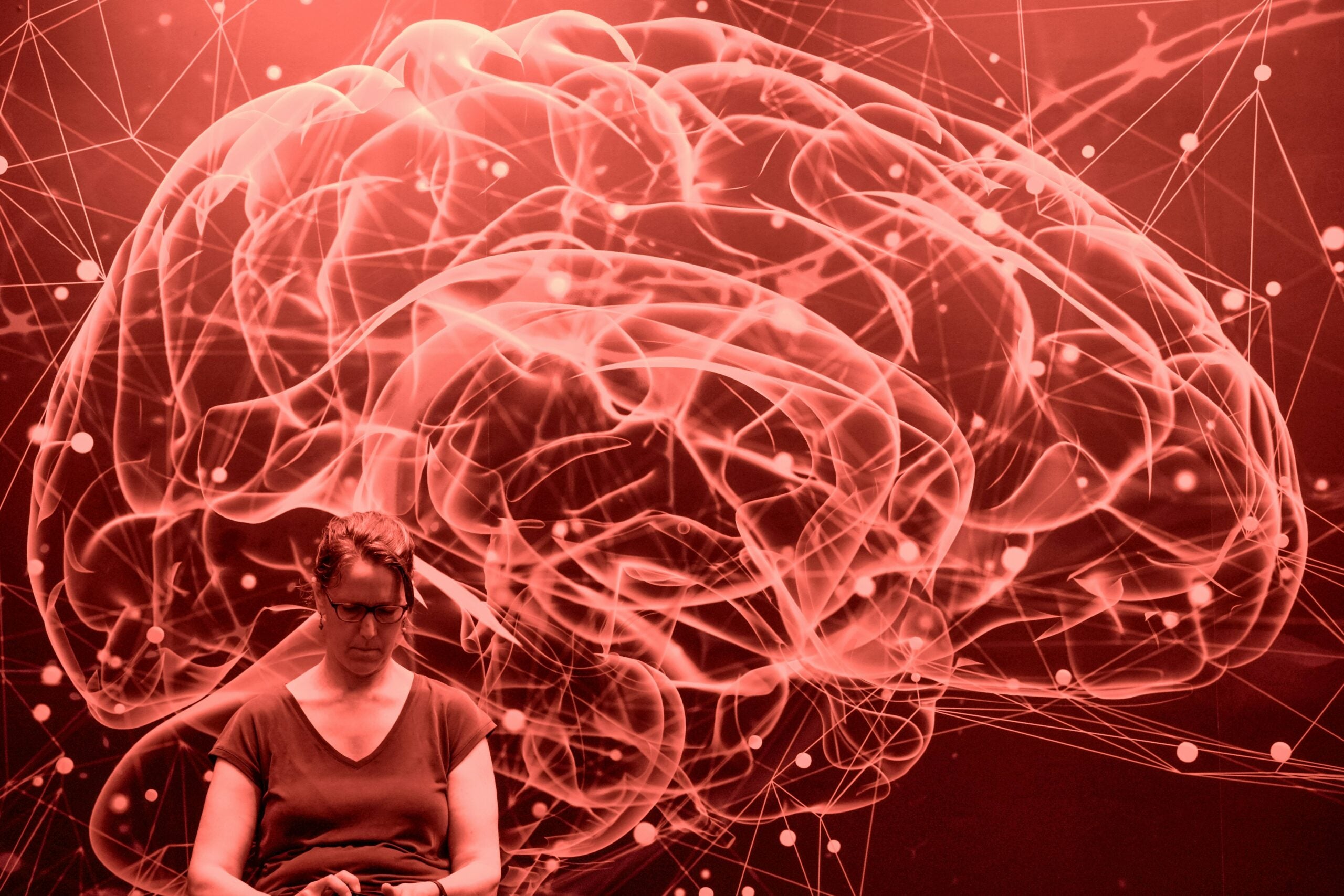
These decisions are made in the brain, using values learned, stored, and deployed by its valuation system. The brain’s valuation system involves, among others, the orbitofrontal cortex (which processes information about the world), anterior insula (which processes information about the body), and the anterior cingulate cortex and basal ganglia (which interact to learn the value of each action given the information received). If the brain predicts the value of an action poorly (as indicated by the cingulate), then the basal ganglia learn better parameters for the next time that such a prediction will be necessary. Computational studies have extensively studied this reinforcement-learning model, producing both good accounting of empirical results and predictions for new experiments.
While social divisiveness is indeed both dangerous and ancient, some studies suggest that people can change, even when polarization appears inexorable.
These reinforcement-learning studies have mostly focused on individuals so far, studying how people respond to environments. For example, a person living in the Sahara may have a different value for water than a person who lives in the Amazon rainforest. These values are inherently learned from experience. While the importance of water is learned by necessity, the same brain reinforcement-learning mechanism functions for any other values.
The Biology of Group Thinking
How does reinforcement learning relate to social groups? If my brain thinks that a person has good value for me and shares my goals, then it is worthwhile to have that person think that I am good value for them, too. The brain achieves this by changing my values so that they become closer to those of that person. But the other person’s brain works similarly and thus, their values will change towards mine. In other words, our mutual interest in each other shifts our values to be more like one another, finding a middle road.
In sociology and social psychology, this process is called homophily, or the propensity to associate with like-minded people. The more similar the values of two people are, the closer they get, implementing a positive feedback loop. In contrast, if the values are initially too dissimilar, people may become more distant with time, because people distrust each other. This is one reason some people see others with different values as threats. Such threats also have roots in evolutionary forces. One needs to repel other groups that may want to steal one’s resources or territory, so the opposite of homophily also exists.
Thus, social reinforcement learning works as if it were gravity but modified. This modified gravity causes people’s values to move towards or away from those of others, forming social clusters and giving rise to social polarization. Thus, these movements are not free but instead obey evolutionary laws that are deeply rooted in the brain. These phenomena cause individuals to seek out and interpret information that confirms their existing values, while rejecting conflicting ones. This is often called confirmation bias or cognitive dissonance.
Brain Mechanisms Reveal Polarizing Tendencies
Computational models using social reinforcement learning show that even if the society has well-distributed values initially, values move over time, spontaneously forming social groups and polarization. However, the groups are not stationary, but rather drift in value space. Properties of these groups that are slowly changing include the number of people in the groups, their members’ characteristics, and the values developed by the group. The dynamics of the changes are complex, exhibiting properties like phase transitions, much like when water freezes into ice.
Another mechanism of how the brain does reinforcement learning is important for social polarization. Because the brain has limited resources, it is constantly evaluating information to allocate resources to what is worth time and energy. Our brains then focus on what’s most important, which is what their valuation systems encode. In this way, when the brain’s valuation system sends feedback to the sensory system, the process helps to focus on the most important information, partially blocking out other things. This process gives the brain its own internal echo chamber. Thus, social-media algorithms creating echo chambers do nothing more than tap our internal brain mechanisms.
These differences are so significant that one can predict political orientation from brain responses.
Other brain mechanisms show internal social-polarization tendencies. For example, stark political differences in belief among groups have been mapped onto the brain. Anatomical measurements show that political liberalism is associated with increased anterior-cingulate-cortex volume and conservatism with increased amygdala volume. The amygdala has many functions, including fear processing. So, the authors hypothesized that individuals with a large amygdala are more sensitive to fear, thus being more inclined to integrate conservative views into their belief system. On the other hand, one of the functions of the anterior cingulate cortex is to monitor uncertainty and conflicts. Thus, again, the authors hypothesized that individuals with a larger cingulate have a higher capacity to tolerate uncertainty and conflicts, allowing them to accept more liberal views.
In addition, neuroimaging results reveal political-partisanship-dependent differences in activation and synchronization in higher-order cortical areas of the brain. Thus, if a person is conservative, the brain areas being activated when they are exposed to political content is different from those of a liberal person. And brain areas that work together are different for conservatives and liberals. These differences are so significant that one can predict political orientation from brain responses.
These brain studies may have fundamental implications for human societies. They suggest that our brains are wired to polarize, possibly predicting polarization, racism, bigotry, and misogyny. These trends reflect eons of evolution in human societies. Unfortunately, these evolutionary tendencies run up against living in complex modern societies, causing biases and distrust.
Can We Overcome Natural Tendencies to Polarize?
The good news is that there may be ways for us to overcome brain-based social sorting. One good example comes from an unexpected area of study, namely, considering aesthetic values like those for art, music, foods, or perfumes. The brain uses these values to make decisions (for example, “should I buy this yellow shirt or this blue one?”), and these values are processed in the valuation system of the brain like any other values. Therefore, maybe we should not be surprised that aesthetic values also exhibit social polarization.
In experiments asking people to evaluate synthetically generated “art” with well controlled parameters, people divide themselves in polarized groups. Surprisingly, the best predictor of this polarization is gender. But while two in three people show tendencies to polarize in these experiments, one in three people reveal individuality. These experimental ratios of polarization and individuality have been confirmed by computer simulations with social reinforcement learning. These same experiments show that this individuality emerges by exposure to art. In other words, the experiments found that actively immersing oneself in art, such as going to museums or concerts, can be transformational, as opposed to doing an art project or engaging in art education.
Based on these results and on the brain processing aesthetic values in the same system as other values, the authors raise a daring hypothesis. They suggest that nurturing social dynamics through exposure to new people and ideas may benefit the brain and bend people’s normative values and beliefs to mitigate social polarization. Thus, even when social cohesion appears thick, people’s ways of thinking can transform.