On July 14, San Francisco 49ers head coach Kyle Shanahan was in a car crash. A month later, he returned to training camp and said, “The concussion stuff just was weird, you feel just more emotional and stuff.” What was stunning was that an NFL coach with access to world-class care was blindsided by the sudden psychological and structural toll of head trauma.
Concussions affect approximately 2.8 million Americans annually. Thirty percent of people with concussions have post-concussion syndrome, defined as persisting symptoms lasting more than four weeks.
Treating recovery as a passive waiting game often ends up masking symptoms.
According to the Centers for Disease Control and Prevention, contact sports like football, basketball and soccer are associated with 45% of emergency room visits for concussions among children 17 and under. Current standards of care include mental and physical rest, pain management, avoidance of stimulation and gradual return to activity.
But treating recovery as a passive waiting game often ends up masking symptoms. As an osteopathic physician, I have found that the dark-rooms-and-rest recommendation doesn’t work. Instead, patients recovering from concussions require a whole-person, hands-on osteopathic approach.
In 15 years of clinical practice, I have treated many patients with histories of head injuries. I recall one who casually mentioned during initial intake that he had been suffering from constant head pressure for over a decade. When asked to elaborate, he said it was no use; he had seen multiple specialists and was told he had post-concussion syndrome from prior sport- and trauma-related head injuries. He was prescribed medications for symptom control but stopped taking them due to side effects.
Instead, I recommended that my patient undergo osteopathic manipulative treatment (OMT). This hands-on technique is a standard procedure that osteopathic doctors (DOs) learn in medical school to treat a range of conditions, including pain and headaches. DOs spend more than 300 additional hours over the standard medical curriculum developing highly refined palpatory skills to accurately diagnose and treat somatic dysfunction in the various layers of the body.
Unlike chiropractic adjustments or massage therapy, OMT is performed by physicians who consider a patient’s full clinical picture and medical history, creating a safe and effective form of hands-on medicine. OMT can also treat other medical conditions such as respiratory and gastrointestinal issues, newborn feeding and colic, and temporomandibular joint (TMJ) problems.
OMT recipients report 23% improvement in symptom severity and two times better sleep quality than those receiving standard allopathic intervention.
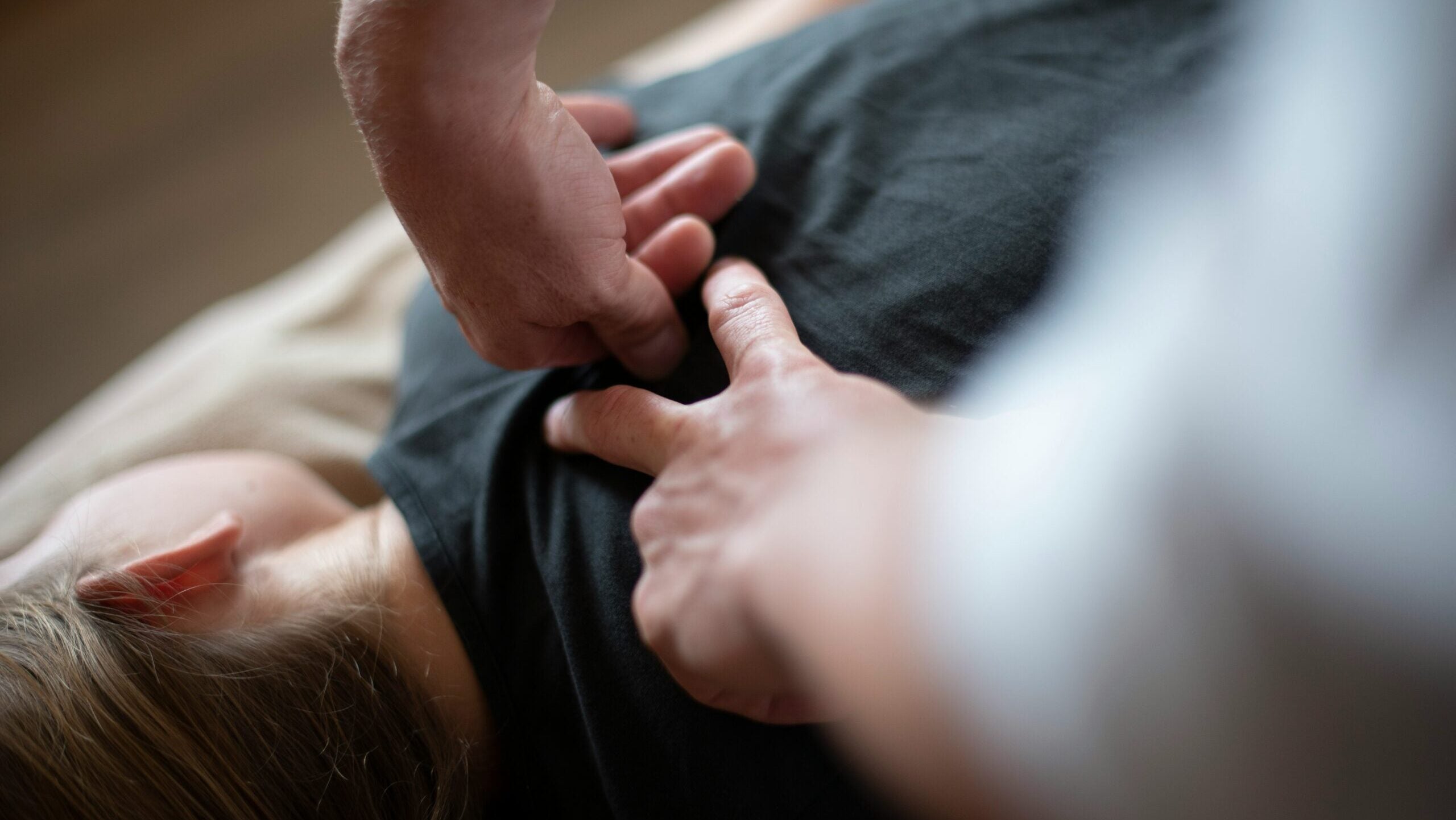
My patient agreed to try OMT. I used myofascial unwinding, a gentle manual pressure technique to release the fascia, which is the thin, intricately woven web of tissue that surrounds every muscle, bone, blood vessel, nerve, and internal organ. Fascia is key to movement biomechanics; it can become tight and twisted in high-force trauma such as concussion, causing muscle tension, decreased blood flow, and gait and balance issues.
I also taught my patient therapeutic breathwork to improve lymphatic and vascular flow. I performed visceral manipulation to release the diaphragm and restore its natural motion, which I have observed to be restricted in patients with high-force trauma. Each visit treated the whole person, addressing sleep, exercise, nutrition, and stress management alongside concussion symptoms. After five visits, his headaches had nearly resolved.
Increasing Recognition for Personalized Medicine and Hands-on Care
Founded in the late 19th century, osteopathic medicine challenged dominant disease-centered and drug-reliant treatments. The field was initially dismissed as unscientific for its emphasis on treating the musculoskeletal system to facilitate self-healing. It took a century of advocacy by osteopathic physicians before the American Medical Association recognized the osteopathic degree as a legitimate medical credential in 1973.
A growing body of clinical evidence shows the benefits of OMT after a concussion: OMT recipients report 23% improvement in symptom severity and two times better sleep quality than those receiving standard allopathic intervention. In these cases, adding three osteopathic treatments significantly reduced the frequency of headaches compared with relaxation exercises alone.
Medical schools, insurers and allopathic physicians still need to do more to connect patients to this essential care.
Unfortunately, most allopathic doctors (MDs) still have limited knowledge of osteopathic medicine. A study published in April in the Journal of Osteopathic Medicine found that 67% of non-DOs have limited exposure to OMT and only 13% feel confident about knowing when to refer patients for it.
That is slowly changing. DOs currently comprise 11% of physicians in the United States, but the proportion is expected to rise as over 25% of medical students are now enrolled in osteopathic medical schools. The shift is promising evidence of young future doctors’ desire to meet society’s need for integrative personalized medicine and hands-on care.
Nevertheless, medical schools, insurers and allopathic physicians still need to do more to connect patients to this essential care. Allopathic residency and Continuing Medical Education (CME) programs should incorporate training by DOs to expand awareness and referrals. Also, patients need greater access to DOs who practice OMT. A recent survey showed that only 28% of DOs at Mayo Clinic perform it, leading to three-month wait times for new patients.
Although OMT procedure codes are covered by Medicare and most private insurance plans, reimbursement rates do not fully compensate clinicians for the longer appointment times required. Healthcare systems should incentivize their employed osteopathic physicians to integrate OMT, with better compensation, dedicated time and referral processes that include osteopathic medicine in their algorithms.
With more osteopathic schools and students in the pipeline, plus policy change, hands-on care is becoming more accessible.
OMT research funding has historically been limited to small individual grants through the American Osteopathic Association (AOA) or osteopathic academic institutions. This year, the AOA successfully advocated for language in the Congress’ FY26 spending bill encouraging the Centers for Medicare & Medicaid Services (CMS) to support access to non-pharmacologic treatments like OMT. This legislation gives the AOA leverage to insist that CMS and private insurers offer better coverage for OMT and secure federal funding for large-scale research.
But for those suffering from post-concussion syndrome, there is already more than enough evidence pointing to the safety and benefits of OMT. Finding a DO who performs it may still feel like a treasure hunt, but with more osteopathic schools and students in the pipeline, plus this policy change, hands-on care is becoming more accessible.
My concussion patient was able to fully recover. However, he remained frustrated that he had endured headaches for a decade because he was never informed about OMT. Others should not have to wait so long.