Living things give every appearance of unity. Watch a butterfly lift from a leaf: wings beat, muscles contract, oxygen flows. Each part of the body seems part of a coherent whole, devoted to a common purpose. This unified picture has proved remarkably useful in biology and medicine.
This perception has given rise to an understanding of organisms as much like machines, each part engineered to serve the interests of the whole. For example, we might say we have legs to carry us and eyes to see; those parts serve our goals. Even when our parts have opposing effects — like the hormones insulin and glucagon — the diametrical forces are seen as a way for the organism to maintain balance, to serve its goal of maintaining homeostasis.
But this unity is illusory. Beneath the surface, the parts of an organism — its cells, genes, and even its microbes — sometimes pull in different directions.
An organism is less like a machine and more like a body politic, rife with internal conflict and opposing factions.
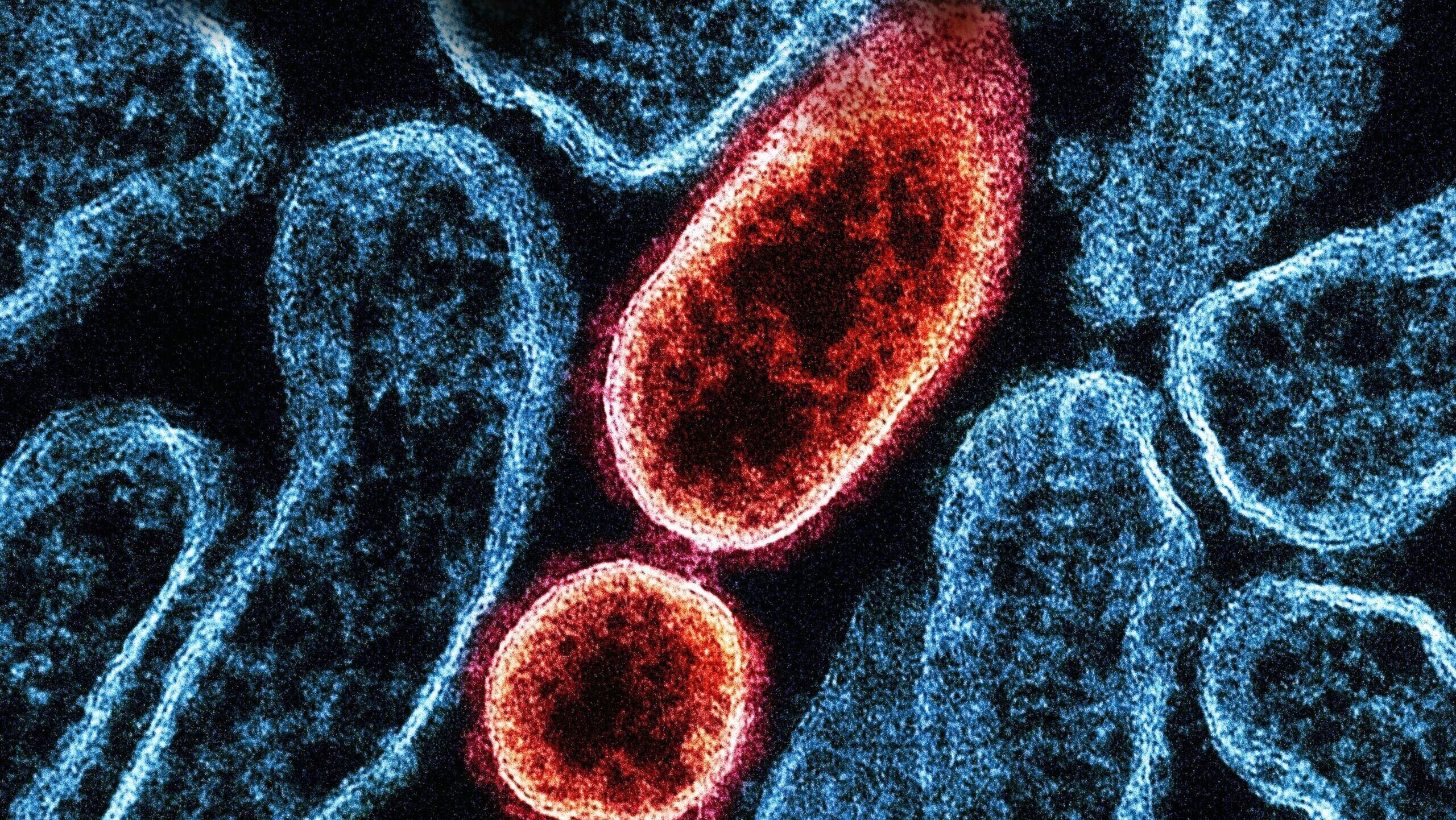
In these cases, the opposing effects aren’t designed with homeostasis in mind. Rather, opposing effects reflect opposing interests at the sub-organismal level. Cancerous cells may replicate without restraint. Genes in the nucleus and genes in the organelles may send mixed signals on which sex to become. Corals and their algal partners turn against one another — all because natural selection on these parts favors different outcomes for them.
A few decades ago, biologists might have treated these opposing parts as oddities or as exceptions to a general rule of cooperation among parts. Yet today, with our technologies for surveying the cellular and genetic landscape, scientists’ appreciation for internal conflict has only grown. As evolutionary biologists, we believe an organism’s internal conflicts reveal what organisms truly are, and for us, a different picture emerges.
An organism is less like a machine and more like a body politic, rife with internal conflict and opposing factions. The term “body politic” usually refers to the collective body of people represented under one jurisdiction — such as a nation or community. Here, however, we use it to describe how the body can be as messy as the collective political project, and how the messiness of politics can inform our understanding of a complex and multilayered organism.
How organisms function amidst conflict
These two metaphors — organism-as-machine and organism-as-body-politic — lead to different predictions of how an organism develops and functions. When we crack open a machine, we expect to marvel at how finely put together it is. We expect every part to serve the same goal, and we don’t expect spare parts, redundancy, or needless complexity.
Bodies are different. Because they are products of a long and contingent evolutionary history, they often have more in common with the untidy workings of politics than with the elegant engineering of machines.
It is not easy to toss aside the body-as-machine metaphor because it aligns with the view of ourselves as unified agents. We often talk of “having” our genes and our cells to help us do the things we need to do.
Consider a developing mammalian fetus. One of its tasks during the weeks or months of its development is growth. And, thinking of the fetus like a machine, one might expect some gene that turns on and signals for more growth. Or, just as reasonably, one might expect two or even three different growth factor genes signaling different tissues to achieve growth. If the wiring diagram for fetal growth actually looked like that — like flipping on a few switches for growth factor genes — then one might be tempted to liken the developing fetus to a watch or a car.
However, the wiring diagram for fetal growth is not nearly as simple as imagined above. A large number of genes see their expression turned on during fetal growth in a correlated fashion. On closer examination one finds correlated expression of both growth-enhancing and growth-suppressing genes. Many of these genes are imprinted, meaning they are expressed exclusively from either the maternally inherited or paternally inherited copy. Further, these oppositely imprinted genes typically have opposing effects, not only on growth but often on one another’s expression as well.
Conflict gives the appearance of coordination
Yet, it would be a mistake to view this network of genes as showing “coordinated” expression. A robber and a policeman may find themselves together at the bank, but we wouldn’t think they coordinated to meet at the crime scene. The co-occurrence of two diametrical actors is not something designed from on high to serve a greater purpose. Rather, their coexistence is a result of their antagonistic interaction, their conflict.
We observe a similar dynamic for the genes in this network. There is antagonistic selection pressure on genes of maternal and paternal origin. They are not naturally selected to deliver the same optimal level of growth. As a consequence, their expression becomes correlated as each tries to influence the organism’s growth in one direction or another.
In this example, these parts of the organism are not serving the organism’s interest as much as their own. Such individual self-interest is not the way the parts of a machine are meant to behave.
But if we are each a body politic, then who is in charge? Collectives riven by internal conflicts are a problem for biologists and political scientists alike.
Instead, regular development requires a delicate balance between a network of opposing genes’ developmental nudges. Over evolutionary time, these nudges become stronger and stronger. The expression levels of growth enhancers and growth suppressors engage in something like an arms-race dynamic. An abnormal outcome is therefore more likely after all this conflict has played out. In contrast, a machine designer might scale back the expression of opposing forces within the developing mammalian fetus, and might reject the idea of opposing parts in the first place.
It is not easy to toss aside the body-as-machine metaphor because it aligns with the view of ourselves as unified agents. We often talk of “having” our genes and our cells to help us do the things we need to do. My genes and cells? They’re mine.
It can be unmooring to think our parts aren’t serving “us” so much as serving some selfish interest of their own instead. If we perceive ourselves as a unified whole, then we expect to be in charge of parts of the body that act out.
But if we are each a body politic, then who is in charge? And can natural selection ever overcome the pressures from selfish parts to deliver a body that functions as smoothly as a well-designed machine? Collectives riven by internal conflicts are a problem for biologists and political scientists alike.