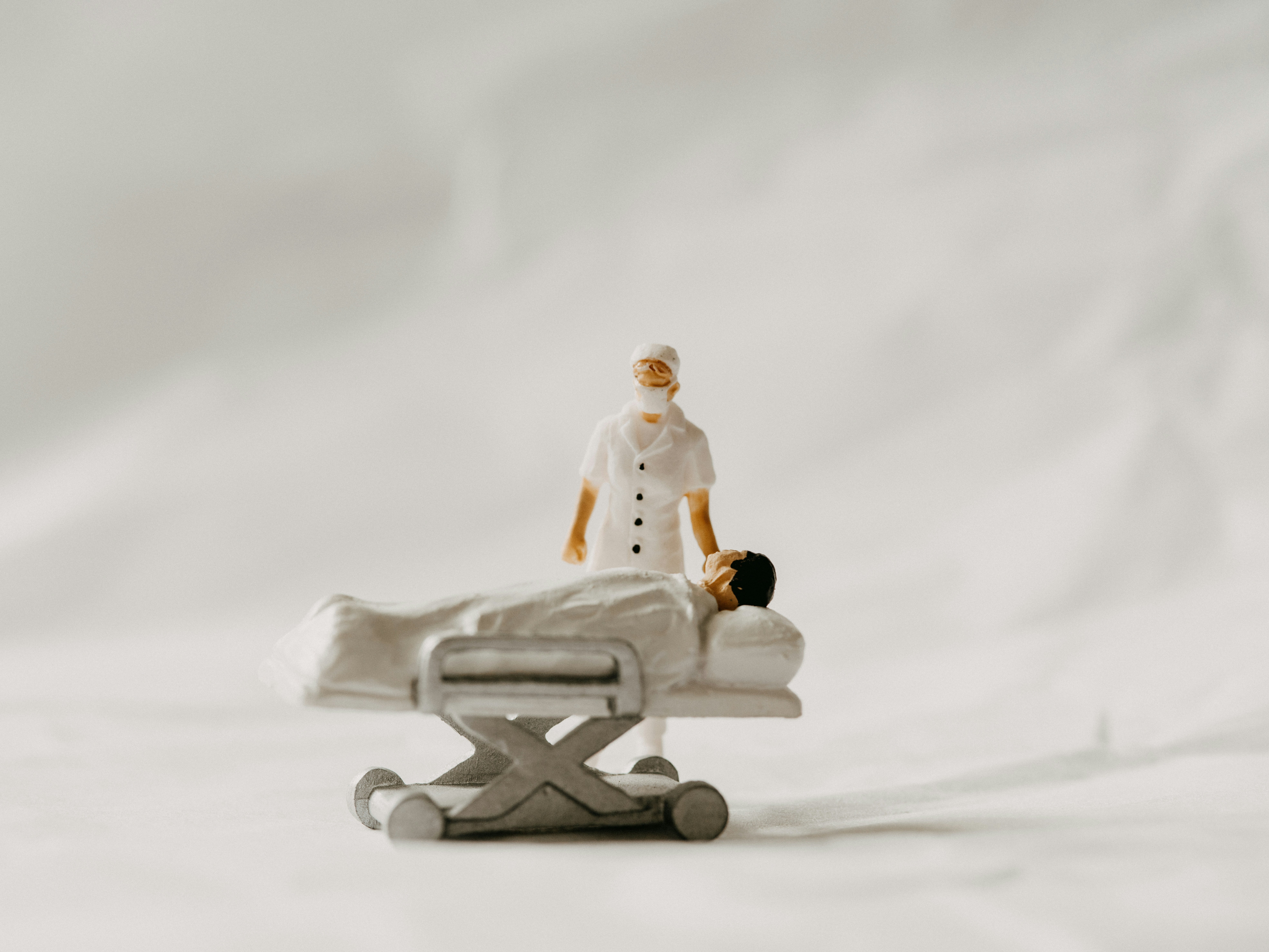
At my 20-year college reunion in May, dozens of old friends — almost all in their early 40s like me — arrived at our college campus in Washington, D.C., touring old haunts and snapping photos on Georgetown University’s front lawn. I, too, was on campus, but on the back side, at the university’s hospital complex, laid out on a gurney in one of the emergency room’s trauma suites.
Two male attending physicians were performing a rushed ultrasound on my chest, tilting the screen so I could see the melon-sized tumor nestled between my lung and my heart. I could make out a large mass, ink black, looming next to my four chambers.
My chest felt tight, as it had for days.
“Has anyone told you what we think this is?” one physician blurted while he toyed distractedly with the finicky ultrasound machine. “This looks like cancer.”
I flashed back to my 25-year-old self when a mechanic told me my brake pads were so shot, he was surprised I hadn’t already died in a car accident. Both men’s words made me feel undeserving of my good fortune for surviving and ashamed of my womanly ignorance. How had I let it come to this?
But as my female college friends streamed into my hospital room over the next few days, leaving their reunion festivities to nod quietly at my bedside, they all told me they knew exactly how this long-undiagnosed illness had happened. Our bodies were changing but none of us had a real guide.
No doctor had ever said the words “perimenopause” or “menopause” to me, and when I brought it up as a potential explanation for my profoundly low energy in recent months, one shrugged and said, “There’s always that.”
In the absence of formal education in clinical settings or schools about what fell into the range of normal and what didn’t, I’d turned to informal sources that misled me. This is slightly embarrassing to admit given that, as a science journalist, my job is to read and interpret scientific information.
But internet algorithms, social media ads and word-of-mouth anecdotes from friends helped me discount legitimate red flags, like getting more winded during workouts, night sweats, forgetfulness and tiredness. I was absolutely exhausted all of the time. But wasn’t every woman my age with young kids and a career?
Researchers say perimenopause is having its moment, as influencers and celebrities draw attention to the changes women experience during the biologically unpredictable years leading up to a woman’s final period.
Indeed, on the day doctors officially diagnosed me with Hodgkin lymphoma, a serious but treatable blood cancer, Melinda French Gates published an op-ed in the New York Times highlighting “a health system that has long treated women as an afterthought.” French Gates announced $600 million in funding to improve medical training and communication about perimenopause and menopause.
Her investment is critical, but efforts to improve medical training and talk candidly about women’s changing bodies needs an urgency equal to the life and death stakes I’ve experienced firsthand.
As French Gates points out, nearly one in three women in the United States over 40 experiences menopause symptoms so severe they disrupt daily life. And many of these changes are remarkably similar to cancer symptoms.
The American Cancer Society has an entire webpage dedicated to parsing out the differences between cancer and menopause symptoms, a decent indicator of just how many women are struggling with this question. I envision a silent army, searching and scrolling late at night, wrestling, wondering, just like me.
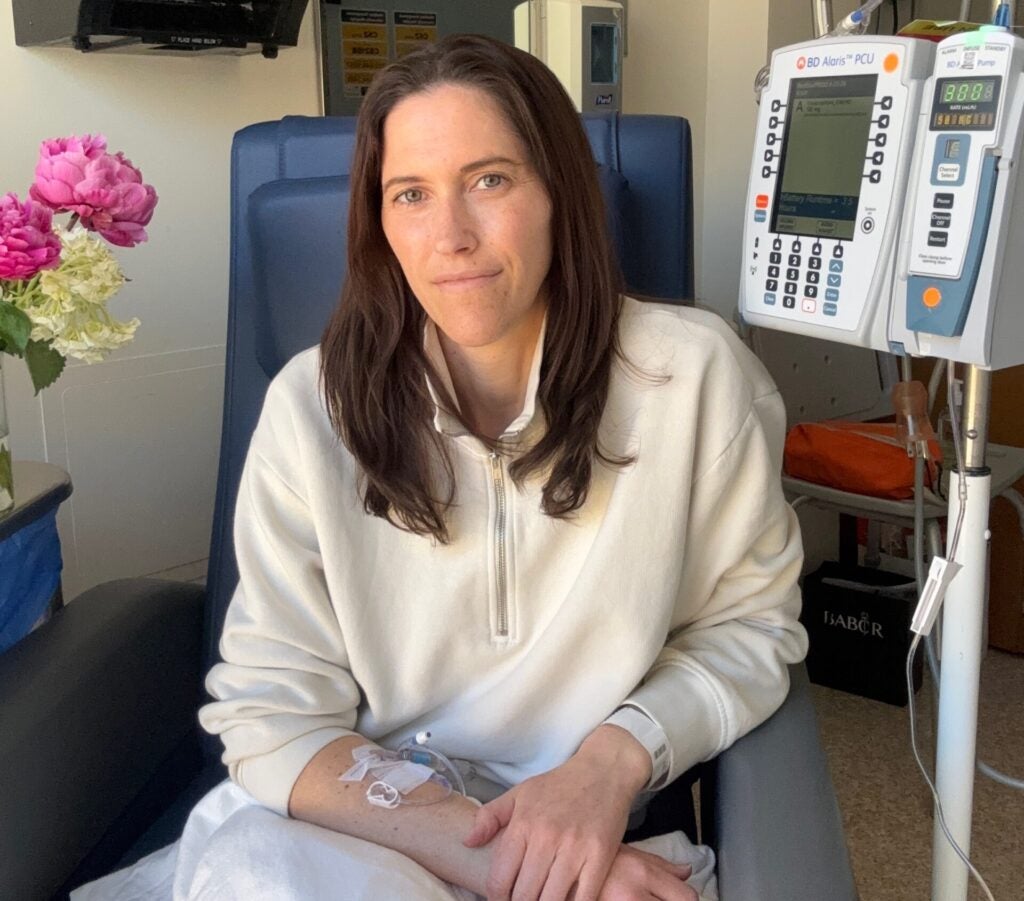
I wouldn’t wake up to the reality of my cancer until a rapidly growing tumor started to suffocate me. I went into an emergency room complaining of shortness of breath; doctors kept me in the hospital for a week, concerned I might suddenly stop breathing.
I fear middle-aged women like me across the U.S. are also discounting ailments that are serious or life threatening. Researchers confirm there is a lack of menopause education for both doctors and patients in the U.S. What they don’t know exactly is where millions of Americans are turning to in this information vacuum.
About six months ago, when I first found myself feeling off kilter, I turned to friends and social media, where I sought and found assurances that what I was feeling was just perimenopause. Welcome to your 40s!
The college friends who arrived at my hospital bedside reported the same information distortion. A California-based television executive showed me the confusing barrage of social media ads she receives daily about perimenopause. It was worse than mine: frowning cartoon uteruses, bulging too-real ovaries, comedians with their hands on foreheads feigning hot flashes.
“But not everything is perimenopause! Clearly!” she exclaimed, my blood oxygen monitor beeping in the background.
We were confident career women but crippled by our own bodily uncertainty.
The day before that scan would reveal the massive tumor in my chest, I met with a hematologist, the same one who avoided my questions about menopause, who told me my symptoms might be COVID, or perhaps long COVID. I was skeptical since this diagnosis follows some of the well-worn diagnostic patterns as menopause.
In her book “Invisible Illness: A History, from Hysteria to Long COVID”, anthropologist Emily Mendenhall details how ambiguous conditions are routinely dismissed by everyone but the sufferers, most of whom are women. In short, both long COVID and menopause become catch-alls for lady problems and aging.
As Mendenhall notes, the medical curriculum also ignores complex chronic conditions linked to infections like chronic Lyme disease that are observed mostly in women.
My hematologist, and most practicing physicians in the U.S., was likely never taught about menopausal care. Even among OB-GYN training programs in the U.S., less than a third offer a menopause curriculum of any kind.
Many women in Mendenhall’s book spent years on a diagnostic odyssey to find what they had and how they might treat it. I, too, faced physicians who didn’t hear me or misdiagnosed my condition, delaying care. However, it’s true that patients with these conditions are often the most knowledgeable about them. Mendenhall calls “the patient’s unique Venn diagram of symptoms and diagnoses” distinct, and it requires clinicians to take the patient’s knowledge and experience of their symptoms seriously.
Even though I have cancer, I feel lucky.
My condition has a clear diagnosis and a straightforward treatment pathway. Many women who have nearly the same symptoms that I did are not so fortunate. They may have debilitating chronic illnesses, with diagnostics and treatments not yet developed. Physicians know menopause can mask or exacerbate those illnesses, too, but little research has been done to tell us exactly how.
Menopause research remains underfunded, receiving only $56 million in dedicated public funds from the National Institutes of Health in 2024. The following year, erectile dysfunction drugs generated $1.36 billion in the U.S. market, with profits being poured into more research for men’s health.
With chemotherapy, my tumor will shrink. My breathing should return to normal. Maybe one day I’ll return to scuba diving and kayaking. Right now, I’m just trying to walk a mile.
But I ignored my cancer symptoms for too long, writing them off as lady problems, until it was a life-threatening emergency. I fear that by delaying menopausal care and education programs in America, we are similarly setting ourselves up for a crisis.