The Rohingya crisis is one of the most documented humanitarian emergencies of the past decade.
Since 2017, when at least 6,700 Rohingya people were killed and hundreds of thousands fled to refugee camps in Bangladesh, media have repeatedly covered the Myanmar government’s efforts to forcibly remove the Muslim minority from the country’s western coastal strip.
Neither Myanmar (formerly Burma) nor Bangladesh will claim the Rohingya as citizens. The Associated Press says they have been called “the world’s most persecuted minority, a people without a country.”
But the recent history of the Rohingya is not only a political crisis. It is also a climate crisis.
The consequences of ignoring how climate has affected the Rohingya are not abstract: They determine who receives protection, who accesses financing, and who is left without either.
The crisis spans both sides of the border. Climate stress shaped the conditions in Rakhine State, where the Rohingya people have lived for generations. It also followed the displaced: Those who fled to Bangladesh are now sheltering in one of the world’s most climate-vulnerable river deltas.
Yet, when humanitarian agencies collect data on the central causes of Rohingya displacement, climate does not appear as a formal category within refugee protection frameworks.
The consequences of ignoring how climate has affected the Rohingya are not abstract: They determine who receives protection, who accesses financing, and who is left without either.
The case for treating the Rohingya crisis as a climate story does not require abandoning the persecution framing. Climate stress did not cause the Myanmar military’s violence. But it compressed the conditions under which that violence became catastrophic.
When agricultural livelihoods collapse, when the resource base sustaining rural communities shrinks, when a population has already been stripped of citizenship and land rights, the conditions for ethnic scapegoating intensify. Climate and conflict are not competing explanations. They are compounding ones.
The Making of Refugees
The 1951 Refugee Convention defines a refugee as someone fleeing persecution on grounds such as race, religion, nationality, membership of a particular social group or political opinion.
Environmental collapse is not listed in the Refugee Convention even though climate events have displaced people around the world. More than 70 years after the convention was drafted, people driven from their homes by flooding, crop failure and cyclone destruction remain legally invisible in the frameworks designed to protect them.
In the Rohingya case, an ethnic and stateless identity makes them disproportionately vulnerable to both environmental and political violence.
In practice, the convention works through a status determination process. A person applies for refugee status and a government or the U.N. refugee agency (UNHCR) examines the claim. Refugee status is granted if the applicant can show a well-founded fear of persecution on at least one of the following: race, religion, nationality, political opinion or membership of a particular social group. That last category has been stretched significantly over time.
Since the 1990s, courts in the United States, Germany, Australia and elsewhere have recognized LGBTQ+ people and survivors of gender-based violence as particular social groups, even though neither sexual orientation nor gender identity appears in the convention’s text.
The argument for climate refugees follows a similar logic: that the harm is real, systematic and tied to an identity. In the Rohingya case, an ethnic and stateless identity makes them disproportionately vulnerable to both environmental and political violence.
Courts have so far rejected direct climate refugee claims.
The closest the law has come is a 2020 UN Human Rights Committee ruling in Teitiota v. New Zealand. They found that states cannot deport people to places where climate change poses a real risk to their right to life.
Teitiota himself lost. The committee found he did not face an immediate enough threat. But the ruling established that climate harm is a legitimate consideration in asylum decisions.
The gap between climate displacement being real and the law not yet protecting people is not merely a philosophical or a legal problem. It is a financing problem.
No country has yet accepted a Rohingya climate claim on these grounds, but the legal foundation for that argument is being built case by case.
The gap between climate displacement being real and the law not yet protecting people is not merely a philosophical or a legal problem. It is a financing problem.
Displaced and stateless populations face major barriers to accessing climate finance, even as institutions like the Green Climate Fund have begun opening limited pathways for some displaced communities. The Loss and Damage Fund does not yet include a dedicated mechanism for populations such as the Rohingya. The money exists, but no clear or consistent mechanism connects it to the people who need it most.
The Cox’s Bazar refugee settlement in Bangladesh, home to nearly one million Rohingya, sits in a district that the World Bank projects will see living standards fall more than 18% by 2050. The people who fled one climate-stressed delta are now sheltering in another region that is undergoing climate stress.
The stressors are different. In Rakhine State the threats came slowly — saltwater creeping into farmland, longer dry spells, agricultural yields declining season by season.
In Cox’s Bazar they arrived fast and with little warning. The camps are built on deforested hillsides, and the clearing of trees for shelter construction has stripped the land bare, accelerating erosion. When cyclones push rain onto those slopes, landslides follow.
Humanitarian response continues to be framed almost entirely around protection from persecution, rather than around long-term climate resilience to recurring environmental shocks.
Cyclone Mora in 2017 destroyed thousands of shelters days after refugees arrived. Cyclone Mocha in 2023 left 40,000 people without cover.
Coping, in any meaningful sense, is not available as an option. Refugees have no legal right to work and their movement outside the camps is restricted, leaving them entirely dependent on humanitarian assistance when the next storm comes.
Yet humanitarian response continues to be framed almost entirely around protection from persecution, rather than around long-term climate resilience to recurring environmental shocks.
What Would Fixing This Look Like?
Reopening the convention would mean convening its 149 state parties to formally amend its definition of a refugee.
In the current political climate that process is almost certainly doomed. From the U.S. to Britain and Germany, major host countries have been moving to restrict, not expand, refugee protections. Any renegotiation would risk not just failure but a rollback of protections that already exist.
The manageable paths work within the existing architecture: updating data collection standards, attaching conditions to climate finance and reforming the governance of the Loss and Damage Fund. None of these require treaty-level action.
Three things are achievable without reopening international refugee law, a process that is both politically toxic and strategically counterproductive.
First, we need better systems to track how climate causes displacement among displaced people. Current displacement data typically record conflict and disaster as separate categories. However, it’s unclear where climate events fit as a contributing driver within those crises.
Once climate data exists, it becomes possible to quantify climate-linked displacement, build the evidentiary case for targeted funding, and hold governments accountable for ignoring it.
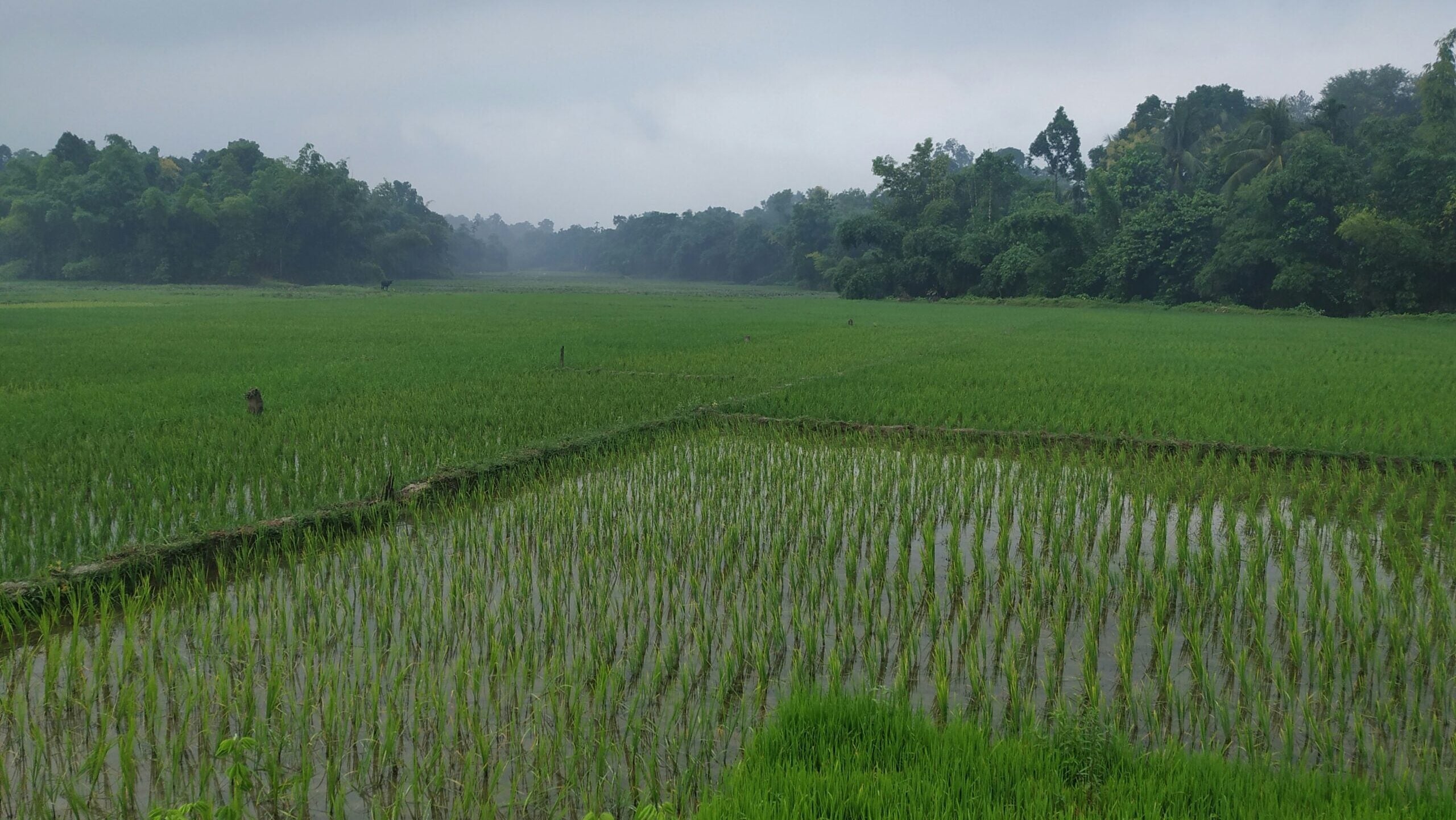
The Rohingya case is itself an illustration. When humanitarian agencies recorded the causes of displacement in 2017, the data captured military violence and ethnic persecution. The saltwater intrusion into Rakhine farmland, the declining rice yields, the cyclone exposure — these appeared nowhere in the formal displacement record.
Afghanistan offers a parallel: UNHCR has documented how recurring droughts and floods combined with decades of conflict to drive displacement, yet the two drivers are tracked separately, making the climate contribution invisible in the aggregate counts.
Adding a layer of climate data requires political will so that an amendment can be added to the Refugee framework. It does not require a new treaty.
What Climate Data Does
Once climate data exists, it becomes possible to quantify climate-linked displacement, build the evidentiary case for targeted funding, and hold governments accountable for ignoring it.
Bangladesh offers a preview of what this looks like in practice. Between 2023 and 2024, IOM and the Internal Displacement Monitoring Centre piloted a new set of standardized displacement indicators, designed to capture disaster and climate drivers alongside conflict in a single national data system. The pilot was funded by the German government and involved coordination across multiple government ministries.
When IDMC applied similar climate-linked data models to the Horn of Africa, it found that floods and droughts displace an average of 1.9 million people annually in Ethiopia, Somalia and Sudan alone. This figure would not exist without a deliberate decision to track climate as a cause.
Recognizing the climate dimension of this crisis is not a matter of framing. It is a precondition for an effective response.
Second, climate finance conditionality should require those who welcome refugees to make sure people feel part of society. When Bangladesh receives substantial financing for climate adaptation projects, that funding should explicitly extend to climate resilience in Cox’s Bazar.
This provision is not charity. Rather, it should be a condition of disbursement. Tying finance to the inclusion of refugees would transform displaced communities from invisible beneficiaries into people who are legitimately named as beneficiaries of government programs.
Third, the Loss and Damage Fund needs a mechanism to support and uplift stateless persons. The fund was designed to compensate nations that have contributed little to climate change but are most afflicted by it. Bangladesh qualifies as a country that is deserving of funding, but there is no way for the Rohingya — the most vulnerable people within Bangladesh — to access it.
What’s Needed Is A Vote
A dedicated window for climate-displaced stateless populations would not require reopening the Refugee Convention. It would require a governance decision by the fund’s board. The Fund for Responding to Loss and Damage (FRLD) is governed by a 26-member board of country representatives, with access rules set by board decision rather than by treaty.
The board has already been called on by more than 350 civil society organizations to create a dedicated community access window. This window is a mechanism that would allow frontline communities, not just national governments, to apply directly for funding.
Extending the access window to stateless populations would require the same kind of board vote. It would not involve a renegotiation of international law.
The Rohingya are affected both by political violence and climate catastrophe. Recognizing that the Rohingya need and deserve policy interventions around climate displacement is crucial because who is counted, who is funded and who is left exposed to the next storm remains an urgent concern.
Recognizing the climate dimension of this crisis is not a matter of framing. It is a precondition for an effective response.