
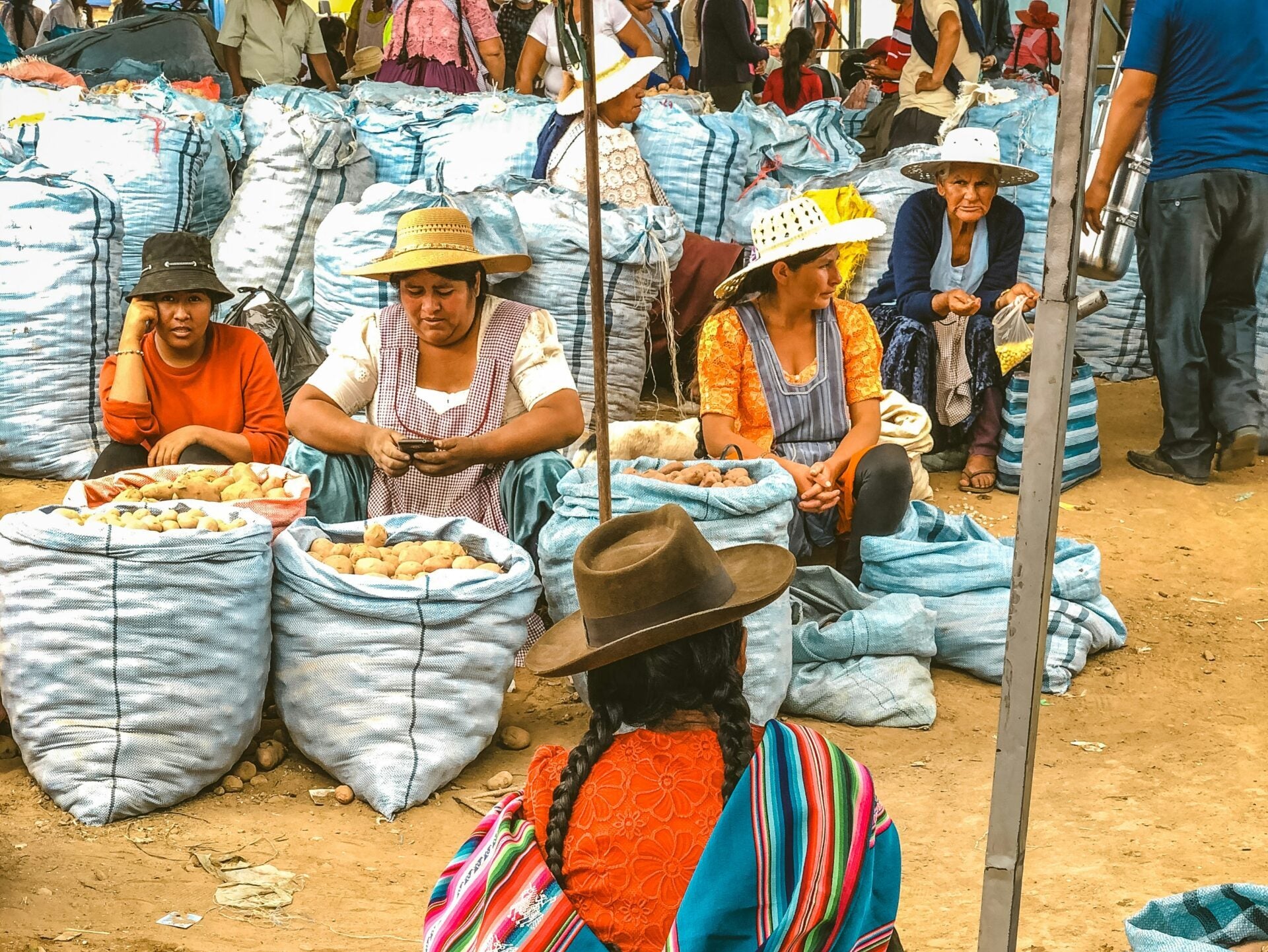
In Bolivia in April 2026, thousands of Indigenous peoples and peasant farmers, called campesinos, marched hundreds of miles on foot from the northern Amazon towards the country’s administrative capital, La Paz. Counterintuitively, they marched to oppose a law that promised to give smallholder farmers more control over their own land.
The Bolivian government, led by center-right president Rodrigo Paz, had just passed Law 1720. Law 1720 allowed land legally classified as “pequeña propiedad’’ — or small properties— to be voluntarily converted into “propiedad mediana,’’ or medium-sized property. This change made the campesinos’ properties subject to a different land regime.
But campesinos, who are present across Bolivia’s highlands, valleys and lowlands, know that land is not politically neutral. Many of the campesino smallholders discussed here came to the eastern lowlands through successive waves of migration and state-sponsored settlement beginning in the 20th century.
More land rights can mean less tenure security in a highly unequal rural economy.
With limited resources, these farmers opened up small patches of forest to grow food and livestock, mainly for family consumption. For years they have watched development dollars flood in. But rarely do they benefit.
Their resistance to Law 1720 was built on an existing distribution of power and risk that has historically not favored the campesino. As advocates of Law 1720 found out, smallholders may prefer to protect their land from dispossession even if these protections restrict their property rights and freedom to participate in land markets. Paradoxically, more land rights can mean less tenure security in a highly unequal rural economy.
The march eventually expanded to encompass broader grievances over deteriorating economic conditions, public services and rising fuel prices. For 53 days, protestors blocked major highways, including the main entry to the administrative capital, La Paz, paralyzing large parts of Bolivia’s economy.
On May 13, 2026, the Paz government repealed the law amidst mounting pressure.
The Promise and Peril of Law 1720
The Bolivian government proposed Law 1720 as an expansion of economic freedom. Branko Marinković — a businessman, senator, and one of the law’s most prominent advocates — described the reform as a step toward “agrarian freedom,” arguing that farmers should be able to decide what to do with their own property.
According to the property right regime set by the 1996 Agrarian Reform Law, small agricultural properties were typically no larger than 50 hectares in size; small cattle ranching properties were no larger than 500 hectares. These properties had long enjoyed important legal protections so they could not be subdivided or mortgaged. But this protection also regulated how small property owners could enter land and credit markets. Medium properties are governed by a different legal regime and can participate more fully in commercial transactions.
In unequal rural economies, the same legal restrictions that limit the marketability of land can also protect families from losing it.
Many agribusiness organizations in the eastern lowlands argue that restrictions on smallholder land hinders the country’s development. Their advocacy for Law 1720 was particularly framed around the situation of small producers in this lowland agricultural economy. There, much of the money and commercial agriculture involves expanding cattle ranches and soybean plantations, which bloomed in the 1990s in part because of World Bank projects and government support programs that provided infrastructure, credits, and technical assistance to the emerging commercial agricultural sector. Smallholder farmers were largely excluded from these support programs.
As a result, most campesino farmers were unable to afford the mechanization and working capital necessary to produce soy at scale. Many smallholder farmers remained in precarious conditions as they watched agricultural wealth become increasingly concentrated among large farmers.
So, at first glance, Law 1720 would deliver a long-held promise by classic economics theories: that having full rights over their land would allow people to obtain credits, and incentivize them to make long-term investment, promoting development. In contrast, restrictive forms of rural land often lead to persistent poverty until those restrictions are lifted.
However, many of the smallholders who the law presented as beneficiaries, including campesino farmers and their representative organization, adamantly opposed it. Many of them worried Law 1720 threatened their livelihoods, as changes to land ownership had in the past.
While the campesinos gained greater access to land under the MAS government, many of their demands went unmet, and the divide between smallholders and large farmers remained deep.
The widespread campesinos’ opposition to Law 1720 exposes a basic problem with thinking about property rights as a simple progression from fewer rights to more rights. In unequal rural economies, the same legal restrictions that limit the marketability of land can also protect families from losing it.
The land type conversion proposed by Law 1720 could therefore affect more than access to collateral. By reclassifying small holdings as medium-sized properties, the law would make these lands eligible for corporate ownership, thereby enabling their acquisition by agribusiness firms.
The stakes are considerable because small-property tenure is not marginal to Bolivia’s rural structure.
Bolivia’s Troubled History of Agrarian Reform and Land Concentration
According to data from Bolivia’s National Institute of Agrarian Reform (INRA), nearly 97% of all titles issued nationally are classified jointly as “pequeña propiedad” or “solar campesino.” Yet the categories of smallholdings or subsistence farms represent barely more than 10% of the country’s nearly 97 million titled hectares.
Historically, rural land in Bolivia was concentrated in the hands of large landowners who operate the hacienda system, where Indigenous farmers provided labor under highly unequal and often coercive conditions.
The 1953 Agrarian Reform attempted to redistribute land from large landowners, dismantling much of the hacienda system in the Andean highlands. But its effects were geographically uneven, and land concentration persisted in the eastern lowlands.
During the military dictatorship of the Banzer government in the 1970s, large parcels of land, some 1000 hectares each, were given to rural elites and political allies.
In 2005, the left-wing Evo Morales of the Movimiento al Socialismo (MAS) party came to power as the first Indigenous president of the country. He began a new phase of the agrarian reform that attempted to limit land concentration and give land to landless peasants and Indigenous Peoples. The 2009 Constitution established a limit of 5,000 hectares for rural landholding, and the Agrarian Reform Institute was tasked with regularizing rural land claims and redistributing large landholdings. But in practice, very few cases of land redistribution occurred.
Credit may provide opportunities for farmers to invest in their farms and expand their ability to produce and sell assets (crops). But when farmers use their farmland as collateral for a loan, they risk losing their entire livelihood if something goes wrong.
The Morales period produced major advances in land titling and in recognizing Indigenous and communal territories. But it produced considerably less redistribution of already established large private estates than reformers had initially envisaged. Eventually, successive MAS governments – Morales’s until 2019 and Luis Arce’s from 2020 to 2025 – became increasingly aligned with the country’s agribusiness sector and became reluctant to implement measures that could generate more conflicts with eastern lowland elites.
Instead, officials largely recognized existing land claims and maintained the land ownership configuration of the past. The government focused on distributing state-owned land to new campesino communities and smallholders seeking to settle in the east, including in intact tropical forests that were part of former timber concessions. These new settlements were often in such remote areas that no road, water, or electricity were available, making the life of smallholder farmers in these agricultural frontiers precarious.
So while the campesinos gained greater access to land under the MAS government, many of their demands went unmet, and the divide between smallholders and large farmers remained deep.
Why Campesinos Are Resisting Land Reform Now
When the center-right Paz government attempted to open up smallholder properties for conversion, many campesinos, who have seen successive agrarian reforms repeatedly and consistently preserve important advantages for rural elites, feared that the new law would provide a pathway for large agribusiness to acquire their land.
This concern was reinforced by the political process surrounding the law. The main organizations representing the campesino and small-producer sectors had not themselves demanded this particular reform.
The heavy involvement of the agribusiness sector in advocating for the law indicates that commercial agricultural actors expected to benefit from changes to the country’s rural land-tenure regime.
Several criticized the lack of consultation before the law was adopted. At the same time, business and agribusiness actors were among its most visible advocates. The way the reform developed does not demonstrate that the law was designed to dispossess smallholders, but it helps explain why its intended beneficiaries questioned whose interests the reform would ultimately serve.
One part of Law 1720 that warrants scrutiny is the government’s proposal to expand access to credit. It is important not to assume that the inability to mortgage land is the principal obstacle preventing small farmers from borrowing money from banks. In practice, agricultural credit is also strongly shaped by the type and profitability of the crop being financed, expected cash flows, market access, the borrower’s previous repayment record, existing indebtedness, and other assessments of productive and credit risk. Converting land into collateral may therefore expand one possible source of guarantees without necessarily resolving the underlying constraints that keep many small producers outside formal credit markets.
The timing of Law 1720 also matters. Bolivia is currently experiencing a severe economic crisis, while agricultural producers have faced recurrent production losses associated with climate shocks, rising input costs, and relatively expensive credit. Under such conditions, borrowing against land can create additional risks for economically vulnerable producers. A failed harvest, falling prices, or another adverse shock could make repayment difficult and expose the property used as collateral to foreclosure or distressed sale.
In other words, credit may provide opportunities for farmers to invest in their farms and expand their ability to produce and sell assets (crops). But when farmers use their farmland as collateral for a loan, they risk losing their entire livelihood if something goes wrong. This risk is only amplified with more severe climate events. Thus, instead of a lender absorbing the risk of a bad harvest, economy or earthquake, that risk is transferred directly to farmers’ most important asset: their land.
While a rural economy that concentrates land in the hands of a few may be more efficient in producing agricultural commodities such as soy and cattle, it won’t necessarily make people feel more secure, keep rural families fed, or build a stronger society.
More importantly, the process of losing one’s land does not need to be violent: When campesino farmers face a crisis, such as drought, the normal, legal operations of the financial system — like bank foreclosures or cheap sales during financial stress — can push land out of the hands of the smallholder farmers, potentially contributing to greater land ownership concentration.
We cannot know for certain what the long-term effects of Law 1720 would have been because it was repealed shortly after its adoption. However, the heavy involvement of the agribusiness sector in advocating for the law indicates that commercial agricultural actors expected to benefit from changes to the country’s rural land-tenure regime.
The widespread campesino opposition to land market liberalization therefore illustrates how expanding one dimension of economic freedom can simultaneously weaken another. While a rural economy that concentrates land in the hands of a few may be more efficient in producing agricultural commodities such as soy and cattle, it won’t necessarily make people feel more secure, keep rural families fed, or build a stronger society.