Over 590,600 people have been deported from the United States since January 2025. These deportations have had an outsized impact on the agricultural industry because about two out of every five farmworkers are undocumented; migrant labor makes up nearly 55% of the agricultural labor force.
Farmers and agricultural producers complain that labor shortages have escalated as a direct result of U.S. Immigration and Customs Enforcement (ICE) and U.S. Customs and Border Protection (CBP) raids on farms, ranches, and dairies.
The raids pose a serious threat to the security and long-term sustainability of the U.S. food supply as many workers are too afraid to show up to work, resulting in crops languishing and rotting in the fields.
For over 150 years, migrant farmworkers have formed the hidden backbone of the global food supply.
We have yet to grasp the long-term social and economic impacts of such drastic measures, which represent a systemic shock to the fundamental infrastructure of U.S. agriculture as well as the economy.
Without farmworkers, the agricultural industry is literally falling apart.
Farmworkers Are the Backbone of US Agriculture
For over 150 years, migrant farmworkers have formed the hidden backbone of the global food supply. They perform the work that most Americans today find too difficult, dangerous, or dirty, and at wages many native-born citizens find unacceptably low.
As one Nebraska agricultural business owner said, “Americans don’t want those jobs.”
Even with technological advancements, manual labor is integral to every step of agricultural labor. This labor is often hidden within the transnational infrastructures of labor required to bring food to our tables.
We call these infrastructures food circuits, where food commodities and people move across borders and regulations, often with contradicting levels of freedom. Food circuits are expansive infrastructures and touch every part of our lives — they include farms, warehouses, cooling facilities, transportation systems, grocery stores, wholesale markets, restaurants, delis, school cafeterias, home kitchens, as well as the people who work in these places.
Migrant farmworkers report feeling “hunted like animals” simply going to work. The undiscerning use of fear and force is causing harm that reverberates indiscriminately across all communities.
Despite the critical role of agricultural labor, many people in the U.S. and Europe blame migrants for societal woes like housing shortages, labor competition, rising inflation, or declining social services. Yet, migrant farmworkers are one of the most vulnerable groups when it comes to labor exploitation, as well as lack of access to social services.
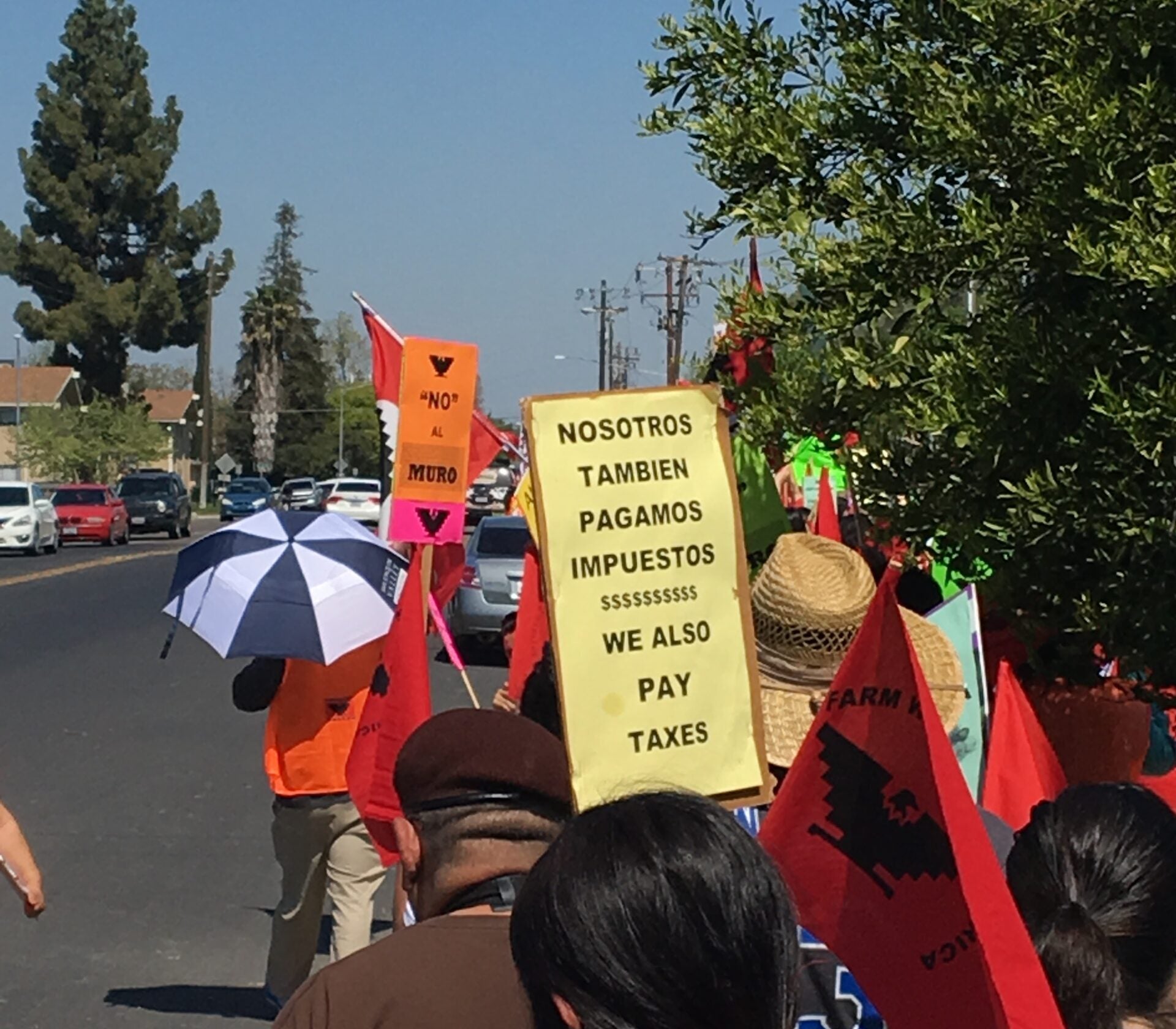
Migrants also pay taxes. For instance, undocumented workers in the U.S. pay taxes on their earnings through automatic payroll deductions and sales tax on everyday purchases. Farmworkers also contribute to essential federal and state services such as the Supplemental Nutrition Assistance Program, Medicare, and Social Security that they — by virtue of their legal status — cannot enjoy.
Even those with permanent residency or who are naturalized U.S. citizens may refrain from accessing these services due to fears of appearing on government databases and being ensnared in over-reaching anti-migration processes.
Ice Raids Create Fear and Anxiety for Farmworkers
In May 2025, the Department of Homeland Security (DHS) under the President Donald Trump administration was set. Although the Trump administration briefly paused raids on agricultural facilities in June 2025 due to the backlash from the agricultural industry, by summer 2026 the DHS quota was closer to 1,500 arrests each day.
ICE publicly maintains that its aim is “to protect public safety, national security, and economic stability.” Yet, targeting those whose daily work ensures the production, stability, and safety of the U.S. food supply runs counter to such goals. ICE’s own records demonstrate that 79 percent of those detained do not have any criminal records.
These ICE raids have created a widespread atmosphere of fear and anxiety and claimed the lives of multiple people. Jaime Alanis, 57, fell 30 feet from the ceiling of a greenhouse during what was widely characterized as a chaotic ICE raid.
Minnesotans Renee Good and Alex Pretti were shot to death in two separate incidents by ICE agents.
Such actions by federal agents have emboldened citizens to enact racist intimidation and violence against migrants without fear of repercussions. Some citizens even impersonate immigration agents to do so.
ICE raids in 2025 in Oxnard, California, alone cost up to $3-7 billion in crop losses and a 5-12% increase in produce prices. By disrupting the food supply and raising costs, the raids have had a devastating impact on workers and consumers.
Migrant farmworkers report feeling “hunted like animals” simply going to work. Many have fled their workplaces or faced food insecurity because of the fear of going to supermarkets or other public places. The undiscerning use of fear and force is causing harm that reverberates indiscriminately across all communities.
Sara is a mother and migrant farmworker in California who harvests berries and bell peppers among other fruits and vegetables. She explained to us that she is afraid not only to go to work, but also to walk her children to school or pick them up. Every time she leaves the house, she worries that it might be the last time she sees her family.
Many migrant workers have lived and worked in the same community for decades and become contributing members. More than 4 million people in the U.S. live in families with mixed-migration statuses. For these families, the possibility of family separation is a living nightmare.
It is difficult to imagine the ways in which these raids have caused damage to the social fabric within communities whose neighbors, children, and friends have been taken away from their families and farms in handcuffs.
Agricultural Leaders Are Beginning to Speak Out
Overwhelmingly, industry leaders and employers across the U.S. who work closely with migrant workers are speaking out against migration policies that hurt the best interests of the country.
On the one hand, all Americans have paid an extraordinary economic price. ICE raids in 2025 in Oxnard, California, alone cost up to $3-7 billion in crop losses and a 5-12% increase in produce prices. By disrupting the food supply and raising costs, the raids have had a devastating impact on workers and consumers.
In addition, individuals and communities that are being torn apart by ICE raids have paid a social and emotional cost. Business owners in Nebraska have spoken out against seeing how their workers were treated, saying it was wrong to put “young Hispanic mothers, with little kids, in handcuffs.”
We urge policymakers to support upcoming bills in the U.S. Congress that recognize both the ongoing and substantial need for migrant labor as well as the need to ensure that the U.S. remains a safe and attractive place for workers.
Agrifood industry leaders in South Dakota have called unprecedented immigration audits “stupid” for decimating an essential workforce.
Texas farmers have experienced severe labor shortages as both documented and undocumented workers fear being arrested at work. Many continue to be impacted and upset about the long-term economic effects of such raids.
Agricultural industry leaders in Idaho whose businesses rely upon migrant workers have commissioned their own evidence-based research reports attesting to the value that migrant workers bring to the state.
These same business people publicly disagree with elected officials over proposed migration policies that would exacerbate labor shortages in addition to the inaccurate characterizations of migrant workers.
Policy Solutions to Protect Farmworkers
For years, many have proposed that guestworker programs, like the H-2A visa or e-Verify, may work for some migrant workers. However, for others, the programs pose overly complicated and bureaucratic processes that can be too difficult to navigate or too costly.
Specifically for farmworker groups, there is concern that H-2A systems legalize steep power differentials between growers and workers. For example, farmers would dock farmworker wages for housing costs if the visas increased in expense; workers would have no ability to negotiate or choose. These conditions are ripe for exploitation and debt peonage.
Instead, we urge policymakers to support upcoming bills in the U.S. Congress that demonstrate bipartisan efforts to place the interests of the nation first by recognizing both the ongoing and substantial need for migrant labor as well as the need to ensure that the U.S. remains a safe and attractive place for workers.
These bills recognize the essential work of migrant farmworkers by providing them with carefully crafted pathways toward legal status, while securing the future of the U.S. agricultural sector and food supply.
The Farm Workforce Modernization Act, led by Democrat Zoe Lofgren and Republican Dan Newhouse, introduces a new temporary legal status for undocumented farmworkers under the Certified Agricultural Worker status with a potential pathway to permanent residency. This legislation would protect workers from deportation.
Senator Alex Padilla’s Renewing Immigration Provisions of the Immigration Act of 1929 is another bill that would update U.S. migration policies under the Registry system — a system last updated in 1986 under President Ronald Reagan. This bill aims to provide pathways to permanent residency on the condition that applicants pass a rigorous screening process and reside in the U.S. continuously for at least seven years.
These bills recognize the essential work of migrant farmworkers by providing them with carefully crafted pathways toward legal status, while securing the future of the U.S. agricultural sector and food supply for almost 350 million Americans.
There could not be a more urgent time to create pathways to protect farmworkers who make the U.S. agricultural industry possible.