Although women and girls have made gains in leadership roles and education in the last 30 years, progress has been slow: At the current rate, achieving gender parity worldwide will take roughly 134 years.
The gap is especially stark in science, technology, engineering and mathematics (STEM). Girls perform as well as boys in math and science, yet report lower confidence in these subjects from a young age — shaping the choices they make long before they enter the workforce.
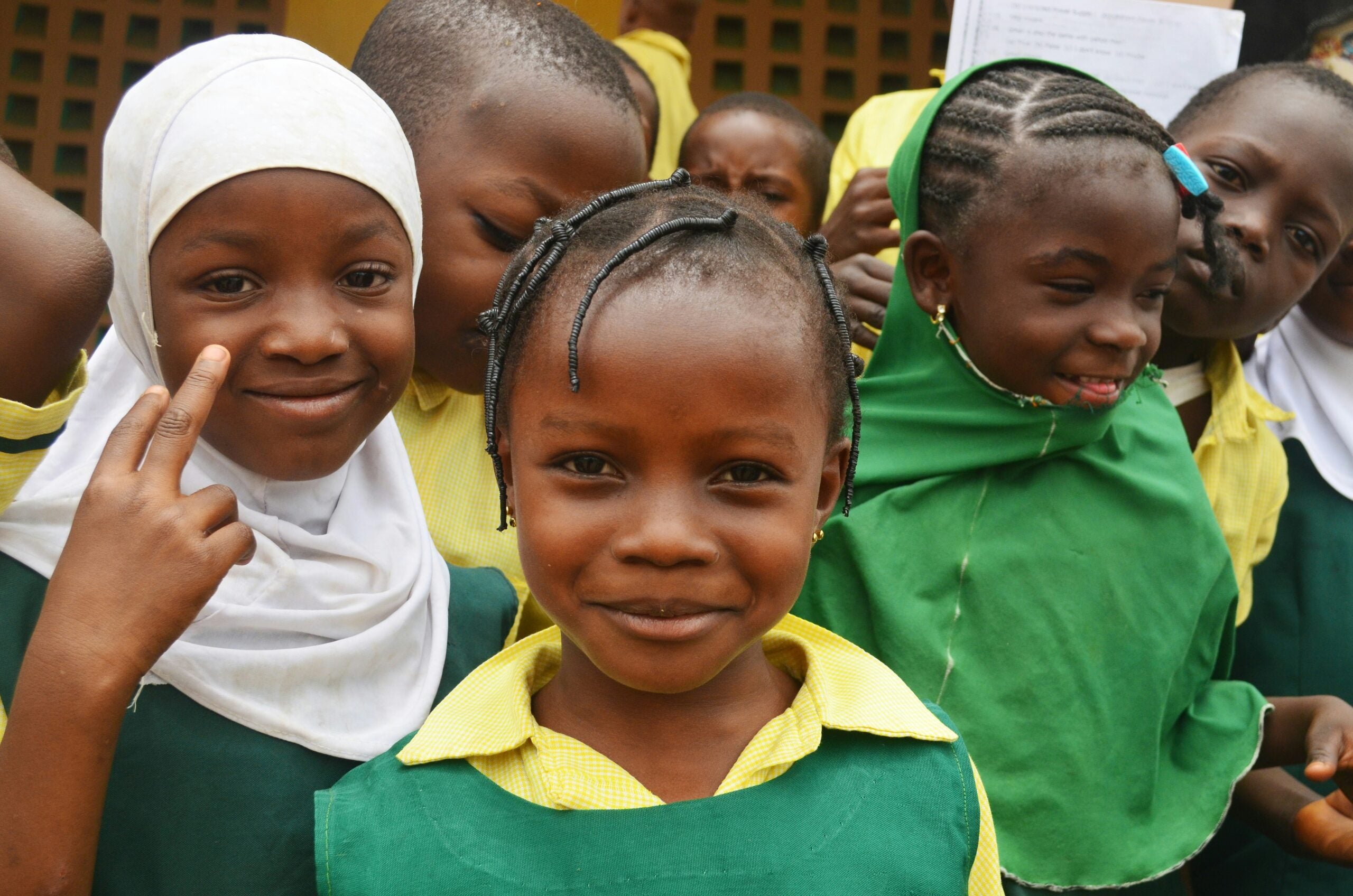
Programs provided by the likes of STEM METS in Nigeria are proving that the solution lies in starting earlier. By engaging children as young as three with hands-on learning experiences, mentorship and female role models, early interventions can reshape confidence and subject choices long before the workforce becomes the battleground.
But the scale of the challenge remains enormous. Across countries and socioeconomic backgrounds, girls are less likely to pursue advanced mathematics, physics, engineering, or information and communication technology. In many countries, female participation in technical and vocational STEM tracks remains below 30%.
As a mother of a Black woman who is soon to be a STEM graduate herself, I ask myself, “What lies ahead for my daughter if this slow trajectory of change continues?”
These early patterns compound. Women account for 35% of STEM graduates globally — only 28% in engineering, manufacturing and construction. They hold fewer leadership roles in STEM sectors and earn less than their male counterparts within the sector.
The result: Millions of girls never realize their life potential or have the opportunity to contribute STEM skills to their communities or influence decisions that shape their lives and livelihoods. Education is not translating into economic and leadership empowerment, and gender parity must be viewed as an economic growth strategy, not just a social add-on.
Engaging Girls in STEM Earlier
In response to the gender gap, global programs in public and private sectors have invested substantially in women’s STEM education at the secondary and university levels. However, these investments are often too little, too late, as well as lacking the required sustainability efforts required for meaningful impact. Education must begin earlier.
The gender gap begins not with subject choices or career paths, but with access to education itself — only 40% of girls complete lower secondary school, a figure that drops further in rural and lower-income communities.
Evidence suggests that when girls are not introduced to math and science until adolescence, they are far more likely to disengage. Teaching that is not related to real-world learning opportunities also contributes to a lack of interest.
Inspiration alone isn’t enough.
Other scholars suggest that girls do not feel encouraged to pursue STEM in part because they lack female teachers.
In my own experience, science and math classes skewed heavily toward male teachers. This pattern continued through secondary school; although I attended an all girls’ school, our STEM teachers were predominantly male.
My classmates and I aspired to become scientists largely because of family influences, not because we saw women like us in those roles.
Closing the Learning and Skills Gap
To help close the learning and skills gap we saw firsthand in Nigeria’s education system, a colleague and I founded STEM METS in 2013. The organization targets children from as young as three to sixteen, and it fosters hands-on experiential learning and real-world opportunities through its extracurricular programs, field trips and camps. Engaging female role models and mentors also builds girls’ confidence and interest in STEM fields early.
But inspiration alone isn’t enough.
We found that many schools are working with out-of-date curricula that do not foster problem-solving or creative thinking skills, leaving students without the relevant 21st-century skills they need to access meaningful job opportunities. STEM METS bridges this gap through hands-on, experiential learning and by introducing girls to emerging technologies that are reshaping how we live and learn.
The most important idea behind our work, though, is simply timing. To create a pipeline for women in STEM, you have to start in early childhood — not after learners have already graduated.
Keeping the Pipeline Open
STEM skills open vast opportunities across multiple sectors and can lead to more economic independence, as well as dignified and meaningful work. When girls and women participate in STEM, economies double their talent pool and broaden the perspectives driving innovation.
For a country like Nigeria, improving girls’ and women’s access to digital, technical, and advanced skills is not optional; it is central to future economic empowerment. We must connect education deliberately to employability and ensure that women and girls have access to skills in future-facing sectors, such as green jobs, AI, cybersecurity and digital systems.
Furthermore, we must provide support through more equitable care systems. Both government officials and employers need to see care not as a side issue, but as central economic issues affecting women’s ability to work and progress.
We must invest in early interventions that widen the pipeline and keep it open for women and girls everywhere.
For example, the World Economic Forum’s Global Gender Gap Report suggests that achieving workforce gender parity requires governments and businesses to “facilitate the adoption and exercise of equitable parental leave” so that childcare responsibilities are shared more fairly. It also says greater parental parity in leave is positively associated with higher female labor-force participation.
As a mother of a Black woman who is soon to be a STEM graduate herself, I ask myself, “What lies ahead for my daughter if this slow trajectory of change continues?”
The future I imagine for her would be one in which she enters the workforce on merit, is recognized for her capability as a scientist, earns compensation equal to her peers regardless of gender, and advances into leadership.
I imagine an inclusive workplace where her ideas are valued — shaped both by her education and by her experience in the world as a woman — and supported by a care infrastructure that means she never has to choose between family and career.
I imagine that she, in turn, becomes a visible role model for other young girls.
If we are serious about gender equality, we cannot measure progress by boardroom successes alone. We must invest in early interventions that widen the pipeline and keep it open for women and girls everywhere.