January 29, 2026
The Honorable Robin L. Rosenberg
Director of the Federal Judicial Center
Thurgood Marshall Federal Judiciary Building
One Columbus Circle NE
Washington, DC 20002
Dear Judge Rosenberg:
For decades, litigants and judges alike have used the Federal Judicial Center’s Reference Manual on Scientific Evidence. The U.S. Supreme Court has cited it more than once to explain foundational principles in science and math.1 And that Court isn’t alone. The Manual “has been provided to more than 3,000 federal judges and even more state court judges and others and has been cited in over 1,700 opinions.”2 So accuracy and impartiality in the Manual is vital.
At least up to this point, the Center has been careful to stress that the Manual merely “describes basic principles of major scientific fields.”3 It was “not intended to instruct judges concerning what evidence should be admissible or establish minimum standards for acceptable scientific testimony.”4 Rather, the Center chiefly intended that the Manual would “open legal institutional channels.”5
Whatever one might say about past editions, the recently issued Fourth Edition cannot claim such restraint. It does more than address undisputed scientific principles. Instead, the Fourth Edition places the judiciary firmly on one side of some of the most hotly disputed questions in current litigation: climate-related science and “attribution.” Such work undermines the judiciary’s impartiality and places a thumb on one side of the scale. It does so even as these issues are pending before the Supreme Court and other parts of the federal judiciary.
We ask that the Center immediately withdraw the inappropriate “Reference Manual on Climate Science” included in the Fourth Edition. Judges should resolve these issues through the ordinary processes of litigation—not by way of a judicially driven, committee-led, quasi-amicus brief. The problems in the climate reference section seem to have started in selecting its authors. Jessica
Wentz and Radley Horton are both connected with climate studies programs at Columbia University. And Columbia and its research partners have long viewed lawsuits against States, traditional energy producers,6 and others as “opportunities” to “resolve” what they see as “the pressing dangers created by climate change.”7 Wentz and Horton themselves have applauded litigation as a tool to advance their preferred political objectives, complaining that the “political sphere in the United States continues to be clouded with false debates over the validity of climate change.”8 As they see it, the courtroom provides a better venue.9
Wentz and Horton’s work in the Manual’s Fourth Edition seems intended to ensure that the judiciary will continue to accept their views uncritically. As best we can tell, Wentz and Horton did not consult any experts who might take a view inconsistent with Wentz and Horton’s conception of “consensus.” They do not cite, for instance, any of the leading experts from the Department of Energy’s recent report on climate change.10 Instead, they endorse a select group of “authoritative science bodies,” such as the Intergovernmental Panel on Climate Change.11 They even suggest that an expert’s consistency with the IPCC should be integrated as a part of the standard Daubert analysis.12 At the same time, they do not acknowledge the significant criticisms that experts have levied against the IPCC’s purportedly “authoritative” work.13 Thus, one side’s view becomes the baseline for all future judicial decisions on the subject. In fact, the Manual‘s committee-based resolution of scientific issues is more consistent with the European approach to adjudication.14
Flawed conclusions then follow from this flawed sourcing.
In one discussion of potential expert testimony in climate- and energy-related cases, for example, the authors offer a cursory defense of “novel” attribution methods—sweepingly reassuring judges that these methods “[i]n many cases” are not “novel” at all.15 Later, in canvassing so-called attribution science, the authors declare that certain aspects of that evolving field are actually “unequivocally” established—leaving a litigant who dares to take a different view effectively doomed from the start.16 Among other things, the Manual states that human activities have “unequivocally warmed the climate,” that it is “extremely likely” human influence drives ocean warming, and that researchers are “virtually certain” about ocean acidification—all treating contested litigation positions as settled fact.
Elsewhere, the authors opine that “it is possible to quantify the contribution of anthropogenic forcing to specific damages, harms, and economic and noneconomic losses”17—the ultimate remedy question at issue in a variety of litigation currently pending before federal courts. Unsurprisingly, then, the authors race to embrace a controversial study that ties specific harms to emissions from specific “major” sources.18 And the authors conceive of climate-related impacts in the broadest possible terms—which would in turn support the most substantial findings of liability for climate-driven plaintiffs.19
Aside from their tendency to offer conclusive opinions on matters of serious dispute, the authors also canvass legal issues divorced from the scientific considerations that the Manual is meant to address. In these sections, they turn their conclusions into a litigation playbook. In one case, the Manual provides a three-part causation test for judges to apply when determining whether defendants’ emissions contributed to plaintiffs’ injuries. This is not neutral education, but rather a decision tree for resolving the central contested issue in climate tort litigation.20 Elsewhere, after surveying various cases implicating climate and environmental issues (some of which we brought), the authors again explain how “climate science may factor into the resolution of [these] climate lawsuits.”21 Among other things, the Manual explicitly frames itself as helping resolve the exact causation questions at issue in pending cases.22
In other words, the authors offer unsolicited, ex parte expert opinions on matters that they recognize are directly at issue in ongoing suits. In several places, for instance, the authors dismiss any suggestion that climate science is too speculative or uncertain to justify relief.23 They do so even though those concerns present one of the central problems in climate-related cases (and eve though certainty is an essential element of expert admissibility standards).24
In short, the climate-related section of the Manual is rife with methodology issues.
But placing the judiciary’s stamp of approval on this work elevates it from problematic to affirmatively destructive. “Article III, § 1[] [of the U.S. Constitution] guarantee[s] … an independent and impartial adjudication by the federal judiciary of matters within the judicial power of the United States.”25 Nothing is “independent” or “impartial” in issuing a document on behalf of America’s judges declaring that only one preferred view is “within the boundaries of scientifically sound knowledge.”26 Even more so when active litigation raising those exact issues is pending before federal courts—including before the Supreme Court.27 That kind of judicial predetermination is anathema to our system of justice.
And the problem only grows considering how many climate-related cases involve questions of state regulatory authority and state common law. By predetermining scientific underpinnings, the Manual effectively prejudges federalism questions that should be resolved through litigation. That sounds nothing like a “dispassionate guide.”28 Nor does it seem consistent with the Center’s mandate “to further the development and adoption of improved judicial administration in the courts of the United States.”29 And ultimately, “[i]n politically contentious debates over matters shrouded in scientific uncertainty, courts should not assume that self-described experts are correct.”30
Really, this issue transcends climate policy. If the Center can predetermine scientific questions in climate cases, what prevents it from doing the same for pharmaceutical liability, election disputes, or Second Amendment cases? The precedent is dangerous regardless of one’s views on climate change. Given those consequences, we anticipate sharing this letter with congressional leadership so that they may examine whether the Center has exceeded its statutory mandate or otherwise overstepped.
Article III guarantees every litigant—whether a State, an energy company, or an environmental group—the right to an independent and impartial tribunal. When the judiciary’s own research arm predetermines contested questions in active litigation, that guarantee becomes meaningless. The Center should withdraw this chapter immediately, not out of political expedience, but out of fidelity to the Constitution it serves. The Center should also establish procedures to prevent similar advocacy-based chapters in future editions. We would appreciate a response indicating whether the Center plans to take these steps by February 6, 2026.
Sincerely,
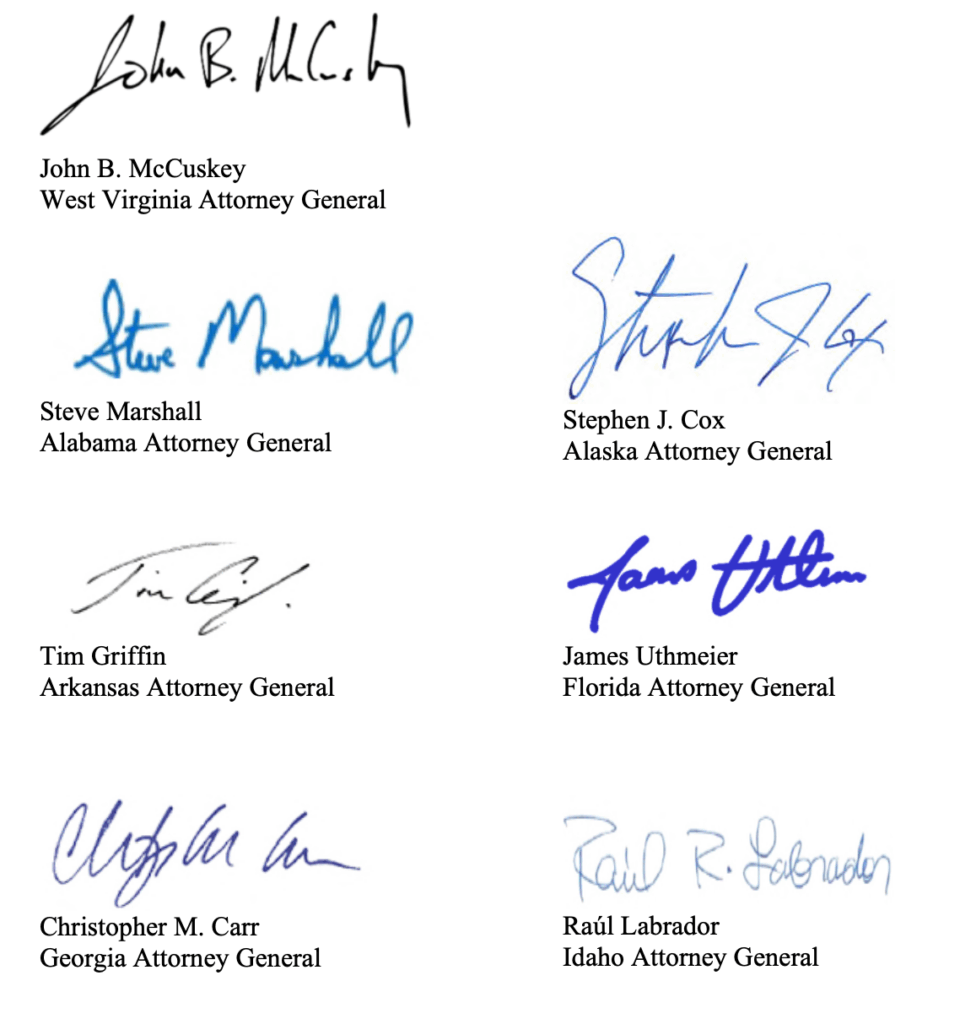
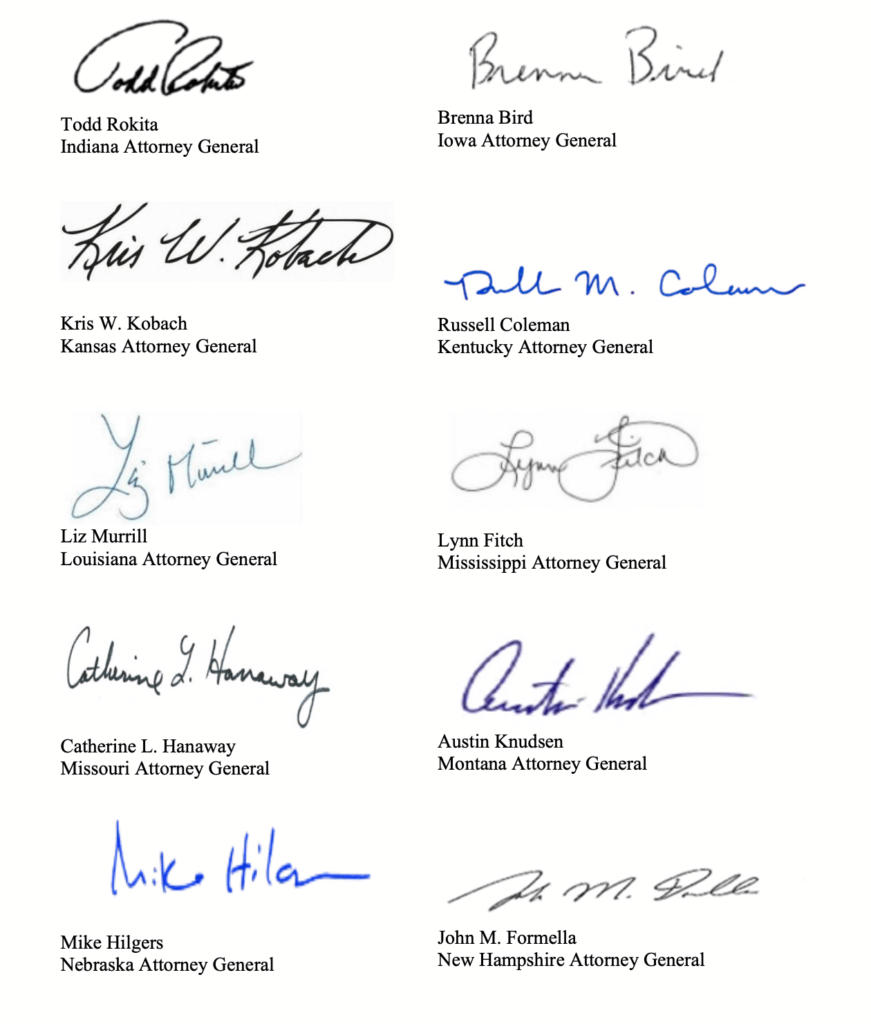
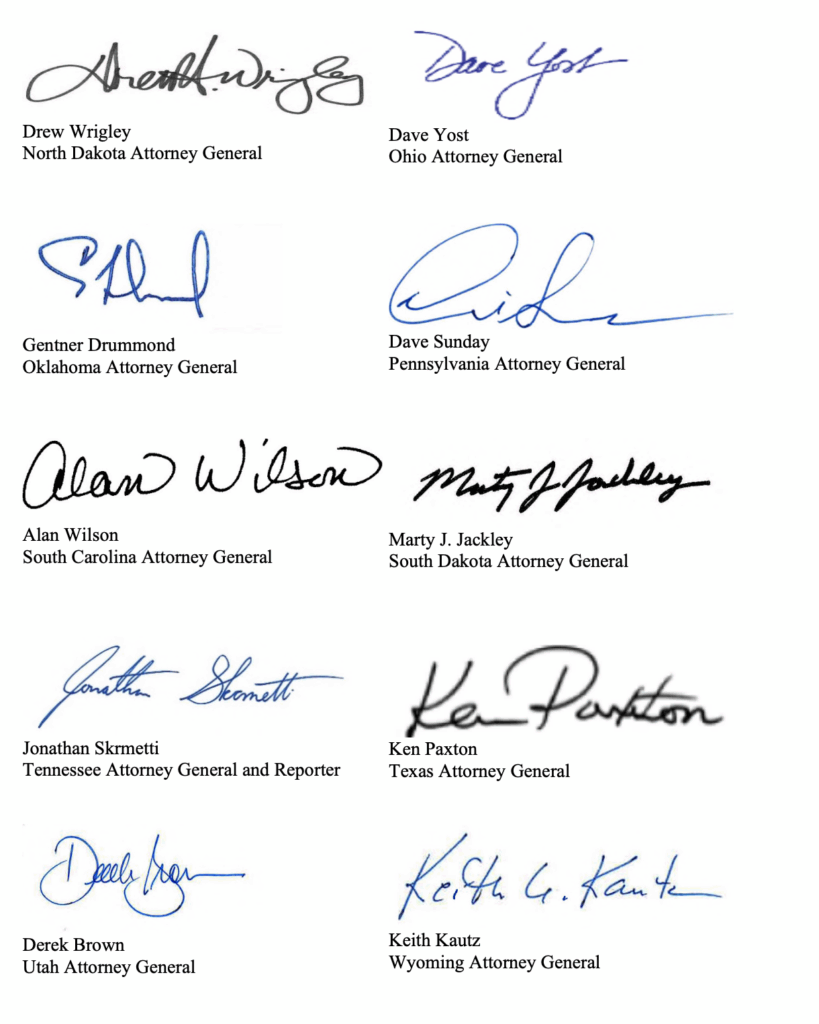
cc: Chief Justice John G. Roberts, Jr., Supreme Court of the United States
Judge Kathleen Cardone, U.S. District Court for the Western District of Texas
Judge R. Guy Cole, Jr., U.S. Court of Appeals for the Sixth Circuit
Judge Sara L. Ellis, U.S. District Court for the Northern District of Illinois
Judge Ralph R. Erickson, U.S. Court of Appeals for the Eighth Circuit
Judge Michelle M. Harner, U.S. Bankruptcy Court for the District of Maryland
Judge Suzanne Mitchell, U.S. District Court for the Western District of Oklahoma
Judge Lynn Winmill, U.S. District Court for the District of Idaho
Judge Robert J. Conrad, Jr., Director of the Administrative Office of the U.S. Courts
1 See, e.g., Brnovich v. Democratic Nat’l Comm., 594 U.S. 647, 677 n.17 (2021).
2 Michael Green, The Education of the Judiciary: The Sciences Addressing Disease Causation, 49 SW. L. REV. 492, 499 (2021).
3 FED. JUD. CTR., REFERENCE MANUAL ON SCIENTIFIC EVIDENCE xv (3d ed. 2011).
4 Id.
5 Id. at 9.
6 Even in the research notes in the Manual, the authors bemoan research “funded by fossil fuel interests or other
industry actors.” FED. JUD. CTR., REFERENCE MANUAL ON SCIENTIFIC EVIDENCE 1652 (4th ed. 2025). The authors
express no similar skepticism towards those who fund research with an aim to advance plaintiff-side climate-related
litigation.
7 UNITED NATIONS ENV’T PROGRAMME, GLOBAL CLIMATE LITIGATION REPORT: 2023 STATUS REVIEW 74 (2023).
8 Michael Burger, Jessica Wentz & Radley Horton, The Law and Science of Climate Change Attribution, 45 COLUM.
J. ENV’T L. 57, 239 (2020). Michael Burger is counsel for the City of Honolulu in ongoing litigation against energy
companies related to climate change. See Br. for Resps., Sunoco LP v. City & Cnty. of Honolulu, 145 S. Ct. 1111
(2025) (23-947), 2024 WL 1995228. Burger also wrote an amicus brief opposing the State of West Virginia in West
Virginia v. EPA, 597 U.S. 697 (2022).
9 Burger, Wentz & Horton, supra note 8, at 239. Wentz has even written about how Plaintiffs should bring such suits.
See generally, e.g., Jessica Wentz & Benjamin Franta, Liability for Public Deception: Linking Fossil Fuel
Disinformation to Climate Damages, 52 ENV’T L. REP. (ELI) 10,995 (2022). And our concerns extend beyond the
named authors. See, e.g., Michael A. Fragoso, Why is Congress Funding the Judiciary’s Support for Climate
Plaintiffs?, NAT’L REV. (Jan. 15, 2026, 1:52 PM), https://tinyurl.com/d5h8w2k9 (cataloguing the many plaintiffs’
experts who were involved in developing the report).
10 See generally U.S. DEP’T OF ENERGY, CLIMATE WORKING GRP., A CRITICAL REVIEW OF IMPACTS OF GREENHOUSE
GAS EMISSIONS ON U.S. CLIMATE (2025).
11 See FED. JUD. CTR., supra note 6, at 1581-82 (“The IPCC is widely considered to be the leading scientific body for
the assessment and synthesis of research on climate change.”).
12 Id. at 1585.
13 See, e.g., Jason S. Johnston, Reliance on Climate Change Data From IPCC Is Badly Misplaced, FRASER INST. (Sept.
13, 2022), https://tinyurl.com/yc34f22u (“The IPCC is not and has never been an objective science assessment organization. It was created by and has always been controlled by the governments of countries that perceive political benefits from international regulatory action to reduce greenhouse gas emissions.”).
14 Mingzhe Zhu & Liyuan Fan, A Comparative Study of the Judicial Construction of Scientific Credibility in Climate
Litigation, 33 REV. OF EUR., COMP. & INT’L ENV’T L. 250, 261-62 (2023).
15 See FEDERAL JUDICIAL CENTER, supra note 6, at 1585.
16 Id. at 1594-98.
17 Id. at 1609.
18 Id. at 1622-23.
19 Id. at 1604-14.
20 Id. at 1584.
21 Id. at 1631.
22 Id. at 1564.
23 See, e.g., id. at 1636, 1639.
24 McClain v. Metabolife Int’l, Inc., 401 F.3d 1233, 1237 (11th Cir. 2005) (“Daubert requires the trial court to act as a gatekeeper to insure that speculative and unreliable opinions do not reach the jury.”).
25 Peretz v. United States, 501 U.S. 923, 929 n.6 (1991) (citation omitted).
26 See FED. JUD. CTR., supra note 6, at xvii.
27 See, e.g., Cnty. Comm’rs of Boulder Cnty. v. Suncor Energy USA, Inc., 2025 CO 21, cert. pet. filed, 25-170 (Aug. 8, 2025); see also, e.g., Compl., West Virginia v. James, 1:25-cv-00168-BKS-DJS (S.D.N.Y. Feb. 6, 2025).
28 See FEDERAL JUDICIAL CENTER, supra note 6, at xiii.
29 28 U.S.C. § 620.
30 United States v. Skrmetti, 605 U.S. 495, 547 (2025) (Thomas, J., concurring).