
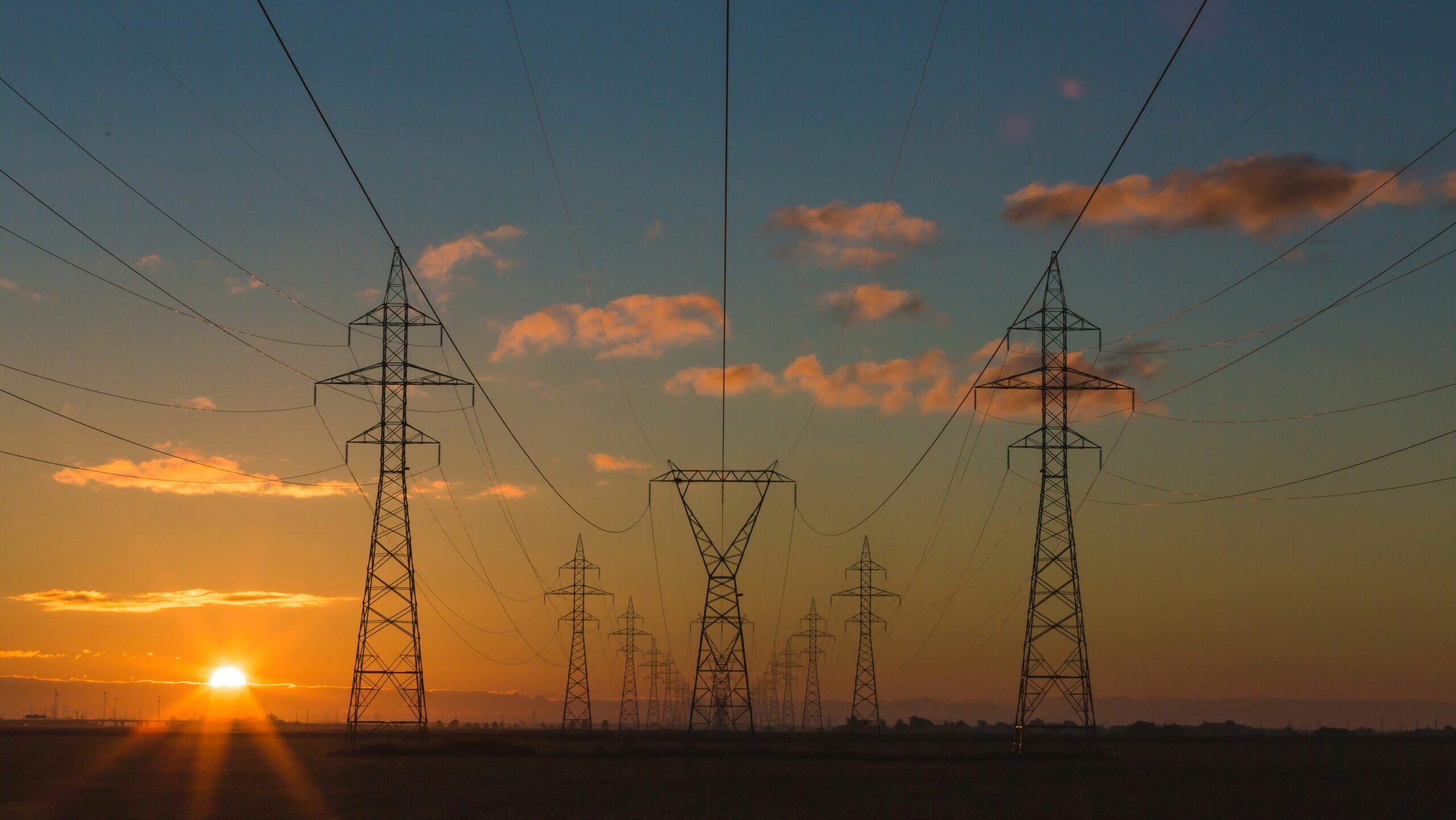
When the power goes out, disruptions are felt far and wide. Water systems lose pumping capacity and pressure, disrupting access to drinking water and wastewater treatment. Cell towers stop working. Hospitals switch to backup generators. Traffic signals fail. Grocery stores lose refrigeration. Internet access collapses.
Over the past two decades, weather events in the United States have caused repeated large-scale outages. There have been hurricanes along the Gulf Coast and Atlantic seaboard. Catastrophic winter storms in Texas and the Midwest. Wildfire-driven disruptions in the West. Extreme heat events that strain electricity systems across multiple regions. Flooding that disables substations and other critical infrastructure.
These catastrophes are not isolated regional anomalies. Rather, these disruptions increasingly reflect a broader pattern of climate-related stress across geographically diverse parts of the electricity system.
And yet this growing grid fragility presents a paradox.
The grid is being operated under emerging climate conditions using institutional and engineering frameworks developed for a different era.
Much of the existing grid was designed using historical weather assumptions. Infrastructure standards and planning practices were generally calibrated around the expectation that future environmental conditions would resemble the past.
But historical climate conditions are becoming increasingly unreliable guides for future infrastructure planning.
Extreme heat is pushing electricity demand beyond historical norms while simultaneously reducing generation and transmission efficiency. Wildfires are threatening substations and transmission corridors in regions once considered relatively low risk. Flooding increasingly threatens both coastal and inland grid infrastructure. Hurricanes are becoming wetter and more destructive. Compound events — such as heat waves coinciding with drought or wildfire — are introducing operational conditions many utilities were never designed to manage.
In effect, the grid is being operated under emerging climate conditions using institutional and engineering frameworks developed for a different era.
What Grid Modifications Were Done
The U.S. has invested heavily in grid modernization over the past two decades. Utilities have deployed advanced sensors, smart meters, automated switching systems and digital monitoring platforms across both transmission and distribution networks.
Federal investment has also accelerated substantially in recent years. The Infrastructure Investment and Jobs Act alone allocated tens of billions of dollars toward grid resilience, transmission expansion, wildfire mitigation, cybersecurity and clean energy integration through programs administered by the Department of Energy and related agencies. Reliability oversight of the bulk power system has likewise become significantly more formalized since the major reforms that followed the 2003 Northeast Blackout.
What is emerging is not simply an infrastructure challenge. It is a governance challenge.
But large-scale outages driven by extreme weather continue to impose severe economic and societal costs.
The problem is not simply that the grid is aging or underfunded. It is that many of the assumptions underlying the design, operation and governance of the electric system no longer fully hold.
Why Grids of the Past Cannot Serve the Future
For decades, the electric grid operated under several broad assumptions. First, climate conditions would remain relatively consistent with historical experience. Second, electricity demand would grow gradually and predictably. And finally, governance structures developed during an earlier era of vertically integrated utilities would remain adequate despite the grid’s rapidly evolving physical and operational architecture.
None of these assumptions fully hold anymore.
Climate change is increasing the frequency, intensity and geographic reach of extreme weather events. At the same time, electricity demand has changed in ways that many planning frameworks were not designed to anticipate.
For instance, the electrification of transportation, buildings and industry has transformed how people live and what type of power we require. The rapid expansion of artificial intelligence infrastructure is sucking up more power than we could have ever imagined, which is intensified by accelerating data-center development.
Historical outage statistics provide limited guidance for resilience planning when historical conditions are no longer reliable predictors of future extremes.
Meanwhile, the physical architecture of the grid has evolved far more rapidly than the institutional structures governing it.
The electricity sector has become increasingly digitized, decentralized, interconnected and operationally complex. But many regulatory and governance frameworks remain fragmented, reactive and poorly aligned with emerging risks.
What is emerging is not simply an infrastructure challenge. It is a governance challenge.
Measuring Reliability Is an Outdated System
Utilities often evaluate performance using metrics that measure how long customers lose power each year. However, these metrics often exclude what are called Major Event Days, when large storms, hurricanes, heat waves and other extreme disruptions cut off power. These weather events are removed from official reliability statistics.
The logic behind the exemption is understandable. Extreme events are difficult to compare against routine operations, and utilities should not necessarily be penalized for every severe storm. But the consequence is significant. The outages imposing the greatest societal and economic costs are often treated as exceptions within the very metrics used to evaluate system performance.
The result is a statistical disconnect between the metrics used to evaluate grid performance and the outages that produce the most severe, prolonged and socially disruptive consequences.
This framing reflects a deeper institutional problem. The electric grid continues to be governed largely through retrospective reliability frameworks even as the dominant risks facing the system increasingly stem from extreme and compounding events.
That distinction matters because metrics shape incentives.
While resilience investments can increase costs today, failing to adapt infrastructure to emerging risks may impose far greater economic and societal costs over time.
Utilities are generally evaluated according to their ability to stay reliable; in other words, there are fewer small outages and people can afford them.
Long-term resilience investments, by contrast, are harder to justify because they are more expensive and their benefits are difficult to quantify. These investments are calculated based on future losses rather than on immediately observable operational improvements.
Consider undergrounding power lines, hardening substations against flooding, redesigning infrastructure using forward-looking climate projections, or building interoperable emergency information systems.
These investments can substantially reduce long-term outage risks, but they often require significant upfront capital expenditures that utilities recover through customer rates.
What’s Needed Is Large-Scale Change in the Power Grid
Utilities and regulators often default toward incremental improvements rather than large-scale adaptation strategies.
This tension is compounded by the fragmented structure of electricity governance in the U.S. The electric grid operates as one interconnected machine, but oversight is divided among multiple parties — from federal regulators to state utility commissions and private companies.
The boundaries between transmission and distribution systems were at one time relatively distinct. However, these boundaries have become increasingly blurred by distributed energy resources, grid-edge technologies and the growing digitalization of electricity networks.
The challenge facing the U.S. is therefore larger than infrastructure modernization alone. It requires rethinking how resilience itself is conceptualized, measured and governed.
The result is what some researchers describe as a jurisdictional seam: a mismatch between the physical interconnectedness of the grid and the fragmented institutions responsible for planning, operating and regulating it.
This fragmentation becomes especially problematic during major emergencies. Utilities often rely on incompatible information systems. Outage data remain siloed across organizations and jurisdictions. Federal agencies, emergency managers and utilities frequently lack a unified operational picture during rapidly evolving disasters. Even today, there is no universally standardized national framework for real-time outage reporting across all utility types.
Most people assume utilities possess seamless visibility into grid conditions. In practice, situational awareness during large-scale outages is often partial, delayed and fragmented.
This matters because modern grid failures rarely remain confined to electricity alone. The electric grid has become deeply intertwined with nearly every other essential service in society.
The challenge facing the U.S. is therefore larger than infrastructure modernization alone. It requires rethinking how resilience itself is conceptualized, measured and governed.
Reliability and resilience are not the same thing. Reliability traditionally refers to maintaining consistent service under routine operating conditions. Resilience, by contrast, involves the ability to anticipate, absorb, adapt to and recover from extreme and compounding disruptions.
What Grid Resilience Looks Like
That distinction between reliability and resilience is increasingly important because the dominant risks facing the grid are no longer routine operational failures. They are systemic disruptions driven by climate volatility as well as interdependent infrastructure systems, cyber risks and rapidly changing energy demand dynamics.
Yet many existing efforts to incorporate resilience into utility performance assessment remain fundamentally retrospective.
In some cases, resilience is approximated simply by reincorporating Major Event Days into traditional reliability metrics. While this provides a more complete accounting of past outages, it does not necessarily provide a forward-looking assessment of how the system would perform under future climate conditions or more severe hazard scenarios.
While resilience investments can increase costs today, failing to adapt infrastructure to emerging risks may impose far greater economic and societal costs over time.
For example, two utility systems may report similar outage outcomes following hurricanes, even if one system was exposed to a Category 1 storm and the other to a Category 5. Equivalent outage metrics under such conditions do not imply equivalent resilience. A system that maintains comparable performance under substantially more severe hazard conditions may in fact possess greater adaptive capacity, stronger infrastructure or more effective operational preparedness. Without accounting for hazard intensity and exposure, retrospective outage metrics alone can obscure meaningful differences in underlying system resilience.
More fundamentally, historical outage statistics provide limited guidance for resilience planning when historical conditions are no longer reliable predictors of future extremes. Metrics derived from past events cannot fully capture how infrastructure may perform under intensifying heat waves, stronger hurricanes, compound hazards or rapidly shifting demand conditions that fall outside historical experience. Nor do they adequately support the justification of proactive investments intended to reduce future catastrophic risk rather than simply document past system failures.
This creates a dangerous asymmetry. Utilities are often evaluated using historical performance metrics while simultaneously being asked to prepare for unprecedented future conditions.
Closing this gap will require more than technological upgrades. It will require institutional adaptation.
What Needs to Change
The central question is no longer whether the grid can withstand isolated disruptions within historical expectations. It is whether institutions built for the climate, governance structures, and energy demands of the 20th century can adapt quickly enough to the risks and complexities of the 21st.
Utilities and regulators will need to integrate forward-looking climate projections into infrastructure planning and engineering standards rather than relying exclusively on historical weather records.
Federal and state agencies will need to coordinate resilience planning across transmission and distribution systems that currently operate under fragmented authority.
Emergency information systems must evolve from reactive outage tracking toward predictive, real-time operational intelligence capable of supporting decisions during cascading crises.
Most importantly, policymakers will need to confront a difficult political reality. While resilience investments can increase costs today, failing to adapt infrastructure to emerging risks may impose far greater economic and societal costs over time.
The vulnerabilities now emerging across the grid are not simply the product of aging infrastructure or isolated failures. They reflect a widening gap between the realities shaping the modern electricity system and the assumptions upon which much of that system is still governed.