
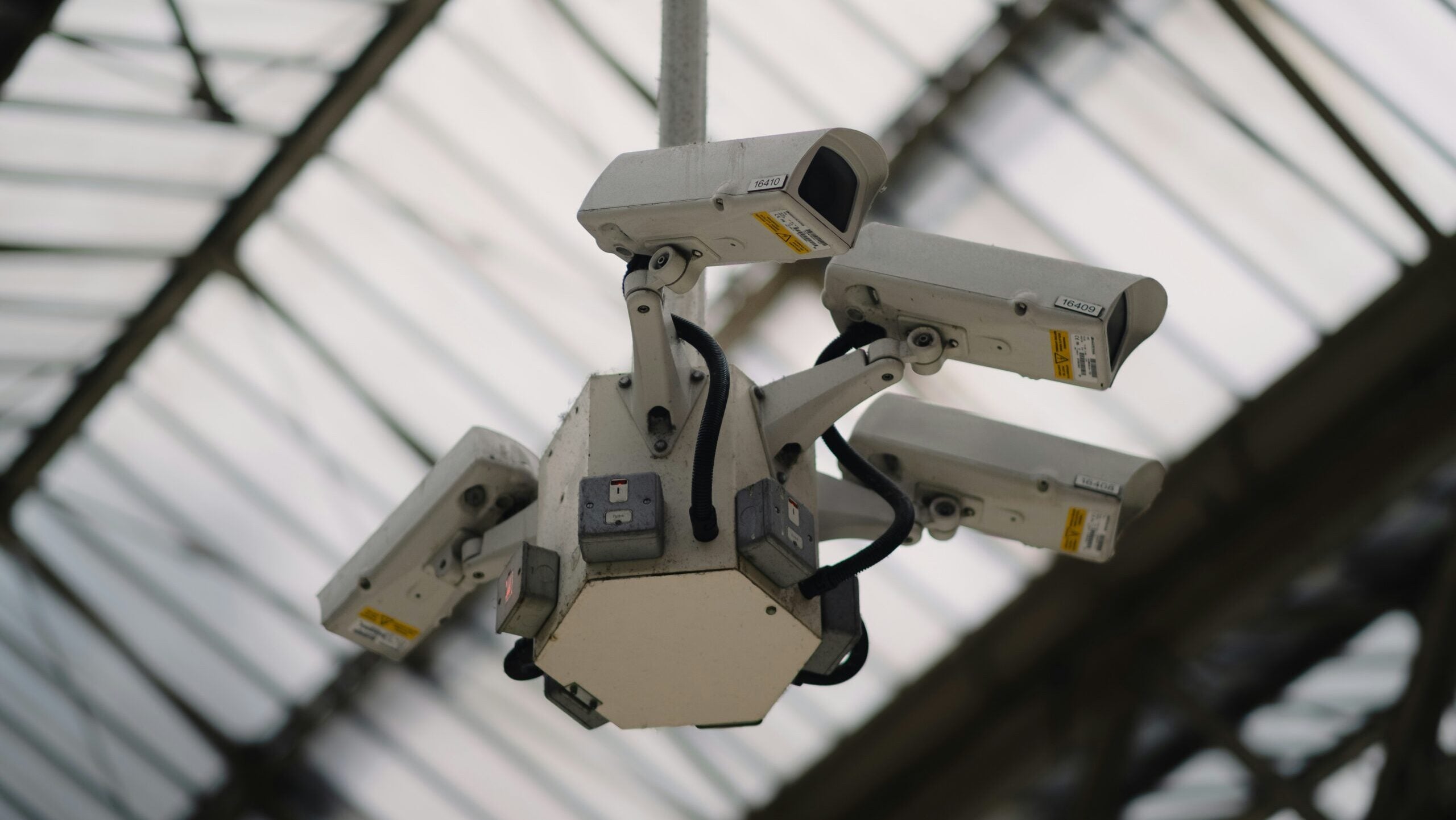
As the proverb goes, when elephants fight, it is the grass that suffers.
Right now, governments around the world are being trampled by the struggle between the United States and China for technological dominance. The U.S. in particular is warning about the risks of procuring Chinese technology, arguing that China will use these systems to advance its technological preeminence and contribute to democratic backsliding.
Governments should take these concerns seriously. Surveillance systems can create cybersecurity vulnerabilities, deepen technological dependence, and normalize intrusive monitoring.
But the prevailing U.S. framing of Chinese technology as an exceptional threat misses the bigger picture. Chinese technologies are not simply discrete threats; they are embedded in a wider global political economy of intrusive digital tools.
US Warnings Are Viewed as Geopolitical
For many governments in the Global South, U.S. warnings against Chinese technology appear geopolitically motivated rather than rooted in a principled defense of privacy and democratic accountability.
Many perceive the U.S. focus on China to be a selective indictment of Beijing. The perception of hypocrisy is reinforced by the long-standing role of Western firms and security agencies in the global industry of spyware, cyber-intrusion, and surveillance technology, including products such as NSO Group’s Pegasus.
Focusing on China’s supply side requires us to consider market forces and Beijing’s strategic ambitions. But it tells only part of the story.
But one challenge is that U.S. warnings about China risk misidentifying the problem.
U.S. warnings treat the proliferation of Chinese surveillance tools as if it were mainly a question of hidden risks or geopolitical strategy. Even when substantively correct, these warnings can fail on their own terms: They risk alienating the audiences they are meant to persuade and, at times, misdiagnosing why the technology spreads in the first place.
Many governments are principally concerned with how best to adopt digital technology in response to locally rooted priorities.
The Demand Side of Chinese Surveillance
Focusing on China’s supply side requires us to consider market forces and Beijing’s strategic ambitions. But it tells only part of the story.
Another part of the story is why governments in the Global South procure these systems in the first place.
Chinese surveillance technology does not spread simply because Beijing exports it. Nor does it spread because states that receive technology from China passively accept authoritarian values.
Chinese products are instead often purchased because they appear to offer practical fixes to urgent pressures: crime, terrorism, urban disorder, weak policing capacity, limited fiscal space, and public demands for visible state action. Their appeal hinges on affordability and immediacy.
Demand for Chinese products helps drive their proliferation across the Global South. Yet attention to demand should not distract us from the reality that governments may acquire these tools on permissible grounds while also using them to monitor protests and reward vendors associated with the PRC.
Local demand does not excuse China’s abuse of these systems or mean that Chinese surveillance technology works as advertised. Across cases, there is limited evidence that such systems have meaningfully reduced crime or terrorism.
The demand side is a field of mixed incentives, reflecting security needs, political interests, and commercial opportunity. Any serious engagement with China’s growing digital footprint must account for these complexities.
Kenya is an illustrative example. The 2013 Westgate Mall attack, when Al-Shabaab members killed dozens of people, exposed failures in existing security and digital systems. The violence was subsequently used to justify expanding digital surveillance as a means of bolstering public safety.
Within this context, Chinese-built systems, including Huawei’s Safe City platform, were presented as technological fixes promising real-time monitoring, facial recognition capacity, integrated command centers, and faster response. The surveillance system was financed through concessional lending from the Export-Import Bank of China and presented as a way to strengthen state capacity and modernize policing.
Most importantly, building the surveillance system offered a visible way to signal to the public that the Kenyan government was actively trying to prevent another attack.
Yet the contradiction is difficult to overlook. Introducing Huawei’s Safe City platform so swiftly was made possible by hastened loan arrangements weakening competition, transparency, and accountability, principles that the Government of the Republic of Kenya claimed to advance.
Part of the concern about Huawei’s and other Chinese-backed projects is that they do more than offer facial recognition systems and command centers. They bundle finance, vendors, installation, training, maintenance, and political partnership into a single offer. That package offers a more convenient means to expand state capacity while narrowing the procedures through which governments choose, evaluate, and govern that capability.
In other words, introducing this safety system not only provided reassurance to a fearful public but also helped entrench Chinese technological and financial dependency.
Kenya is not unique here. Across Africa, local officials increasingly construe surveillance systems as pragmatic responses to crime and terrorism. From South Africa and Senegal to Uganda, governments have worked with Chinese partners.
Working with tech companies such as Huawei remains attractive because they promise swift and functional solutions in contexts where broader structural reform like state-wide security initiatives is slower, costlier, and politically harder.
In Uganda and Zambia in particular, the use of Huawei surveillance tools has raised concerns about political misuse. Reports have claimed that Huawei-assisted surveillance was used to monitor opposition figures and intercept their encrypted communications, including those of Ugandan musician and activist Bobi Wine.
These public-private partnerships have widely raised perturbations over opaque tendering practices, debt burdens, cybersecurity vulnerabilities, and weak oversight mechanisms. Yet working with tech companies such as Huawei remains attractive because they promise swift and functional solutions in contexts where broader structural reform like state-wide security initiatives is slower, costlier, and politically harder.
The question is not only whether the technology is Chinese or what political risks are at stake. It is also whether governments are building long-term structural solutions — or exchanging supposedly quick fixes for long-term dependence.
When Surveillance Becomes a Development Offer
For one thing, the cases above show that Chinese security exports are not always direct impositions from Beijing. They often enter through local requests for assistance in areas where domestic institutions have struggled to respond.
Yet this local demand does not excuse China’s abuse of these systems or mean that Chinese surveillance technology works as advertised. Across cases, there is limited evidence that such systems have meaningfully reduced crime or terrorism.
Crime is not simply a security issue, nor only a problem of insufficient visibility. It may stem from deeper structural conditions such as poverty, urban decay, weak institutions, and mass unemployment. Adopting Chinese surveillance technology may help security agencies see more. But seeing more is not the same as governing better.
U.S. engagement should therefore move upstream: helping partner governments define needs, structure projects, assess procurement options, and set standards before technical and financial dependency becomes locked in.
Accordingly, attention to technological fixes such as Chinese digital security technologies can deprioritize much needed structural reform and social policy.
The risks of depending on China’s digital security infrastructure are real. Countries that rely on a single external partner may create long-term dependence, particularly when financing, maintenance, and technical support are tied to the same relationship.
Public acknowledgment of cybersecurity concerns by procuring governments remains limited, and attribution — identifying the source of potential intrusions -– is often deliberately cautious. Governments dependent on external finance and technical support may hesitate to escalate such concerns in ways that strain relationships with partners like Beijing.
The result is a muted politics of risk: Vulnerabilities may be recognized internally but are rarely translated into diplomatic action.
The US Needs to Compete on Systems, Not Warnings
The U.S. should compete earlier in the project cycle. Formal tenders often arrive after the real contest has already been decided. Project design, financing terms, interoperability rules, cybersecurity standards, maintenance obligations, data-access provisions, and upgrade paths can narrow the field of viable vendors before procurement begins.
U.S. engagement should therefore move upstream: helping partner governments define needs, structure projects, assess procurement options, and set standards before technical and financial dependency becomes locked in.
The outcome of strategic competition will not hinge simply on the pace of technological proliferation. It will be shaped by who influences the systems through which security, data, infrastructure, and state authority are organized.
Hence, a more credible alternative would be for the U.S. to support locally led, early-stage digital infrastructure capacity that governments can draw on before procurement and financing choices harden. Existing development finance, cybersecurity, standards, and private-sector expertise could help governments assess lifecycle costs, cyber risks, procurement terms, and vendor dependence while leaving final decisions in their hands.
Such an approach would also serve U.S. strategic interests. Countries locked into opaque, single-partner surveillance systems may be less able to adopt open standards, protect sensitive data, cooperate securely with U.S. agencies, or create fair conditions for American and allied firms. Over time, such dependencies can shape cybersecurity practices, data governance, and diplomatic relationships.
The outcome of strategic competition will not hinge simply on the pace of technological proliferation. It will be shaped by who influences the systems through which security, data, infrastructure, and state authority are organized. China has understood that surveillance forms part of a broader offer encompassing infrastructure, finance, training, maintenance, and political partnership.
If U.S. officials want to compete, they must offer more than suspicion. They must help governments to expand capacity without surrendering control — and to be willing to say no when surveillance cannot be reconciled with democratic oversight and basic rights.