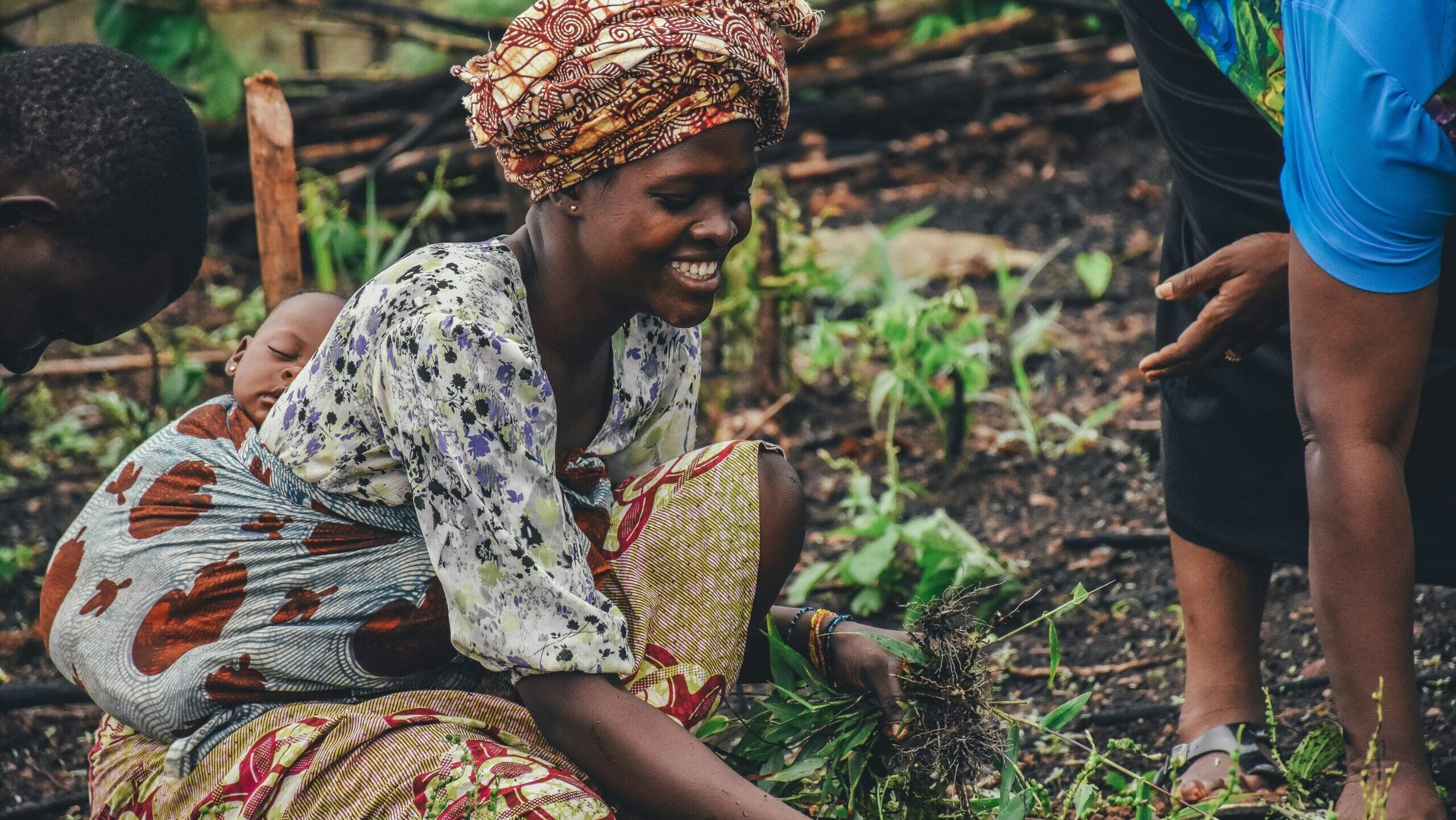
Chidinma, a vegetable farmer in Aba North, Abia State, Nigeria, had grown used to disappointment. Season after season, some farmers had received government support: fertilizer, seeds, and other inputs meant to boost production. Yet neither she nor the farmers in her community ever received anything. The benefits, they were told, had already been allocated.
In spring 2026, Chidinma’s situation changed. For the first time, she appeared in a registry of farmers, and the system found her. The Abia State Ministry of Agriculture, in partnership with the African Union Development Agency–New Partnership for Africa’s Development program, provided her with fertilizer, herbicides, and vegetable seeds.
Chidinma’s story points to a deeper shift underway, and a question Africa must urgently answer: Whom does data serve?
When designed around existing hierarchies, data systems can exclude the very people they aim to serve: women without land titles, tenant farmers, and seasonal laborers. But when designed intentionally, data can do the opposite. It can make the invisible visible and the excluded included.
Structuring Data for Farmers
For decades, agricultural development across Africa has been designed from the top down, by governments, donors, and financial institutions. Farmers, who form the backbone of the food system, have largely been treated as beneficiaries, not participants. In this model, data is collected about farmers, but this data is rarely structured for them.
In 2016, I founded Kitovu Technology Company to support smallholder farmers across Africa. One of the solutions we deployed in partnership with the Abia State Government is the Abia Agriculture Database System (Abia ADDS), which creates a dynamic, verifiable registry of farmers.
Despite its transformative potential, agricultural data remains one of the most underinvested assets in Africa.
Through the state’s Identification infrastructure, the system generates a unique identity for every farmer, regardless of whether he or she owns land, leases it, or farms as a tenant. Women farmers, often sidelined in traditional systems, are fully captured.
The result is not just better data. It is better outcomes.
With accurate farmer records, support reaches real people instead of ghost beneficiaries. Farmers receive targeted inputs and advisory services tailored to what they grow and where they farm. Governments can plan interventions with precision rather than guesswork. Financial institutions gain the visibility needed to extend credit to farmers previously deemed too risky.
These benefits are not theoretical. According to reporting by Peoples Gazette, Abia State officials described the database as a tool to “eliminate ghost farmers and ensure that only genuine farmers benefit from government interventions.”
Similarly, Punch Newspapers noted that the system was designed to “transform agricultural production through accurate data and targeted support,” while The Sun Nigeria reported that the initiative forms part of a broader policy to “revolutionise agriculture” in the state.
Agricultural data suffers from a classic market failure where everyone benefits, but no one wants to pay.
These validations reinforce what farmers like Chidinma are already experiencing: When data is accurate and inclusive, systems begin to work.
Furthermore, the impact compounds. When farmers can access the right inputs, store produce better, and connect to markets, post-harvest losses decline, yields improve, and incomes rise. What changes is not just productivity, but profitability.
Investing in Agricultural Data
Yet, despite its transformative potential, agricultural data remains one of the most underinvested assets in Africa.
The reasons are familiar. Data systems are expensive to build. The returns are not immediate or easily captured by a single actor. Benefits spill across sectors — government, finance, markets — making ownership difficult to assign.
Meanwhile, existing data remains fragmented across ministries, NGOs, and private platforms, locked in silos that do not communicate.
In short, agricultural data suffers from a classic market failure where everyone benefits, but no one wants to pay.
Nigeria has faced this problem before, just not in agriculture.
Nigeria’s financial system today runs on shared infrastructure that no single bank could have built alone. It is called the Nigerian Interbank Settlement System (NIBBS). By enabling interoperability, trust, and scale, NIBBS unlocked an entire ecosystem of digital payments and financial services.
What if agricultural data could be treated as an investable asset, structured in a way that allows capital to flow into its creation and maintenance?
Agriculture has yet to make that leap.
But what if we could build an Agricultural Data Infrastructure Processing System that replicates this shared-backbone structure, a NIBBS for African agriculture data?
Such a system would connect public and private agricultural data under common standards, allowing governments, agribusinesses, development partners and financial institutions to contribute to and benefit from a shared pool of verified information.
Instead of fragmented efforts, the ecosystem would operate with coherence, interoperability and scale.
And what if we went further? What if agricultural data could be treated as an investable asset, structured in a way that allows capital to flow into its creation and maintenance?
Through models like tokenization, investors could fund data infrastructure and access liquidity rather than waiting years for indirect returns.
These ideas may seem unconventional. But so did digital banking once. The question is no longer whether it can be done, but whether there is an appetite to fund its development and scale.
Seeing the Farmer First
Africa’s food system is under pressure like never before. Climate shocks, rising populations, fiscal constraints, and persistent inequality are hitting it from every side.
Yet too many interventions still operate in the dark — inputs distributed without insight, policies designed without evidence, and farmers blamed for failures rooted in broken systems.
Chidinma’s story offers a different path. It shows what happens when systems are built to see the farmer first. When farmers are visible, they become bankable. When they are understood, they become productive. When they are included, they become powerful economic actors.
To reimagine Africa’s food system, we must recognize data for what it truly is: a foundational infrastructure, as critical as roads, power, and finance.
To be sure, data is not a silver bullet. Poorly designed systems can still exclude vulnerable groups if safeguards are not in place. Data can be incomplete, misclassified or outdated. Without strong governance, there are legitimate concerns around privacy, misuse or unintended consequences such as taxation burdens or exclusion from support.
And data without complementary investment in storage, logistics, finance and markets cannot fully transform the food system. Visibility must be matched with opportunity.
These limitations do not weaken the case for data. They strengthen the case for getting it right.
Building What Matters
To reimagine Africa’s food system, we must recognize data for what it truly is: a foundational infrastructure, as critical as roads, power, and finance.
This change in perception requires more than technology. It demands vision, coordinated investment and new models of collaboration between governments, private sector actors and development partners.
Chidinma and millions like her cannot afford to wait. It is time to build systems that make farmers visible, valuable, and empowered.
Because when data serves the farmer first, Africa does more than feed itself. It builds a pathway out of poverty.