
A century ago, our blizzard of memes, emails, blogs, links, tweets, deep fakes, scams, algorithms and competing AI systems would have been unimaginable.
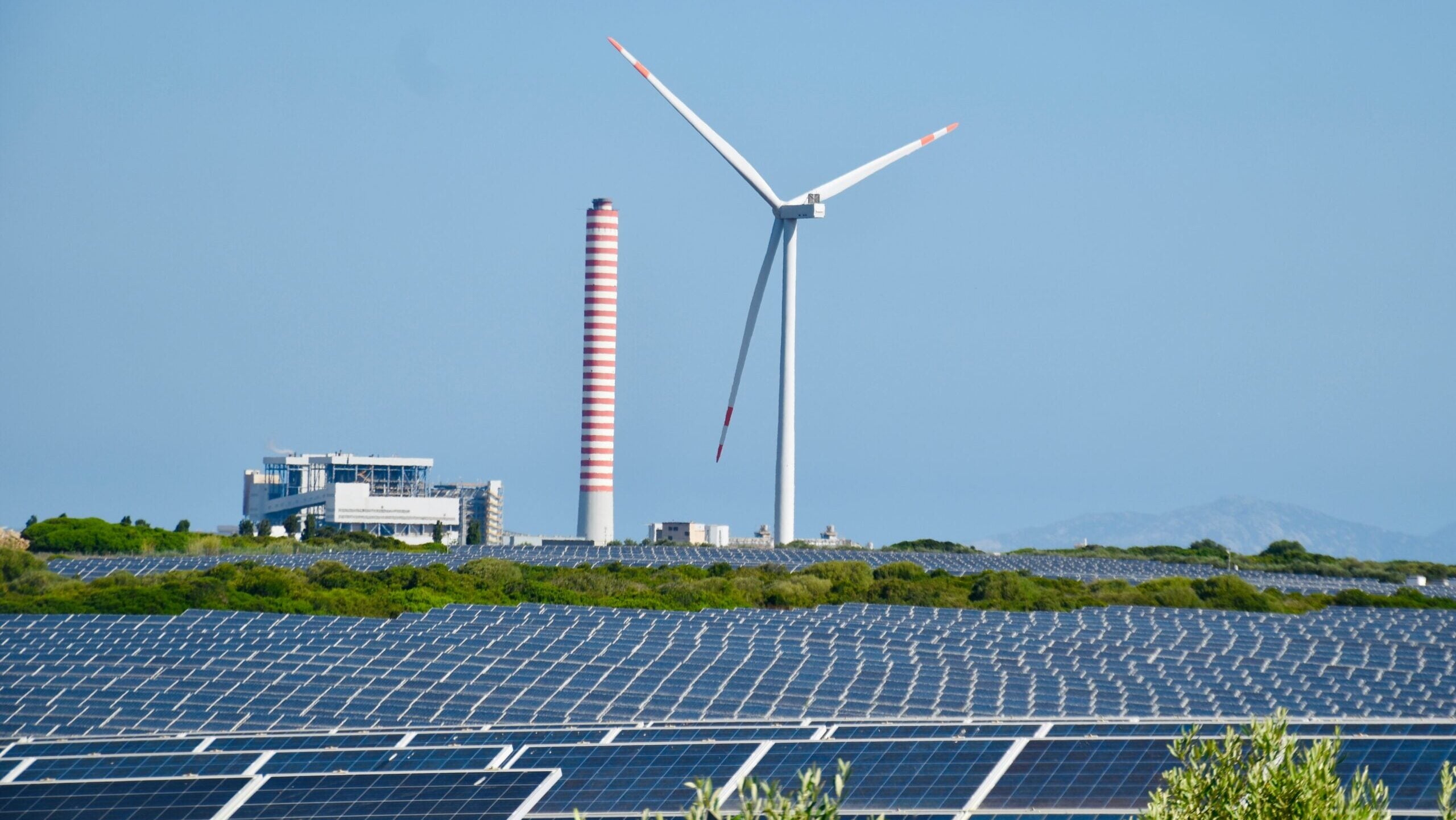
But in fifty years — the amount of time energy transitions take — society will have transitioned again, fueled by alternative energy. The rest of the world is already rapidly embracing renewable sources of power.
However, the current United States government is actively resisting alternative energies.
That’s because President Donald Trump and other government officials are relying on an outdated way of thinking about energy. They misunderstand what actually drove the economic prosperity of the early twentieth century — often referred to as America’s Golden Age — a period the administration frequently invokes in its messaging.
Their misperception does far more than slow the transition to renewable energies. It threatens to pull the U.S. into an ugly, dystopian future.
To understand what made progress possible in the past, and what has been at the center of U.S. productivity and culture, we must first understand energy transitions.
Energy Transitions
Between 1876 and 1929, Americans led the world in two overlapping energy transitions.
The first was the adoption of electricity to produce power, heat, and light, and to operate controls such as thermostats and alarms.
The second was the adoption of oil and gas to drive vehicles, heat and light buildings, and operate chainsaws, ovens, pumps, and other machinery.
These transitions increased manufacturing power by more than 600 percent and mining by more than 800 percent. Agricultural horsepower rose even more, from .66 million in 1880 to 28.6 million.
The new energies boosted productivity and wages, while at times lowering consumer prices. A Ford Model T cost 60 percent less in 1921 than it had in 1911, and by 1929 there was one car for every 5 Americans.
Manufacturing productivity in the decade after World War I rose by an astonishing 60 percent. The mastery of new energies made possible the wealth and power of what came to be called the American Century.
The Energy Transition Was Not Understood
And yet, in the 1920s energy was not a comprehensive term that included coal, oil, gas and electricity.
Most Americans saw these sources — coal, oil, gas and electricity — as separate and competing industries that provided different products and services. Only scientists and engineers understood energy in terms of thermodynamics.
Most Americans continued to think in a Newtonian way, interpreting events through the idea of force rather than energy. As a result, they lacked the vocabulary necessary to clearly understand and describe what they were experiencing.
As Eric Schatzberg explains in his landmark history of the word “technology,” in 1900 there was no concept available to understand the rapid changes then occurring, and many authors simply spoke of “the machine” or “applied science.”
Americans faced a gap in the language needed to explain these changes. Lacking the word “technology” or the concept of an energy transition, they could not construct a comprehensive overview that linked urbanization, skyscrapers, assembly line factories, mass consumption, motorized transport and other innovations based on new energy sources.
The country is not reverting to the world of 1926, but entering an intensely digitized and networked lifeworld. The shape of this new horizon of experience is still forming and remains contested.
As a result, people attributed the effects of the energy transition to non-technological factors, such as democracy, a work ethic, individualism, inventive genius, immigration restriction, tariffs, low taxes or abundant resources.
However, the energy transition not only changed material conditions; it also changed how Americans understood themselves and their society.
Psychological factors played a central, if more elusive, role. The Americans of 1929
did not just command more power; compared to their grandparents in 1876, they saw themselves and their society in new ways.
To understand why, it is helpful to think of an energy transition as a change in the lifeworld.
Energy Facilitated Sweeping Changes in Everyday Life
Edmund Husserl developed the concept of “lifeworld” to describe what a person takes for granted as being always already there.
The people living in 1876 shared a horizon of experience that framed what they considered normal and possible. For example, in their lifeworld a voice could be heard only if a person was physically nearby.
In contrast, by 1929 technologies such as the telephone, phonograph and radio had become normalized, meaning that voices and sounds could be heard across long distances.
A lifeworld maps the boundaries of what is real and what is impossible. It has distinct shapes, textures, rhythms and energies that define the comfortable and familiar, or that which is already there.
The energy transition concerned not only the sources, production, storage and uses of energy, but also life’s textures, sounds, movements, smells, sights and habits.
The 1876 lifeworld was irrevocably altered by 1929.
For example, in 1876 the city street echoed with the clip-clop of horses. Its air was filled with dust, and horse droppings attracted flies. Streets welcomed playing children, vendors with pushcarts and a welter of pedestrians, with only minimal traffic control. The streets were weakly illuminated by gas; once stores closed, their windows went dark and few people were about.
In 1876, speakers had to rely on their vocal cords to speak to an audience. A little more than 50 years later, in 1929, the microphone, radio and talking pictures amplified messages to millions of listeners.
In 1929 the same street was paved, and there were no horses or manure. Pushcarts were few, and children were prohibited from playing in the street, where trucks and automobiles moved swiftly and were controlled by electric traffic lights. Powerful streetlights brightened the streets, illuminated shop windows and electric signs.
The buildings were higher, because steel construction and elevators made taller apartment and office buildings accessible and profitable. More people were on the streets, for they had more leisure time and more money to spend, and they enjoyed a range of amusements that had not existed in 1876.
Moreover, the typical city had more than doubled its population.
In short, the energy transition facilitated a comprehensive transformation of the life of the street. Changes in every other aspect of society were just as sweeping. If someone from 1876 were suddenly transported to 1929, the change in lifeworlds would have been like a visit to another country.
Productivity Was Misattributed to Cultural Factors
In 1876, people relied on the muscle power of millions of horses, mules and oxen, both on farms and in cities. By 1929 streetcars, bicycles, automobiles, tractors, trucks and buses had displaced this animal power.
In 1876, speakers had to rely on their vocal cords to speak to an audience. Few had heard the voice of an American president. They had never seen an electric light, much less a spectacular flashing sign. A little more than 50 years later, in 1929, the microphone, radio and talking pictures amplified messages to millions of listeners.
The energy transition made possible enormous increases in productivity, shorter working hours, and higher real wages. New ways of living were woven into a culture that sought to heal sectional differences after the Civil War, absorb an enormous influx of immigrants, adopt a scientific understanding of nature and shift from a rural to an urban society.
It was a complex, interactive process. Although immigration restrictions, high tariffs and racial discrimination were not directly related to the energy transition, many Americans believed these policies helped produce economic prosperity. Lacking a language to explain the prosperous new lifeworld, many Americans associated change with these policies.
The new lifeworld seemed to be partly due to immigration laws that favored northern Europeans. Some pseudoscientific theories, such as eugenics, proclaimed that Blacks, Hispanics and other minorities were mentally inferior and had to be kept in their place. The new energy lifeworld appeared to be partially the result of policies based on racial differences.
An Erroneous Conception of Progress
This narrative of progress has become the underlying ideology of the Trump administration, which identifies fossil fuels with national renewal. President Trump expects the intensification of their use will “usher in a golden age of American energy dominance.”
During his first term, he invested in nuclear power, exported coal, increased fracking for oil and gas, supported a new pipeline to Mexico and opened federal lands to drilling and mining.
In his second term, he has mocked renewables, defunded research on climate change, hindered the adoption of green energies, loosened pollution standards on coal-fired utilities, withdrawn from the Paris Climate Accords and ended subsidies for electric vehicles.
Faced with the energy transition to alternative energies, the movement to intensify fossil fuels declares that global warming is a hoax and that alternative energy technologies are inadequate to maintain dominance.
The rest of the world is adopting wind, solar, tidal and thermal power, because these energy sources are less expensive than fossil fuels and help mitigate rising global temperatures.
The state of Iowa already produces more than 60 percent of its electricity with renewables, and Colorado plans to be based 100 percent on them by 2030.
But to make America like it was a century ago, Trump and his followers focus on coal, oil and natural gas. They pursue the policies of presidents from William McKinley to Herbert Hoover: minimize taxes, raise tariffs, remove regulations, open public lands to exploitation, produce more fossil fuels, curtail immigration, urge women to be housewives, eliminate affirmative action and shut down multiculturalism.
Just as the 1920s began with a Red Scare and the deportation of radicals and dissenters, in the 2020s the Trump administration has painted a picture of the “radical left,” which they say seeks to fill the nation with illegal immigrants and burden the economy with welfare programs. In contrast, White House officials promote not only the old energy system, but also 1920s-style immigration restriction, tariffs and isolationism. A misguided understanding of the 1920s lifeworld is being used to define greatness.
Fossil Fuels vs. Alternative Energies
In 1926, the U.S. was a world leader in the adoption of fossil fuels and electrification. But in 2026 the nation is divided between some city and state governments that embrace alternative energies and a federal government that champions the old energy regime.
Yet these attempts to preserve the old energy regime have not succeeded.
In many cities and states alternative energies have blossomed. Take Salt Lake City, St. Paul, Minnesota and Boulder, Colorado. These cities expect to be using 100 percent renewable energy by 2030.
Other cities already have achieved that goal, including Burlington, Vermont and Denton, Texas.
The fossil fuel energy regime is in decline, but the U.S. need not decline with it.
The state of Iowa already produces more than 60 percent of its electricity with renewables, and Colorado plans to be based 100 percent on them by 2030.
Renewable energies are well-established in Republican strongholds like Texas, Oklahoma, Arizona, Wyoming and South Dakota, as well as in the Democratic bastions of California, New York and Minnesota.
Much of the nation was making the transition by March 2025, when for the first time alternative energies produced more than half of the nation’s electricity.
The country is not reverting to the world of 1926, but entering an intensely digitized and networked lifeworld. The shape of this new horizon of experience is still forming and remains contested.
A century ago, Americans used the metaphor of the “machine age” to describe changes that today might be explained with terms like “technology” or “energy transition.” The phrase “machine age” did not refer to a specific machine but to industrialization more broadly.
In 2026 we are again reimagining both self and society. We are attempting to define life as we know it within an electrified, digitized society that is deeply interwoven with energy systems. This still-emerging lifeworld includes a blizzard of memes, emails, blogs, links, tweets, deep fakes, scams, algorithms and competing AI systems.
The U.S. is at a crossroads and must make choices. The Trump administration claims that a prosperous future must imitate their version of American history. That is a false narrative and a dystopian choice.
To date, the new technologies have been under-regulated and allowed to pursue business models that maximize exaggeration and profits while minimizing factual accuracy and accountability. Its privatized, monopolistic architecture is not the inevitable outcome of technical change, but a socially constructed realm that could be redesigned.
We may be as blind to its meaning as Americans were blind to the energy transition between 1876 and 1929. But at least we know this is a major transition whose outcomes are negotiable.
Like previous energy transitions, this one does not lead to inevitable results.
The fossil fuel energy regime is in decline, but the U.S. need not decline with it. This need not be a dystopian moment. The future’s possible configurations are emerging more fully in places such as Scandinavia, Estonia, the Netherlands and Singapore.
They are developing new lifeworlds based on alternative energies, responsible consumption, free trade, open identities, hybrid work, racial inclusion, the rule of law and multicultural variety.
The U.S. is at a crossroads and must make choices. The Trump administration claims that a prosperous future must imitate their version of American history, in which greatness was achieved by the combination of fossil fuels, tariffs, racial hierarchy, sealed borders, a powerful executive, media monopoly, military escalation and intensified nationalism. That is a false narrative and a dystopian choice.
The U.S. might also choose to build a new energy lifeworld. This one may be based on alternative energies, robots, AI and other new technologies. It might improve industrial efficiency, increase leisure time, prioritize recycling, decentralize cities, improve transportation, build better housing, expand access to knowledge and most important of all, strengthen democracy.