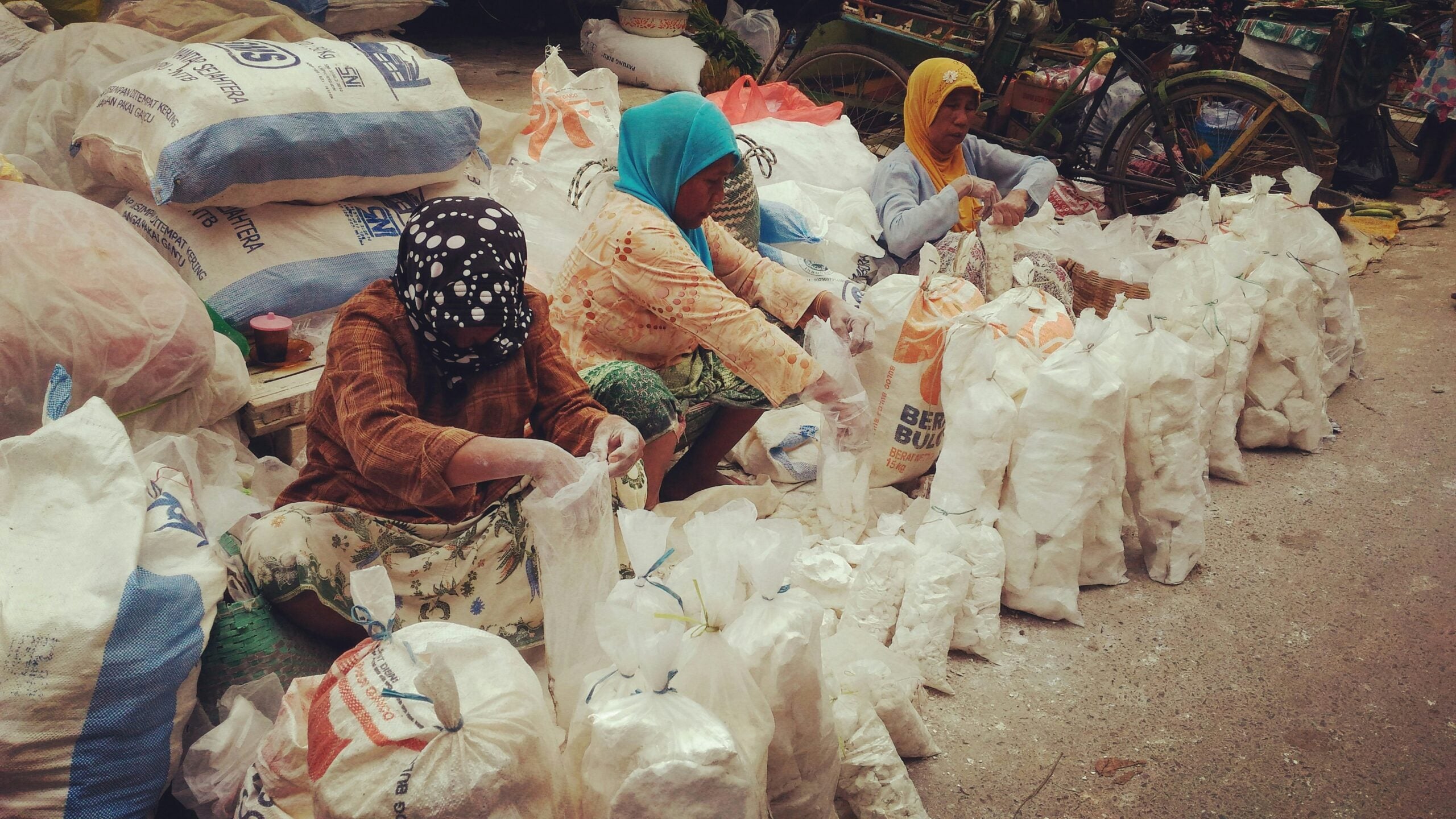
In 1891, in the tenements of New York’s Lower East Side, bad milk was killing children. Not metaphorically. Contaminated, unpasteurized milk was responsible for nearly a quarter of all deaths in children under three.
The late 1800s was the tail end of the “swill milk” scandal, a decades-long public health crisis that began in the 1840s. The swill was the foul-smelling, steaming waste from the whiskey distilleries that dotted Manhattan and Brooklyn.
Distillery owners, ever looking for a new revenue stream, fed the hot mash to dairy cows. Sickened by a diet of nothing but industrial alcohol byproduct, the cows produced a thin, bluish liquid deceptively marketed on wagons as “Pure Country Milk.”
To improve the milk’s ghastly appearance, vendors would add chalk, plaster of paris, and eggs. An 1858 exposé in Frank Leslie’s Illustrated Newspaper showed images of emaciated, ulcer-covered cows, their tails rotted off, living in their own filth.
The public was horrified, but the city’s political machine, greased by distillery money, did little. For the poor of the Lower East Side, this cheap, poisonous milk was often the only option.
It was into this world that the philanthropist Nathan Straus, co-owner of Macy’s, brought his milk depots, offering pasteurized milk to families who could not afford the clean supply the wealthy already enjoyed.
Over four years, 20,111 children were fed on Straus’s pasteurized milk. Only six died. The New York Times ran the headline: “Death Rate Cut in Half.”
Industry Interests and the New Food Pyramid
I thought about Nathan Straus in January, when the new food pyramid arrived. It came from the Department of Health and Human Services, under its new secretary, Robert F. Kennedy Jr.
At the base of the pyramid sat protein, dairy and “healthy fats” with pictures of steak and whole milk. The smallest triangle, representing discouraged foods, was labeled “whole grains,” with an image of a bread loaf, a bowl of cereal or oatmeal, and some scattered seeds or nuts.
The guidelines were the work of the President’s Make America Healthy Again (MAHA) Commission, which Kennedy had championed as a process free from industry influence. But as STAT News reported, the guidelines were rushed into existence in three months by a panel of researchers with their own financial ties to the beef and dairy industries. One panelist called the process “a little outrageous.”
Thin or non-existent evidence was enough to rewrite national nutrition policy.
The pyramid itself did not specify raw dairy. But Kennedy, a lifelong advocate for raw milk, had celebrated the release of the MAHA report by doing raw-milk shooters in the White House with a wellness influencer who calls himself the “Carnivore MD” and an “anti-toilet-paper advocate.”
The same administration that elevated dairy in the pyramid had its secretary publicly championing the unpasteurized version — a product the Centers for Disease Control and Prevention’s own data show carries an 840 times higher risk of foodborne illness than pasteurized milk.
The case against seeds and their oils, meanwhile, rested on the claim that they cause chronic inflammation. A 2012 systematic review of 15 randomized controlled trials found no evidence to support the claim.
A 2017 meta-analysis reached the same conclusion.
A 2017 Presidential Advisory from the American Heart Association did recommend replacing saturated fats with vegetable oils to reduce heart disease risk. But overall, thin or non-existent evidence was enough to rewrite national nutrition policy.
Measles and Magical Thinking
At the same time, the strongest evidence in all of preventive medicine was not enough to overcome the secretary’s skepticism about the risk of infectious diseases and the benefits of vaccines against those diseases.
Measles begins with a high fever, a cough, and red, watery eyes. Then comes the rash: flat red spots that start on the face and spread down the neck, torso, arms, and legs.
Measles has a reproduction number of 12 to 18 — meaning that 12 to 18 unvaccinated people are infected by each infectious person with measles — one of the highest of any known pathogen. Indeed, one infected person walking through a room can transmit the virus to someone who enters that room two hours later.
The Measles-Mumps-Rubella vaccine, which has been administered billions of times over decades, is highly effective against all circulating strains, with a safety record that few interventions in the history of medicine can match.
To prevent community transmission, more than 95 percent of a population needs to be vaccinated. However, coverage among American kindergartners has fallen from 95.2 percent to 92.5 percent in five years — a decline that sounds small until you learn it represents approximately 286,000 unprotected children.
The MAHA agenda applies a low evidentiary bar to nutrition claims that primarily serve the affluent: elaborate dietary regimes, artisanal raw milk, seed-oil-free cooking.
This year, as of March 12 the CDC had confirmed 1,362 measles cases across 31 states. In comparison, the full year of 2025 saw 2,284 cases.
Those numbers are especially remarkable given that measles was officially eliminated from the United States in 2000.
In a correspondence published in The Lancet, public health researcher Y. Tony Yang called Kennedy’s anti-vaccine leadership a “peril” to public health.
Kennedy, a lifelong vaccine skeptic, had brought that skepticism to HHS at the precise moment when the disease was returning. The evidence for the vaccine was overwhelming. The skepticism was not proportional to any evidence against it. It was something else entirely: a skepticism that only the privileged can afford.
Inversion of Evidence
Looking into the archives of human pandemics suggested to me that the inversion of evidence is not uniquely American, but rather a recurrent phenomenon in public health history.
In 1854, cholera was killing hundreds of people in the Soho neighborhood of London. More than 500 died in ten days. A physician named John Snow mapped the cases and traced them to a single contaminated water pump on Broad Street — the founding act of modern epidemiology.
What is less often remembered is that the pump served a working-class neighborhood. The wealthy had private wells. The workers at the brewery on Broad Street were spared — not because of any intervention, but because they drank beer instead of water.
The privilege paradox is not just that the wealthy refuse vaccines at higher rates. It is that they can refuse them without bearing the cost.
Cholera, as physician and anthropologist Paul Farmer later wrote, was a disease that followed “the contours of social inequality.” Tuberculosis followed the same contours. In the late nineteenth century, the wealthy who contracted TB retreated to sanitaria in the mountains — Davos, Saranac Lake — where they rested in clean air and were attended by private physicians.
The poor died in tenements.
The disease was romanticized among the literary classes — Keats, the Brontës, “consumption” as a mark of artistic sensitivity — while it killed industrial workers by the thousands. TB was, and remains, what the medical literature calls “the disease of poverty.”
The pattern is old enough to be a law: Infectious disease follows power. The wealthy buy their way out — through sanitation, through space, through access to treatment.
The poor bear the burden.
And when a new tool arrives to break the pattern — a vaccine, a water filter, a pasteurized milk depot — the questions are always the same: Who gets it first, and who decides whether it is trustworthy?
Pathologies of Power
Who, today, gets to be skeptical of vaccines while pontificating about the virtues of esoteric nutrients?
A 2016 study in the American Journal of Public Health examined personal belief exemptions from vaccination requirements in California between 2007 and 2013. The researchers found that higher household income and a higher percentage of White residents significantly predicted greater increases in exemptions.
Moving from the 10th to the 90th percentile of income — from $25,000 to $135,000 — predicted one additional exemption per 116 students.
Private schools had more than double the exemption rate of public schools.
The children of the wealthy will probably be fine. The real concern, as it has always been, is about the other children.
An Australian study identified the same phenomenon and gave it a name: “the privilege paradox” — geographic areas with the highest socioeconomic advantage had the lowest rates of vaccination.
The wealthy can afford their skepticism. They live in low-density neighborhoods. Their children attend small schools. Their risk of exposure, even in an outbreak, is low.
It is the families in dense housing, in large public schools, in communities that depend on herd immunity, who bear the consequences when that immunity erodes.
The privilege paradox is not just that the wealthy refuse vaccines at higher rates. It is that they can refuse them without bearing the cost.
And conversely, their privilege buys time to debate whether one off-label nutritional supplement or another will extend a lifetime that is already statistically long for reasons of wealth.
Double Standards
The double standard comes into focus not as hypocrisy, exactly, but as a structure.
The MAHA agenda applies a low evidentiary bar to nutrition claims that primarily serve the affluent: elaborate dietary regimes, artisanal raw milk, seed-oil-free cooking. These are the concerns of people with the resources to optimize their diets and the leisure to worry about what kind of salad dressing may lower their pseudo-scientific inflammatory markers as measured by unvalidated concierge medspas and novelty gadgets.
At the same time, the agenda applies extraordinary skepticism to the strongest evidence base in preventive medicine — a vaccine that has prevented an estimated 21 million deaths since 2000.
Nathan Straus spent his fortune making pasteurized milk available to the children of the poor because the children of the wealthy already had clean milk.
A century and a quarter later, the Secretary of Health and Human Services is championing raw milk — and questioning the vaccine that protects the children who cannot afford to be unprotected.
The children of the wealthy will probably be fine. They were fine in 1854, when the cholera was in Soho and the private wells were in Mayfair. They were fine in 1891, when the swill milk was in the tenements and the clean milk was uptown.
The real concern, as it has always been, is about the other children.