
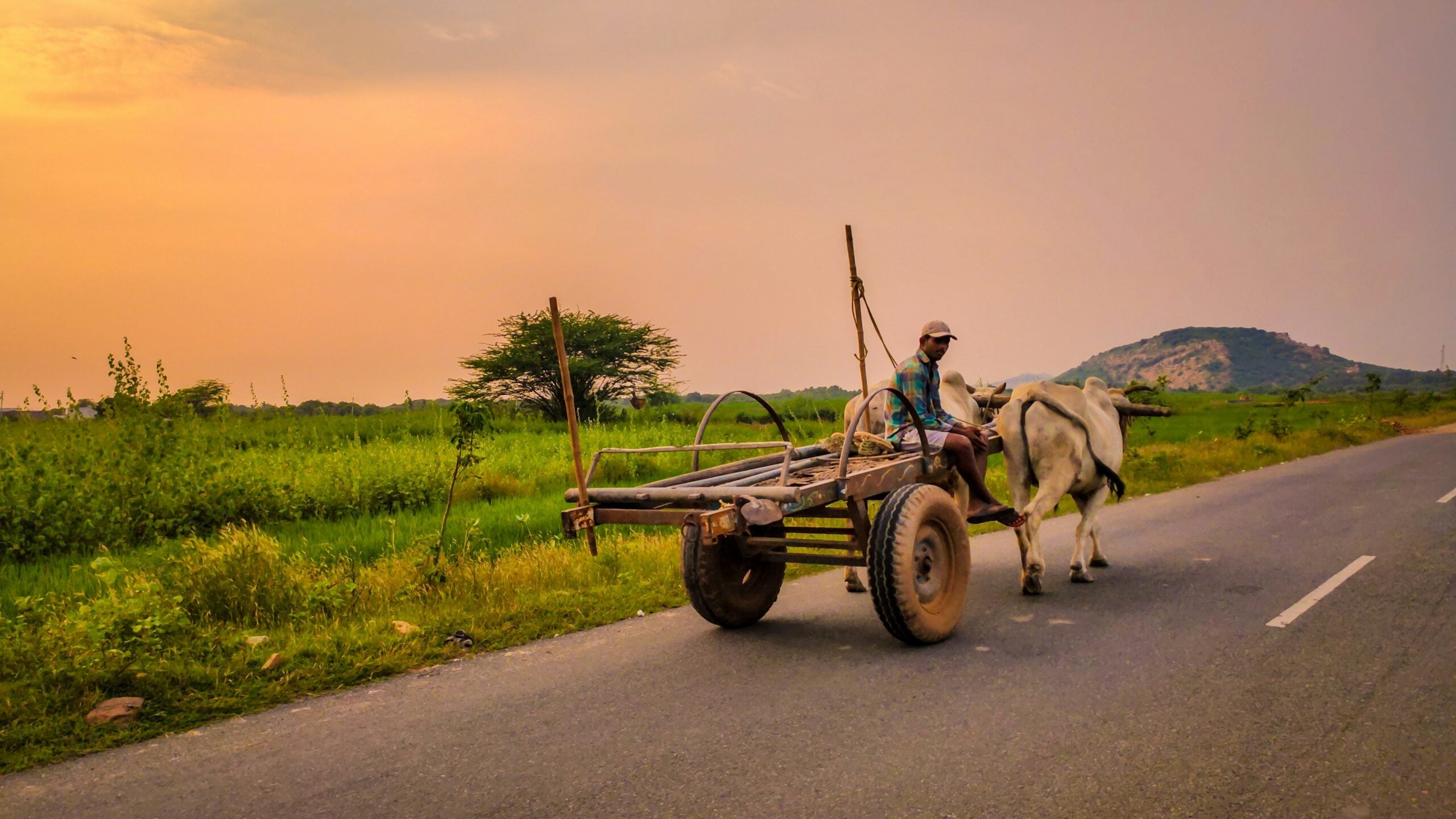
Drive through the Indian state of Punjab in January and you’ll see an emerald ocean of wheat stretching to the horizon. This is the heartland of India’s Green Revolution, the marvel of international technical cooperation between scientists, philanthropists, and governments that ended India’s era of famines. Return in June and the same fields are flooded with rice paddies.
These fields featuring the wheat-rice-wheat-rice rotation are iconic — symbols of India’s triumph over hunger and lush canvases that live in India’s cultural imagination. The model has spread to other Indian states. Wherever possible, rice and wheat are favored crops. But it was not always this way. A century ago, Indian farmers grew thousands of varieties of other grains, particularly pulse and millet landraces, each adapted to specific soils, rainfall patterns, and microclimates. Even rice cultivation had local variations, with more than 100,000 distinct varieties of rice growing in different regions of India.
The historical agrobiodiversity was more than heritage — it was insurance against pests, diseases, droughts, and floods. Today however, that insurance policy is being systematically dismantled. Punjab has become an environmental disaster zone. The water table is falling by more than a foot per year. Eighty percent of the state’s groundwater blocks are now classified as “overexploited.” Soil quality is degenerating: Zinc and iron levels in rice and wheat have dropped by a third while arsenic levels in rice have surged by more than one thousand fold. And every October and November, the state disappears under a toxic haze as farmers burn rice stubble — the tight planting schedule leaves no time for alternatives — contributing to Delhi’s apocalyptic air pollution.
What was once India’s insurance against droughts, floods, pests, and disease is now being systematically dismantled.
As a development economist who has worked with rural communities across India, I’ve learned it doesn’t have to be this way. The farmers know it too — they watch their wells run dry and their input costs rise. There is less hunger but more anxiety about the sustainability of agriculture. Climate projections of increasingly extreme temperatures and erratic rainfall amplify these fears, especially since 52% of agriculture remains rainfed. Most farmers are smallholders with no financial buffers, minimal access to credit, and complete dependence on monsoon patterns that are becoming dangerously unpredictable.
There is less hunger but more anxiety about the sustainability of agriculture.
The cruel irony is that the disappearance of crop biodiversity is happening precisely because India has been so committed to protecting its farmers. Genetic diversity maintained over thousands of years is disappearing in a few generations — not because farmers are ignorant of these crops’ value, but because the policy architecture adopted during the Green Revolution removed the incentive to cultivate them.
The Architecture of Agricultural Lock-in
Post-independence, India created a policy architecture to protect its farmers. That same architecture now prevents them from adapting to the environmental crisis.
India’s agricultural support system is built around specific crops, specific regions, and specific constituencies — locking farmers into environmentally destructive practices even as they understand the long-term costs. By now, the incentives are overwhelming: A Punjabi farmer has little incentive to plant anything other than wheat and rice because the government guarantees purchase prices for those crops, provides free electricity to pump groundwater, subsidizes fertilizer, and offers virtually no support for alternatives.
Crop biodiversity is disappearing not because farmers are ignorant of its value, but because policy has removed the incentive to cultivate it.
The most important policy is the Minimum Support Price (MSP) system that was established at the time of the Green Revolution in the 1960s. The MSP mechanism establishes price floors for specified crops, with the government guaranteeing procurement at announced rates when market prices fall below support levels. Formally, this serves as income insurance against market volatility. In practice however, it is a production mandate. In other words, while it intends to simply compensate farmers for what they grow, on the ground it determines their choice of what to grow.
The MSP system currently covers 22 crops. However, wheat and rice account for roughly 95% of government procurement. For these two crops, the Indian government doesn’t just guarantee that farmers can sell it. Rather, it provides the infrastructure: thousands of procurement centers, storage facilities, and a distribution network through the Public Distribution System. The government will also provide free electricity for pumping groundwater and heavily subsidize fertilizer. These incentives are nearly impossible to refuse for rural farmers in Punjab.
In practice, India’s farm support system functions less as insurance and more as a production mandate.
For a Punjab farmer, selling wheat or rice to the government is guaranteed and simple. Every policy lever — procurement infrastructure, electricity subsidies, storage networks — reinforces the decision to grow wheat and rice. As a result, the ecological solutions do not ensure economic stability. Selling millets, pulses, or oilseeds requires farmers to find private buyers, face uncertain prices, and receive no procurement infrastructure. It is simply riskier.
The National Picture
Punjab’s environmental crisis is not an anomaly. In some parts of Maharashtra, farmers plant sugarcane despite severe water scarcity. The close links between the state’s sugar cooperatives and political networks provide procurement support and political protection. Across central and eastern India — in Madhya Pradesh, Chhattisgarh, Telangana, and Odisha — rice cultivation has dramatically intensified as state governments expanded procurement infrastructure and offered bonuses on top of MSP for Indian farmers to prioritize rice, displacing traditional crops like pulses, millets, and oilseeds that were farmed for generations.
Meanwhile, crops that agricultural scientists recommend based on India’s climatic conditions — millets that require minimal water and thrive in rainfed conditions, pulses that fix atmospheric nitrogen, oilseeds that could cut India’s $15 billion annual edible oil import bill — are disappearing from farmers’ fields.
These are political problems as opposed to scientific ones. Without government support in the infrastructure of producing, selling, and distributing these crops, most Punjabi farmers cannot afford to make the choice that is more ecologically sound. Yet, Punjab is simply the most visible manifestation of a national pattern: public policy aimed at improving food security has dramatic environmental consequences.
These are political problems as opposed to scientific ones.
The Broader Coalition
The political economy of agriculture in Punjab includes more than just farmers and politicians. First, there are the middle men who are agents that commission crops from farms, often on credit. Arthiyas earn 2.5% on every procurement transaction, handling billions in annual trade. These middlemen are not passive intermediaries; they’re politically organized, have direct relationships with farmers, and their entire business model depends on how much food they purchase from local farmers. As a result, many of these middle men provide advance credit to farmers, facilitate mandi transactions, and form the crucial link between cultivation and government purchase. Reducing wheat and rice production threatens their livelihoods directly.
Second, there is the fertilizer industry. The government has a subsidy bill that fluctuates between $15-23 billion (just in the past three years). Corporate stakeholders like Indian Farmers Fertilizer Cooperative Limited (IFFCO) will lose a substantial amount of money without the subsidy-driven demand for rice and wheat. Companies like IFFCO also benefit from planning what will be cultivated, where and how it is sold, and who profits from what.
Third, there is the Food Corporation of India (FCI). It boasts more than 40,000 employees and holds vast networks of storage contractors, transporters, and administrators whose positions depend on what and how much food they sell. At the same time, electricity is also subsidized, creating grid dependency that enables policymakers to keep all these workers devoted to this existing agricultural infrastructure.
In turn, these policymakers use this power to get elected. This power underscores the reasons for continued investments in rice and wheat, even though the system drives India toward an environmental cliff that everyone can see but no one can politically afford to avoid. Yet, reform requires dismantling the very coalitions that keep governments in power.
The Science-Politics Chasm
Agricultural scientists have solutions for farmers in Punjab that rely on ancestral knowledge but push against political power. The Indian Council of Agricultural Research, state agricultural universities, independent institutes and government expert commissions have proposed these, and other, solutions.
First, diversify to less water-intensive crops like pulses, millets, and oilseeds. Genetic diversity provides societies resilience to pests, diseases, and climate variability — precisely what India will need as temperatures rise and rainfall becomes more erratic. Industrial high-yielding varieties deliver higher output under optimal conditions, but they require intensive inputs: water, fertilizer, pesticides. Traditional varieties, evolved over generations to thrive in specific microclimates with minimal inputs, are being lost just as climate change makes their adaptive traits most valuable.
Second, adopt direct seeding techniques. Instead of transplanting rice seedlings into flooded paddies, farmers can sow seeds directly into prepared soil. This reduces water consumption by 20-30% and shifts planting schedules earlier — creating the time buffer farmers need to manage crop residue without burning it. Direct seeding addresses two crises simultaneously: groundwater depletion and air pollution.
Third, restore traditional varieties. This not only is good for the soil but also good for the heart. Heart related health conditions have surged in South Asia in the 50 years since the Green Revolution. Millets — a food harvested for millennia that was displaced by Green Revolution crops — are rich in iron, calcium, and micronutrients that rice and wheat lack. Similarly, traditional rice varieties that Indians have relied on for centuries to manage blood pressure, sugar regulation, inflammation and other health conditions are being entirely lost.
And fourth, reduce fertilizer intensity. This will have a direct effect on Punjab’s groundwater table, which is falling and may deplete aquifers that are essential for the sustainability of agriculture for the next generation. Decades of excessive fertilizer use — encouraged by subsidies — have degraded soil quality and reduced agricultural productivity. The nutrient imbalances aren’t easily reversed and are compounded with every planting season.
Many efforts are being made to make these changes. The government has launched a comprehensive push to revive millets, rebranding them as “Shree Anna” (sacred grains) and deploying multiple policy instruments. This includes not just MSP announcements but also the Production Linked Incentive Scheme for Millet-based Products (approximately 90 million USD from 2022-27), substantial allocations under the Nutri-Cereals Sub-Mission (900 million USD in 2025-26), and integration of millets into mid-day meals and public distribution systems. Processing incentives aim to create demand for millet-based products. At India’s request, the United Nations General Assembly declared 2023 as the International Year of Millets. The results show some progress: millet production increased by 443,000 metric tons in 2024-25—a 2.5% gain over the previous year, with the desert state of Rajasthan leading the way.
The women we spoke with understood what’s at stake—their families’ health, their land’s future, their economic independence.
These statistics mask what’s possible when comprehensive support actually reaches farmers. In the tribal areas of Udaipur, Rajasthan, I recently witnessed how Seva Mandir – a grassroots civil-society organization – has been supporting women farmers in benefitting from these new policies. On a field trip to the Jhardol block of Udaipur district, a group of Georgetown students and I talked to tribal women who received six years of education, training, and support to become millet farmers. In the first two years of the program, they received a small amount of traditional seed, cultivated small plots and largely kept the output for their own use. Over time however, they expanded the scale and began to sell the output. Though much of the profit went to transportation and storage costs, the women sought to expand their scale of production.
In the fourth year of cultivation, the women worked collectively through their self-help group to raise more than $2,500 from donors that included the government as well as private foundations. They used the funds to rent a workspace, purchase milling equipment, and produce millet-based products such as flour, biscuits, chocolate, and snacks that they sell at local fairs. In the past two years, their earnings from selling these products were sufficient to recover the initial investment into the enterprise and generate a profit. The women note that they still face high costs of advertising, transportation, storage and packaging, and are still working toward a profitable and sustainable model. Similar case studies are reported elsewhere.
The women we spoke with understood what’s at stake—their families’ health, their land’s future, their economic independence. The lesson here is that when farmers have access to processing and markets, traditional crops can compete economically with rice and wheat. But to make the transition at scale, they need the same systematic support—procurement guarantees, storage networks, input subsidies—that made rice and wheat cultivation essentially risk-free for decades. Until the political economy that created the wheat-rice lock-in is restructured, efforts like these remain fragile islands of success in a sea of structural barriers.
But here’s the trap: Environmental timelines don’t align with political timelines. Climate change and resource depletion operate on schedules that don’t care about election cycles or coalition stability. The reforms India needs require dismantling the very coalitions that keep governments in power. It’s time to stop protecting the current agricultural system and start demonstrating that alternatives can deliver both environmental sustainability and farmer prosperity. Until India can build state legitimacy differently, reform remains politically impossible. The stakes here are the long-term viability of India’s food security, public health, and agricultural future.