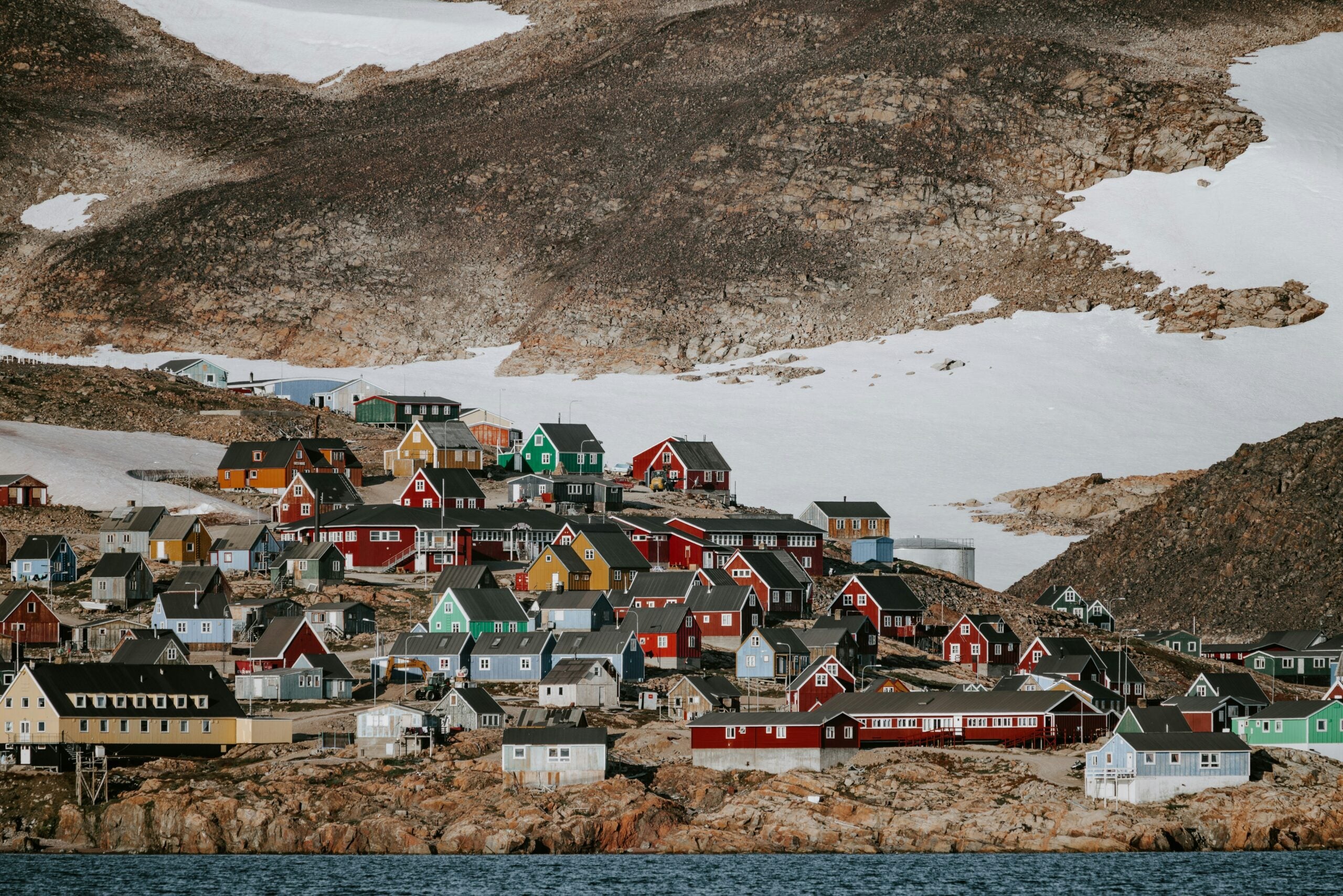
Until recently, most Americans thought of Greenland as a far-off, sparsely populated expanse of ice that is largely irrelevant to everyday U.S. concerns. That view is increasingly wrong. Greenland is not peripheral to U.S. interests; it is pivotal. As the Arctic warms and access expands, Greenland is becoming less a distant landscape and more a defining piece of high ground for the next era of deterrence and alliance security. Because in a world where time, distance, and resilience determine outcomes, geography starts to be the deciding factor.
Greenland is becoming a hinge point where climate change and geopolitics intersect. Warming temperatures are lengthening operating seasons and changing accessibility as the ice sheet rapidly melts. These are environmental facts, but they are also strategic accelerants. The Arctic is no longer a peripheral theater but a connective one, linking Russian and Chinese force posture, transatlantic transportation routes, infrastructure, and emerging commercial activity.
In Greenland, infrastructure is not just economic; it is societal resilience.
While both the physical and geopolitical landscape are rapidly changing in Greenland, the strategic importance of the semi-autonomous island is not new. Going back as far as the Eisenhower Administration, the U.S. government has had an on-again, off-again relationship with Greenland. The failure on the part of every administration since then has been a lack of sustained, comprehensive investments of time and resources on the part of the U.S. government.
Amid this shifting landscape, one of the most important signals in recent years has come not from Washington, but from Nuuk and Copenhagen. Greenland’s semi-autonomous leaders and Denmark’s government have publicly emphasized dialogue and cooperation with the United States. This position reflects a pragmatic recognition that Arctic security cannot be sustained by symbolism or episodic engagement.
So, the real policy question is not over who owns Greenland. Rather, the question is how to build cooperative security and durable prosperity — not just for today, but for the next generation of Greenlanders and Americans. In practice, that means a framework that is co-designed with Greenland and Denmark with transparent objectives and alignment with NATO’s broader interests in the Arctic. It is a recognition that the Arctic has long time horizons, high infrastructure costs, and uniquely harsh operating conditions. No single country can create broad security conditions under these circumstances.
The right U.S. approach is not to dictate outcomes, but to help structure a marketplace of options where Greenland can choose partners who respect environmental safeguards, community benefit, and transparent governance.
But a partnership model becomes real only when people can see and feel its benefits. That is where the most practical —and arguably the most persuasive — case for U.S. engagement emerges: dual-use investment that improves daily life in Greenland while strengthening U.S. operational readiness.
In Greenland, infrastructure is not just economic; it is societal resilience. Connectivity, emergency response, communications, and access to reliable energy are not a given in the Arctic. But they are what enable communities to thrive and what allows the private sector to invest.
For example, ports that support maritime safety and logistics can also improve commercial access and emergency response. Airfields strengthened for reliability and resilience can improve civilian connectivity while enabling defense mobility in a region where distance and weather compress decision time. Communications upgrades can support everything from day-to-day coordination and telemedicine to domain awareness and crisis response. Search-and-rescue capability, in pacrticular, is a values-aligned form of security cooperation as it is visible, life-saving, and inherently collaborative.
Energy resilience sits in the same category. Reliable power in Greenland is a quality-of-life issue, a cost issue, and a strategic issue. Investments in energy resilience like microgrids, storage, diversified generation, and hardening of critical facilities can reduce vulnerability to disruptions while improving affordability and reliability over time. In a region where redundancy is limited and supply chains are long, resilience is not simply a technical upgrade; it is a form of security in itself.
How the US Should Engage
If the U.S. wants a sustainable security relationship with Greenland, it should build the relationship around infrastructure that serves Greenlanders first while strengthening U.S. capacity in the region. Of course, security and infrastructure alone do not answer the deeper question of prosperity. Greenland’s future will be shaped not just by defense posture, but by the pathways available for economic development. That is why values-aligned economic opportunity must be part of any serious U.S. strategy.
The goal should not be to pressure Greenland into decisions, accelerate extraction without guardrails, or turn economic relationships into geopolitical zero-sum contests. The goal should be to ensure Greenland has credible options that are transparent, responsible, and structured to build local benefit rather than external dependency.
The Arctic is not a region where unilateralism pays dividends. It is a region where legitimacy and cooperation are force multipliers.
This matters in part because external actors have already tested the edges of Greenland’s economic and political space. China, in particular, has sought strategic footholds in Arctic-adjacent economies globally, often through infrastructure interest, financing approaches, or resource-related engagement that can create long-term leverage. The U.S. should not respond by trying to outmuscle others through coercion or transactionalism. It should respond by offering the most durable alternative: partnership built on predictable standards, transparent terms, and investments that strengthen Greenlandic agency.
The U.S. approach should also include responsible investment, especially in areas linked to critical minerals and supply chain resilience. Greenland’s resource potential will continue to draw attention. The right U.S. approach is not to dictate outcomes, but to help structure a marketplace of options where Greenland can choose partners who respect environmental safeguards, community benefit, and transparent governance. Supporting Greenland’s ability to negotiate from strength on issues like contracting, permitting, benefit sharing, and environmental review is a strategic imperative.
If we treat Greenland as a partner, whose self-determination is a central goal, we can build a relationship that improves lives, strengthens deterrence, and creates enduring security for Greenland, America, and our allies.
When these pieces are combined, the broader strategic picture becomes clear. The U.S. can meet its own goals by deepening collaboration with Arctic partners, strengthening NATO cohesion, and reducing the strategic openings that Russia and China will seek to exploit. It can meet these objectives without undermining the alliances that make the U.S. Arctic strategy viable in the first place. The Arctic is not a region where unilateralism pays dividends. It is a region where legitimacy and cooperation are force multipliers.
Greenland, in this sense, is a test of U.S. strategic maturity in the 21st century. If we treat Greenland as an object — an asset, a bargaining chip, or a headline — we will generate resistance and open the door for our competitors. If we treat Greenland as a partner, whose self-determination is a central goal, we can build a relationship that improves lives, strengthens deterrence, and creates enduring security for Greenland, America, and our allies.
That is why Greenland may decide the next era of security. Not because it is the battlefield, but because it is where the U.S. can demonstrate that modern security strategy is inseparable from governance, prosperity, and consent. The world’s new high ground is not just physical terrain. It is the ability to build and maintain alliances that last and to invest in shared resilience in the places where the future is now.