As part of HR 1, also called the One Big Beautiful Bill Act, U.S. lawmakers agreed to put $1000 in investment accounts for eligible babies born in 2025-2028.
These Trump Accounts, a type of baby bond, take advantage of compounding interest to grow financial security from birth. While the policy isn’t perfect, Trump Accounts are an opportunity to help kids be healthier – if we make sure the advantages reach those who need them most.
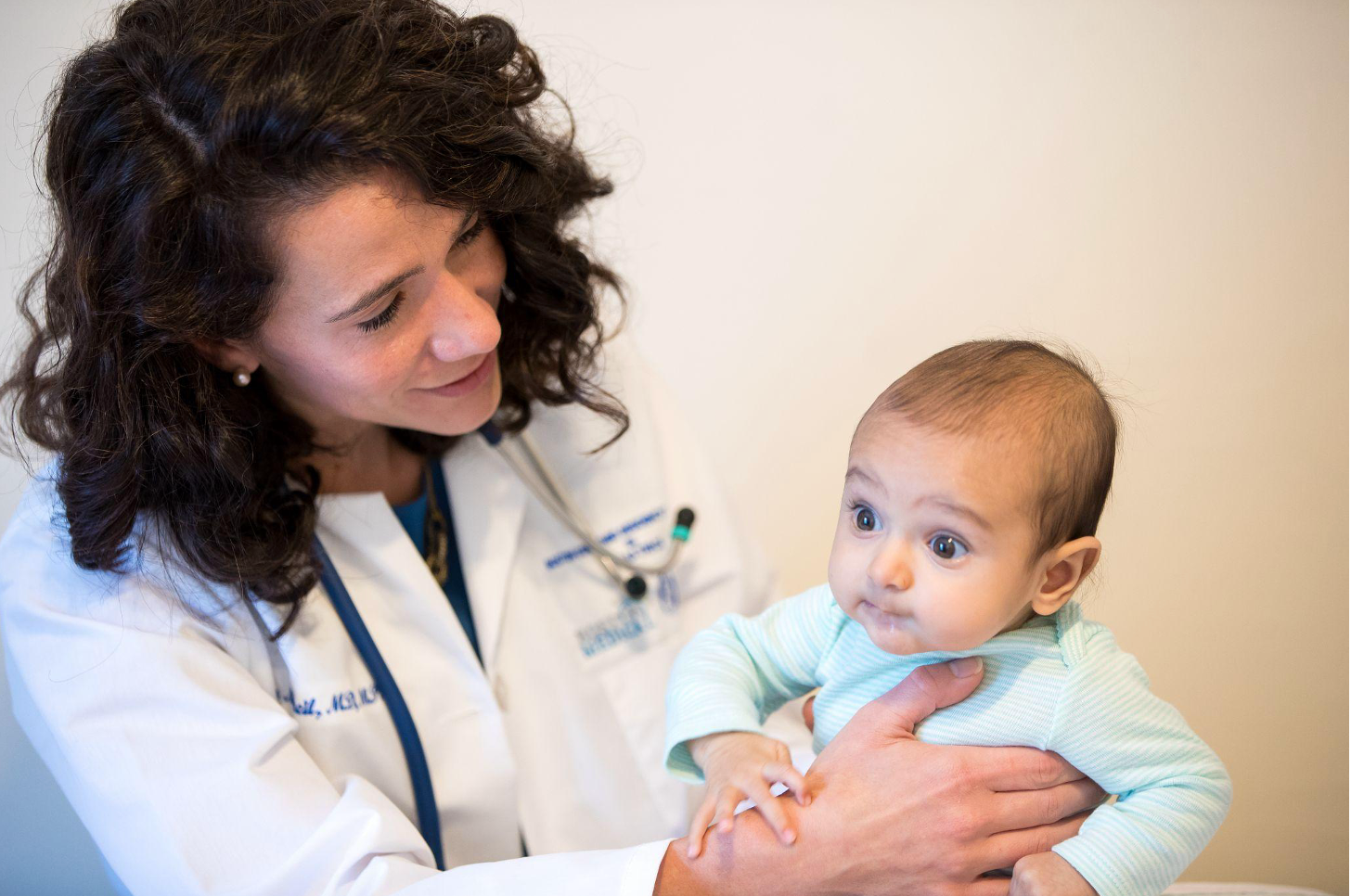
As a pediatrician, I serve many low-income families seeking to maintain good health. Yet many of the children who come into my clinic face challenges that extend well beyond their physical well-being. In response, I created StreetCred, which connects families to economic resources, such as financial coaching, tax preparation, college savings accounts, and food pantries, during routine prenatal and well baby check ups.
It also helps families enroll in established programs such as Women, Infants, and Children (WIC); Supplemental Nutrition Assistance (SNAP); Family Self-Sufficiency (FSS); and Paid Family Medical Leave (PFML). We have found that providing education and facilitating enrollment in these underutilized programs through a pediatrician’s office increases uptake. That matters because data show these programs improve maternal and child health.
But the research only confirms what most of us know intuitively: Money matters for health.
Money and health are inextricably linked
Too often in my clinic, I see parents trading their health for their children’s.
As one mom struggling with poverty movingly shared with me, “I barely eat, and if I do, it’s like a bowl of cereal at nighttime, and it’s just because I’m dizzy. I make sure [my babies] have their formula, their baby food, because they are growing like leaves … when it comes down to me, it doesn’t really matter.”
Over 11 million kids (16%) in our country are growing up poor, defined as a family of four with an income less than $30,900.
Eleven million is a lot of kids; only seven states have a population of more than 11 million.
As the National Academies of Medicine highlights, financial wellbeing is a major driver of lifelong physical and mental health.
Financial strain and low income are associated with everything from low birth weight and preterm birth to child developmental delays, increased pediatric cancer relapses, poorer maternal mental health, increased adult suicide rates, and more.
As much as income matters for health, so does wealth, or net worth. This is where baby bonds such as the Trump Accounts come in. Net worth is made up of assets (how much money a family has built up in savings or in investments like mutual funds or a house) minus debt (how much money a family owes for things like a mortgage, college loans, credit card debit or medical bills). If your net worth is negative, you have more debt than assets and a lack of wealth.
Households with net worth poverty – that is to say, net worth less than 25% of the federal poverty level – are more likely to experience poor physical and mental health. And yet, one in three families – one in three! – experiences net worth poverty. This study found 60% of Black families had net worth poverty compared to 25% of white households. This number – one in four! – remains a high number, suggesting that net worth poverty is worth our attention no matter who you are.
Families face barriers to and inequities in income and wealth generation
As a pediatrician, I know that if we want kids and their parents to be healthy, we must treat the root causes of their poor health. That means treating both income poverty and net worth poverty like the health problems they are.
In some ways, focusing on income poverty might seem to be the logical place to start – help families get better jobs and, over time, their net worth will increase. The problem is, parents face many barriers to getting better jobs, including lack of or too expensive child care, needing more education, and unstable job markets. The difficulty of finding work is amplified by technology changes driven by AI and robotics, and by policy changes such as tariffs and shifting taxation. And even when parents have better jobs and more income, the cost of living is so high, it is very difficult to get ahead and save.
In addition, income alone will be insufficient to overcome generations of economic exclusion many families, such as Black and Native American/American Indian families, have faced. The average U.S.– born Black family in Boston, for example, has a net worth of $8, compared to the average white family’s net worth of almost $250,000.
So, in addition to working on increasing income, we also must address net worth poverty.
Baby bonds can build health and hope for the future
We’re excited the Trump Accounts provide a new opportunity to help families build assets. Research shows real health benefits to this type of investment.
Think of baby bonds like a prescription for better child development and maternal mental health.
Seems too good to be true – that we could put some money in an investment account for a child and see these health outcomes, right?
A long-running study in Oklahoma randomized low-income babies at birth to receive $1,000 into an invested, educational child development account. This study has found improvements in child social emotional development and maternal mental health once the children reached preschool – long before the families had access to the money.
Eighteen years in, these benefits have continued to accrue; parents continued to have increased educational expectations, adolescents have had fewer behavioral problems, greater hope for the future, and a greater likelihood of being more prepared for college.
The transformative nature of this hope for the future was crystalized for me when a newly arrived Haitian mom showed up to our clinic with her three-month-old, not because the baby had an appointment, but because she had heard from a friend that we could help her open a 529 College Savings Account that Massachusetts would seed with $50-170. This mom had barely completed third grade. Opening this account made her dream of a better future for her child tangible. Investing in a young child is immeasurably powerful; the benefits only multiply as the decades wear on.
Trump Accounts are an imperfect baby bond
Despite these exciting benefits, Trump Accounts are imperfect. Baby bonds hold the most potential for eliminating the wealth gap and improving the health of low-income children if lower-income families get more money than higher-income families. Trump Accounts give all eligible children $1000.
My kids, if born today, would get the same amount as kids born to an unemployed mother trying to get back on her feet. To me, that doesn’t make sense and isn’t the best use of public dollars.
Moreover, the $1000 is only available to citizen children whose parents have a social security number, meaning that some of the most vulnerable kids in our country are left out. There is a complex policy debate on immigration; however, there are two groups of kids being left out: undocumented children and citizen kids who were born in the US to undocumented parents. Isn’t it in our best interest – as well as humane – to help them thrive?
Families will open the accounts, which are available now, by filing a special tax form or signing up on a government website. The government could instead proactively open accounts for all babies born via the Social Security Administration, but it is not at this time.;
Requiring parents to take proactive action means the kids most in need of this money are at risk of being left out. Their parents may be less likely to know about the accounts, to be comfortable with the idea of opening an investment account, and to have access to the technology and investing knowledge to open one.
Finally, many low-income families rely on a complex web of sources of income to get by. Usually this is paid work as well as government benefits such as SNAP. For families with incomes under 200% of the federal poverty line, 72% also rely on at least one public benefit; 54% of families who rely on public benefits use two or more programs. The challenging thing is that programs like SNAP limit how much income and assets a family can have to $2,000. This leads to what’s called a “benefit cliff”. A benefit cliff means that when a family has one dollar over $2,000 in savings, then they lose access to benefits like SNAP. Reports state the money in Trump Accounts will not count against this asset limit, but government informational websites do not yet clearly address this question.
Low-income families who need public benefits to make ends meet may be hesitant to open accounts without explicit assurance that this decision will not put their day-to-day financial status at risk.
Opportunities for policy action
Immediately, the government can address these concerns as they finalize the details of the Trump Account administration. They can make account opening automatic, create a strong community-led campaigns to educate and empower low-income families, and issue plain-language guidance exempting dollars in the Trump Accounts from benefit asset limits.
Employers can create their own human resources benefit policies to transfer money to their employees’ Trump Accounts, with a limit of $5000 annually. They should consider preferentially transferring money to low-to-moderate income employees. City and state governments can continue to launch their own baby bond programs, ideally with a progressive design to close the racial wealth gap.
All policy involves politics
People create policies, and policies are inherently political.
Historically, politicians on both sides of the aisle have supported cash transfers as a policy tool. Disagreements occur in the details: how progressive the policy should be, who should be eligible, how it should be administered.
As social creatures, we each have relationships, which at its simplest level is politics. We can use these relationships to advance the idea of baby bonds. Share this story with a friend, family member, colleague. Join a neighborhood group or coalition. Reach out to your city councilors, state and federal representatives and senators. I worked in Congress and took countless meetings with constituents. Congressional offices truly want to hear from you, their constituents. They value your on-the-ground expertise, and if they’re hearing enough voices on the same issues, they will eventually act.
Politics is fast and slow; it can take a decade for a federal bill to become law, but a singular event can also catapult a long-standing debate into action. Building those relationships and coalitions and being ready is key to ensuring your issue moves forward when that unpredictable moment for action occurs.
Let’s invest in our future
We each should want to see kids thriving. We need a vibrant economy and competent, well-adjusted workers, neighbors, and leaders to ensure we are well cared for. While children are our most vulnerable citizens, they also are hilarious, bright, and joyful. As my preschooler said to me the other day, “But Mom, if kids can’t vote, what if [adults] don’t vote for what we want?”
Let’s vote for kids. Baby bonds are one tool we can use to support them.